
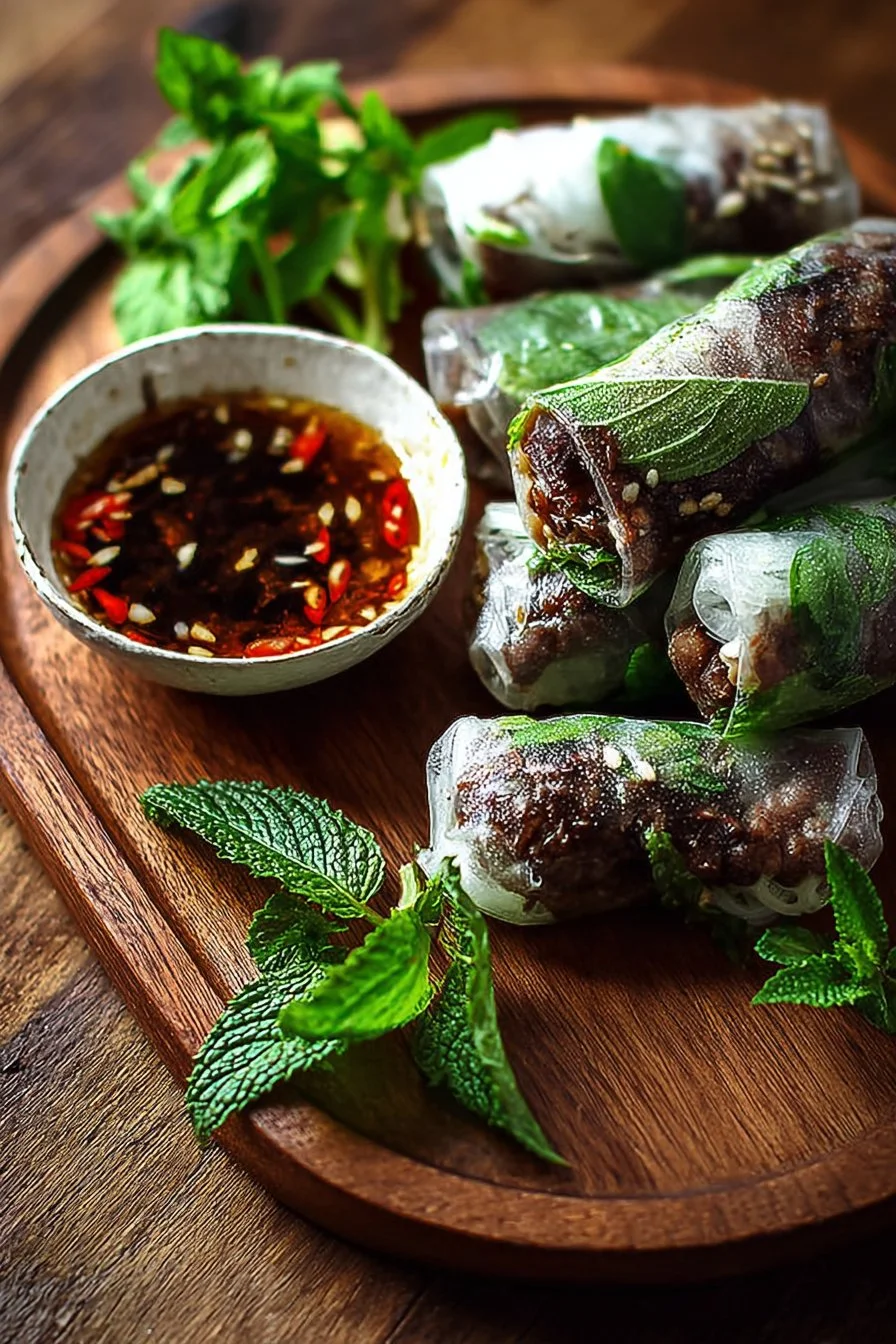
Bright, fresh, and satisfyingly savory, these Thai Basil Beef Rolls are a delightful balance of fragrant herbs, crisp vegetables, and warm seasoned meat wrapped in delicate rice paper. Each bite delivers a contrast of textures — tender, well-seasoned ground beef, crunchy matchstick carrots and peppers, and the sweet-anise lift of fresh basil. They’re deceptively simple to make, yet feel special enough for a casual dinner, appetizer at a party, or a light lunch that won’t weigh you down. If you enjoy quick handheld beef dishes, you might also like this beef and cheese chimichangas recipe for another easy, crowd-pleasing option.
Why You’ll Love This Thai Basil Beef Rolls
- Bright, layered flavors: savory soy and hoisin mingle with fresh basil for a fragrant profile.
- Textural contrast: warm, soft meat plus crisp raw vegetables and pliable rice paper make each bite interesting.
- Fast and weeknight-friendly: the whole recipe comes together quickly — about 20–30 minutes from start to finish.
- Flexible protein: the recipe lists ground beef but includes ground chicken or shrimp as easy swaps.
- Simple ingredient list: pantry-friendly sauces and fresh produce are all you need.
- Shareable and versatile: perfect as an appetizer, light dinner, or party finger food.
- Fresh-forward presentation: rice paper rolls look clean and impressive without elaborate plating.
What Is Thai Basil Beef Rolls?
Thai Basil Beef Rolls are rice paper-wrapped rolls filled with cooked, seasoned ground meat, shredded carrots, thin bell pepper strips, and whole basil leaves. Flavor-wise, they blend savory soy and sweet-hoisin notes with the fragrant punch of basil and the natural sweetness and crunch of raw vegetables. The cooking method is straightforward: brown the ground beef on the stovetop, toss in the soy and hoisin to season, let it cool slightly, then assemble in hydrated rice paper wrappers. These rolls are typically served as an appetizer or light main and bring a fresh, summery vibe to the table — think weeknight comfort with an elegant, handheld twist.
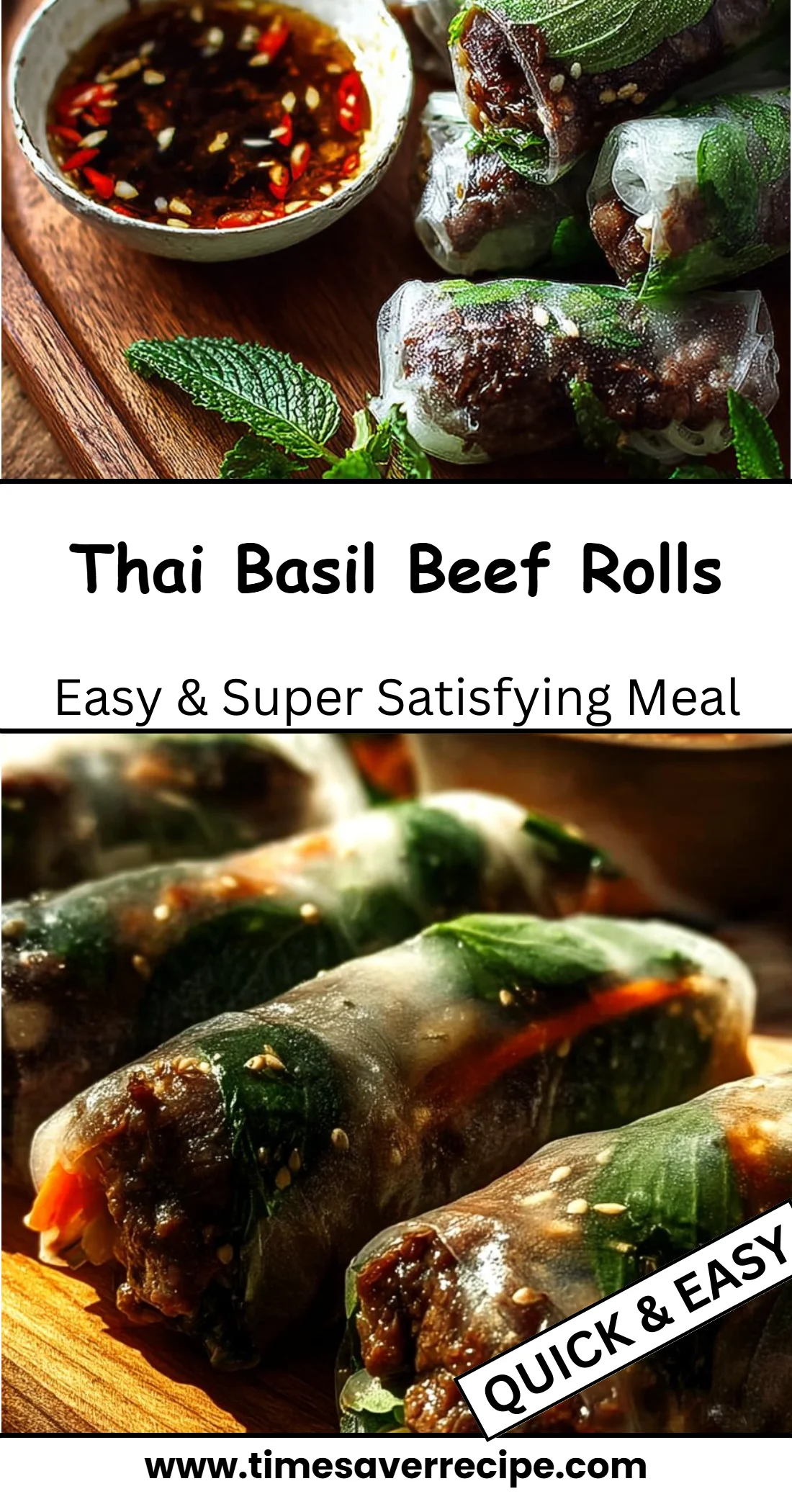
Ingredients for Thai Basil Beef Rolls
For the Filling
- 1 pound lean ground beef (or ground chicken/shrimp)
- 2 tablespoons soy sauce (or tamari for gluten-free)
- 1 tablespoon hoisin sauce (or 1 tsp honey + 1 tsp ketchup)
For the Veggies
- 1 cup shredded carrots
- 1 cup chopped bell peppers, thin strips (any color)
- 1 cup fresh basil leaves (Thai basil or sweet basil)
For Wrapping
- 6 sheets rice paper wrappers
Ingredient Notes (Substitutions, Healthy Swaps)
- Ground protein: The recipe lists lean ground beef but you can swap ground chicken or ground shrimp as noted. Cook times will be similar; chicken cooks through quickly, shrimp may need slightly less time if using pre-chopped raw shrimp.
- Gluten-free option: Use tamari instead of soy sauce to make the filling gluten-free.
- Hoisin swap: If you don’t have hoisin, the recipe suggests a simple substitute of 1 tsp honey + 1 tsp ketchup — this keeps the sweet-savory element without changing the roll’s character.
- Lower-fat option: Use extra-lean ground beef or ground chicken to reduce fat. Keep in mind leaner meats can dry out faster, so watch the cooking time and remove from heat promptly.
- Veggie variety: Use any crunchy veggies you enjoy — cucumbers or thinly sliced cabbage are fine as optional additions (label these optional if you add).
Step-by-Step Instructions
Step 1 – Brown the meat
- Heat a skillet over medium-high heat. Add the ground beef and cook, breaking it apart with a spoon, until no pink remains, about 6–8 minutes.
Visual cue: The meat should be evenly browned with no visible pink and some flavorful browned bits on the pan surface.
Pro cue: Avoid overcrowding the pan; if the skillet is crowded, the meat will steam instead of brown. Use a wide skillet for best results.
Step 2 – Season the filling
2. Stir in the 2 tablespoons soy sauce and 1 tablespoon hoisin sauce (or the honey + ketchup substitute). Cook an additional 1–2 minutes to let the flavors meld.
Visual cue: The meat should look glossy and well-coated with the sauce; the pan aromas will hint at soy-hoisin sweetness.
Pro cue: Taste a small pinch and adjust — soy adds salt, hoisin adds sweetness and depth, so tweak only slightly if needed.
Step 3 – Cool slightly
3. Remove the skillet from heat and let the cooked meat cool for about 5 minutes before assembling.
Visual cue: The steam should subside and the meat will be warm but not piping hot.
Pro cue: Cooling prevents the rice paper from becoming soggy during assembly and helps preserve the texture of the vegetables.
Step 4 – Prep the veggies
4. Shred the carrots and cut the bell peppers into thin matchsticks.
Visual cue: Veggies should be thin enough to bite easily inside the roll — about 1/8 to 1/4-inch wide strips.
Pro cue: Uniform strips make rolling easier and create a neater presentation.
Step 5 – Hydrate the rice paper
5. Dip one rice paper wrapper in warm water for 5–10 seconds until pliable, then lay it flat on a clean surface for assembly.
Visual cue: The wrapper should be flexible and slightly tacky but not falling apart.
Pro cue: Use warm (not boiling) water and don’t soak longer than suggested — over-soaking causes tearing.
Step 6 – Assemble the roll
6. Place 2–3 tablespoons of the cooked meat onto the lower third of the wrapper, add a small handful of shredded carrots, a few bell pepper strips, and 2–3 basil leaves.
Visual cue: Filling should be centered with room at the edges to fold; avoid overstuffing.
Pro cue: Distribute filling evenly across rolls for consistent size and easy eating.
Step 7 – Fold and roll
7. Fold the bottom edge over the filling, tuck in the sides, and roll tightly to seal.
Visual cue: The finished roll should be compact and cylindrical, seam side down.
Pro cue: Tuck firmly but gently — a tight roll holds together better while eating.
Step 8 – Serve
8. Serve immediately with your preferred dipping sauce or enjoy them plain.
Visual cue: Rolls will have shiny, translucent rice paper showing the colorful filling inside.
Pro cue: Fresh is best — rice paper softens further if left too long, so plan to serve soon after assembly.
Pro Tips for Success
- Heat control: Keep the pan at medium-high when browning, but reduce slightly if the meat starts to burn; you want flavor, not char.
- Texture control: Cool the meat before assembling to keep the rice paper from becoming overly soft or sticky.
- Seasoning balance: The soy provides saltiness; hoisin adds sweet-savory depth. Add them gradually and taste.
- Avoid sogginess: Don’t soak rice paper too long. A quick dunk in warm water makes it pliable without falling apart.
- Even filling: Use a small cookie scoop or tablespoon to portion meat so each roll is similar in size.
- Roll technique: Fold the bottom, tuck sides, then roll — this keeps the filling secure.
- Prep station: Lay out your filling components in separate bowls for efficient assembly, especially helpful when making multiple rolls.
Flavor Variations (Optional)
- Spicy kick (optional): Add a little sriracha or chili paste to the cooked meat mixture for heat.
- Citrus herb lift (optional): Add a splash of lime juice to the cooled meat just before assembling for brightness.
- Crunch boost (optional): Toss in chopped peanuts or toasted sesame seeds into the filling for extra texture.
- Sweet-savory twist (optional): Increase hoisin by an extra 1/2 tablespoon for a sweeter, richer roll.
- Fresh herb swap (optional): If Thai basil isn’t available, use sweet basil or a mix of basil and mint for a fresher herbal note.
Note: Variations are optional and do not replace the base recipe — they simply add another layer of flavor.
Serving Suggestions
- Party platter: Arrange rolls on a platter with extra basil leaves for garnish and an assortment of dipping sauces on the side.
- Light dinner: Serve 2–3 rolls per person with a simple green salad for a balanced meal.
- Picnic or lunchbox: Wrap individually in parchment for a portable option.
- Appetizer course: Halve the rolls diagonally and present as bite-sized finger food.
- Pairing idea: For a bolder party spread, pair these rolls with warm beef and cheese chimichangas for contrast — fresh rolls alongside a crispy, comforting option is crowd-pleasing.
- Plating tip: Serve with basil sprigs and thin lime wedges (optional) for a bright look.
Make-Ahead, Storage & Reheating
- Make-ahead components: You can cook the meat and prep the shredded carrots and pepper strips up to 2 days in advance. Store each component separately in airtight containers in the refrigerator.
- Assembling later: Hydrate rice paper and assemble rolls just before serving for the best texture. Assembled rolls left longer than an hour may become softer.
- Refrigerator storage time: Store assembled rolls tightly wrapped in plastic wrap or in an airtight container for up to 24 hours. They’re best on day of assembly.
- Reheating: Because rice paper softens and the crispness of the vegetables changes with heat, reheating assembled rolls isn’t recommended. If you want warm filling, gently reheat the cooked meat separately (low heat in a skillet or microwave) and assemble with fresh rice paper and veggies.
Storage and Freezing Instructions
- Freezing assembled rolls: Not recommended. Rice paper becomes brittle when frozen then soggy when thawed, and raw vegetables lose their crunch.
- Freezing components: You can freeze the cooked meat portion on its own in an airtight container for up to 2 months. Thaw overnight in the refrigerator and reheat gently before assembling into fresh rice paper wrappers.
- Alternative: If you need a freezer-friendly handheld, consider preparing and freezing the meat-only component and assembling fresh rolls when ready to serve.
Nutrition Facts (Per Serving)
| Calories | Protein | Carbs | Fat | Fiber | Sodium |
|———|——–|——|—–|——|——-|
| 213 kcal | 15 g | 12 g | 11 g | 2 g | 420 mg |
Nutrition values are estimates and may vary depending on ingredients and portion sizes.
FAQ About Thai Basil Beef Rolls
Q: My rolls are falling apart — what did I do wrong?
A: Likely the rice paper was over-soaked or the filling was too wet. Use a quick dip in warm water (5–10 seconds), and let the meat cool to reduce steam and moisture.Q: Can I use lettuce instead of rice paper?
A: Yes, butter or romaine lettuce leaves can be a low-carb alternative but the eating experience will differ from the tender chew of rice paper.Q: How can I tell if the meat is fully cooked?
A: Cook until no pink remains and juices run clear. With ground beef, 6–8 minutes over medium-high heat is typical.Q: Can I reheat leftover assembled rolls?
A: Reheating assembled rolls is not ideal; rice paper and raw veggies lose texture with heat. Reheat the meat separately and assemble fresh rolls.Q: Will rice paper wrappers tear while rolling?
A: They can if over-soaked. Use warm water and don’t exceed 10 seconds. If a wrapper tears, discard and use a new one.Q: How long will cooked filling keep in the fridge?
A: Cooked meat and prepped veggies will keep up to 2 days when stored separately in airtight containers.
Notes
- Plating idea: Slice rolls in half diagonally and fan them out on a long platter for an elegant party presentation.
- Small flavor upgrade: Stir a little extra hoisin into any leftover meat for a saucier filling if you prefer more glaze.
- Seasoning adjustment: If using very lean meat, add a pinch more soy or a touch more hoisin for depth.
- Presentation tip: Keep basil leaves whole and visible near the wrapper surface for visual appeal and aroma.
- Timing trick: If hosting, prep the meat and veggies ahead and hydrate/wrap just before guests arrive for the freshest texture.
Thai Basil Beef Rolls
- Total Time: 30 minutes
- Yield: 4 servings
- Diet: Gluten-Free
Description
Bright, fresh, and satisfyingly savory, these Thai Basil Beef Rolls are a delightful balance of fragrant herbs, crisp vegetables, and warm seasoned meat wrapped in delicate rice paper.
Ingredients
- 1 pound lean ground beef (or ground chicken/shrimp)
- 2 tablespoons soy sauce (or tamari for gluten-free)
- 1 tablespoon hoisin sauce (or 1 tsp honey + 1 tsp ketchup)
- 1 cup shredded carrots
- 1 cup chopped bell peppers, thin strips (any color)
- 1 cup fresh basil leaves (Thai basil or sweet basil)
- 6 sheets rice paper wrappers
Instructions
- Heat a skillet over medium-high heat. Add the ground beef and cook, breaking it apart with a spoon, until no pink remains, about 6–8 minutes.
- Stir in the soy sauce and hoisin sauce (or honey + ketchup) and cook an additional 1–2 minutes.
- Remove the skillet from heat and let the cooked meat cool for about 5 minutes.
- Shred the carrots and cut the bell peppers into thin matchsticks.
- Dip one rice paper wrapper in warm water for 5–10 seconds until pliable, then lay it flat on a clean surface for assembly.
- Place 2–3 tablespoons of the cooked meat onto the lower third of the wrapper, add a small handful of shredded carrots, some bell pepper strips, and 2–3 basil leaves.
- Fold the bottom edge over the filling, tuck in the sides, and roll tightly to seal.
- Serve immediately with your preferred dipping sauce or enjoy them plain.
Notes
For best texture, assemble rolls just before serving. Leftover meat can be stored in the refrigerator for up to 2 days.
- Prep Time: 15 minutes
- Cook Time: 15 minutes
- Category: Appetizer
- Method: Wrapping
- Cuisine: Thai