
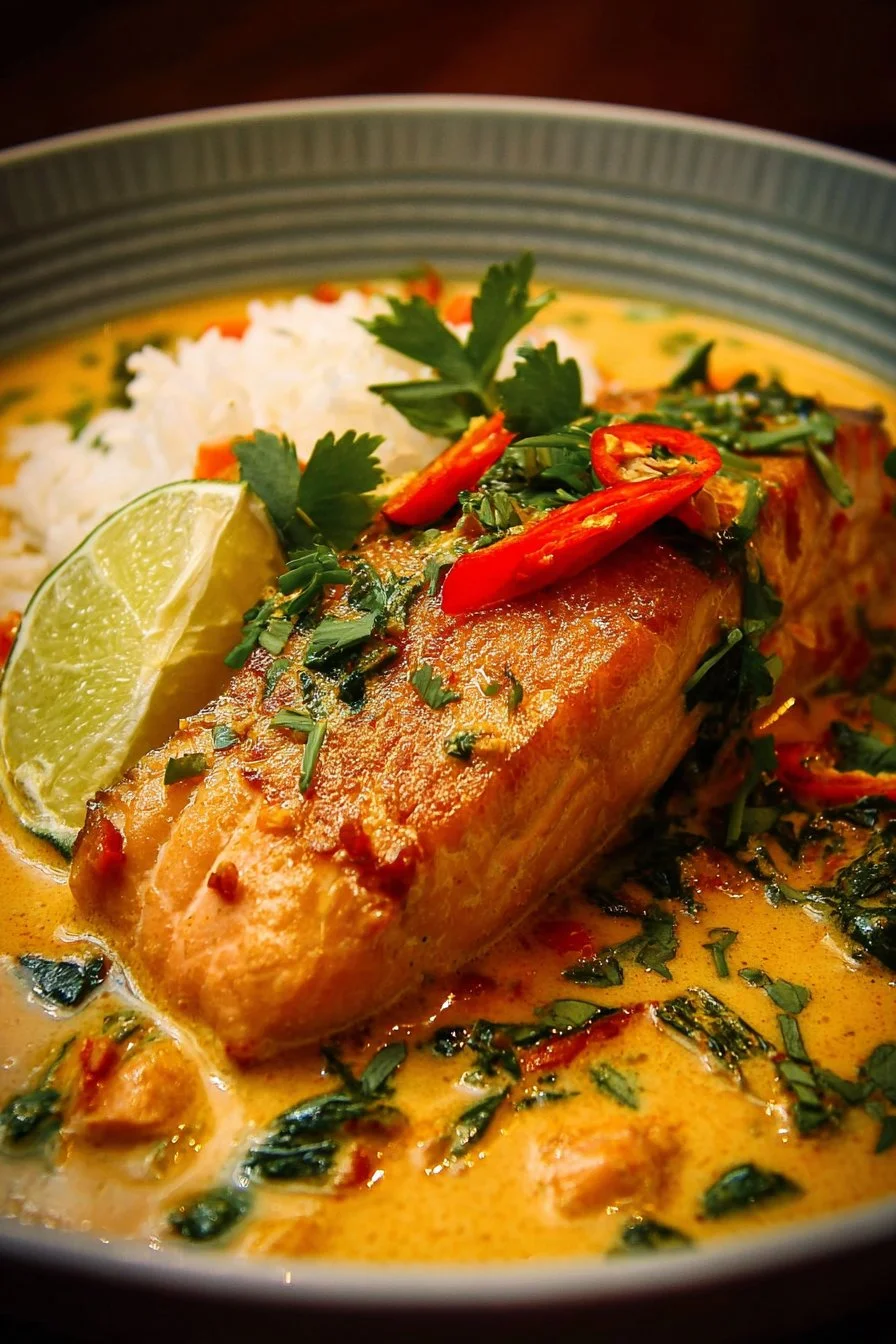
This Salmon in a Creamy Thai-Style Coconut Curry is a weeknight revelation: tender, flaky salmon bathed in a silky, slightly spicy coconut curry that’s brightened with lime and a whisper of fish sauce. The sauce clings to the fillet and makes a light pan-sauce when spooned over rice, while quick-sautéed peppers and spinach add color and a gentle crunch. It’s easy enough for a cozy weeknight but special enough for guests — all in about 30 minutes from start to finish. If you love simple baked salmon dinners with bold flavors, you might also enjoy the baked salmon with creamy spinach and mozzarella for another comfort-food twist.
Why You’ll Love This Salmon in a Creamy Thai-Style Coconut Curry
- Bold, balanced flavor: creamy coconut, aromatic Thai red curry, tangy lime, and savory fish sauce create a layered, restaurant-worthy sauce.
- Quick to make: minimal prep and a hands-off bake for the salmon make this an efficient dinner.
- One-pan (almost) ease: the salmon bakes in the sauce, reducing dishes and preserving flavor.
- Textural contrast: silky sauce and flaky salmon meet crisp-tender bell peppers and tender spinach.
- Versatile serving: spoon over rice, noodles, or even cauliflower rice for a lighter option.
- Crowd-pleaser: familiar ingredients with an exotic twist makes it a safe, exciting choice for guests.
- Comforting but bright: rich coconut soothed by lime juice keeps the dish from feeling too heavy.
What Is Salmon in a Creamy Thai-Style Coconut Curry?
This dish is a simple baked-salmon entrée where fillets are cooked in a coconut-curry sauce flavored with Thai red curry paste, fish sauce, lime, and a touch of sugar. The sauce is poured over the salmon in a shallow baking dish, which infuses the fish as it roasts. Expect a creamy, slightly spicy sauce with citrus lift and umami depth from the fish sauce — the curry paste does the aromatic heavy lifting. It’s typically served over steamed rice and finished with quick-sautéed bell peppers and spinach for color and texture. The vibe is comforting and slightly exotic — perfect for a weeknight dinner, casual dinner party, or anytime you want a flavorful but unfussy meal.
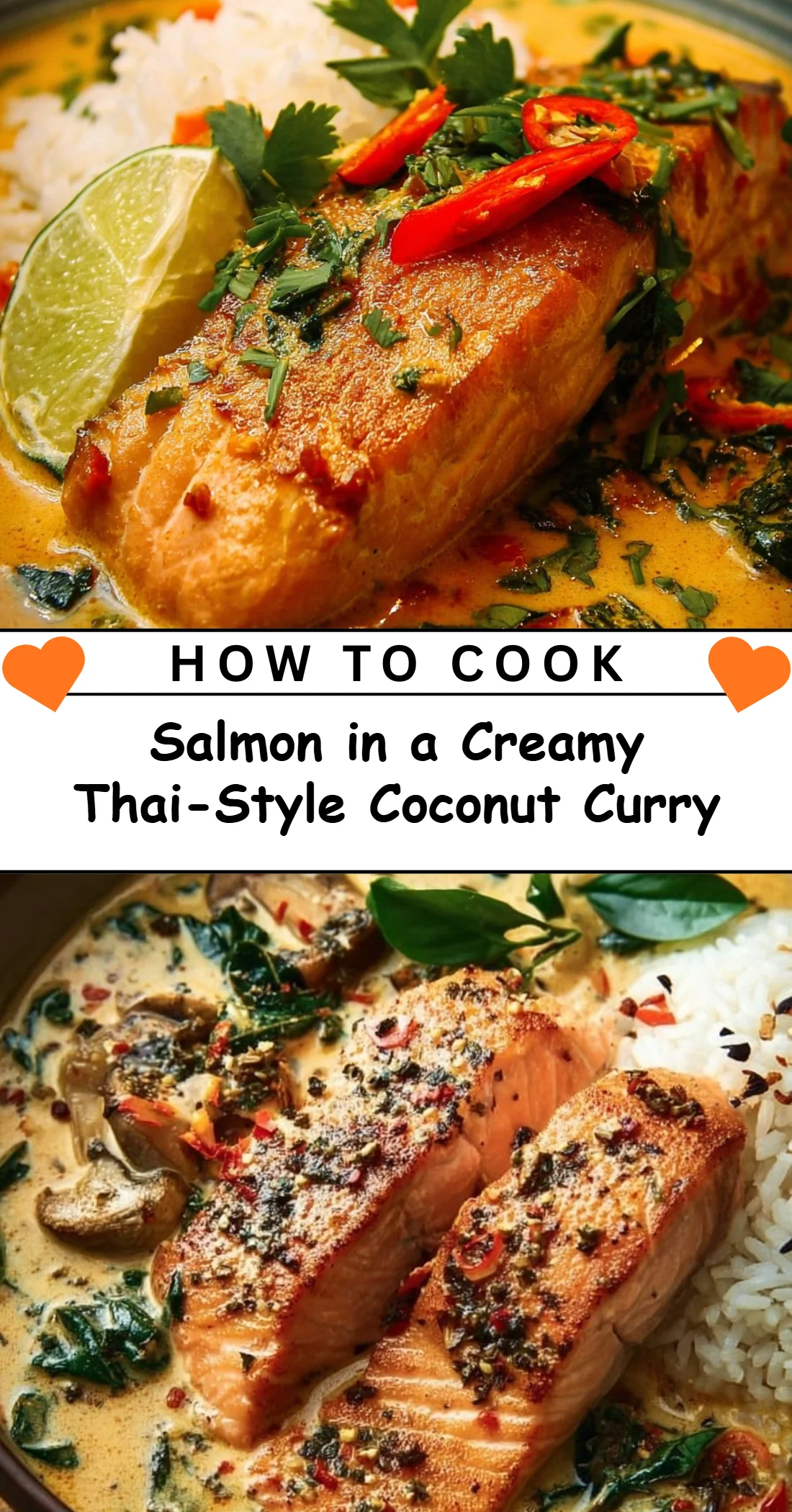
Ingredients for Salmon in a Creamy Thai-Style Coconut Curry
For the Fish and Sauce
- 4 salmon fillets (about 6 oz each)
- 1 (13.5–14 oz) can coconut milk
- 2 tablespoons Thai red curry paste
- 1 tablespoon fish sauce
- 1 tablespoon fresh lime juice
- 1 teaspoon sugar
For the Vegetables
- 1 cup bell peppers, thinly sliced
- 1 cup fresh spinach
For Serving
- Fresh cilantro for garnish
- Cooked rice for serving
Ingredient Notes (Substitutions, Healthy Swaps)
- Coconut milk: For a lighter version, use light coconut milk (lower calories and fat), though the sauce will be a bit less rich.
- Thai red curry paste: Keeps the signature flavor — you can reduce to 1 tablespoon for a milder curry or up to 3 tablespoons if you prefer more heat.
- Fish sauce: Adds umami and salt. For a lower-sodium option, use a reduced-sodium fish sauce or reduce added salt to taste. Vegetarians can swap fish sauce for a mixture of soy sauce and a squeeze more lime (optional substitution).
- Lime juice: Fresh is best for brightness, but bottled lime juice will work in a pinch.
- Bell peppers and spinach: Substitute with other quick-cooking veg you already have, like thinly sliced zucchini or bok choy leaves, keeping cook times similar.
- Rice: Serve over white, brown, jasmine, or basmati rice. For a low-carb option use cauliflower rice.
Step-by-Step Instructions
Step 1 – Preheat and prep the dish
Preheat the oven to 400°F (200°C) and lightly oil a shallow baking dish. Pat the salmon fillets dry and season lightly with salt and pepper.
Visual cue: The baking dish should be just large enough to fit the fillets in a single layer with a little space around them.
Step 2 – Make the curry mixture
In a bowl, whisk together the coconut milk, Thai red curry paste, fish sauce, fresh lime juice, and sugar until smooth and well combined.
Visual cue: The sauce should be uniform in color with no lumps of curry paste.
Step 3 – Arrange salmon and pour sauce
Place the salmon fillets in the prepared baking dish and pour the curry mixture over the fillets, spooning a little over each piece.
Pro cue: Make sure the sauce comes up the sides of the fillets but doesn’t fully submerge them — this helps the tops roast slightly while the flesh steams gently in the sauce.
Step 4 – Bake the salmon
Bake for 15–20 minutes, depending on thickness, until the salmon is cooked through and flakes easily with a fork. Begin checking at 15 minutes to avoid overcooking.
Visual cue: The salmon will be opaque and flake when tested in the thickest part.
Step 5 – Sauté the vegetables
While the salmon bakes, heat a splash of oil in a skillet and sauté the thinly sliced bell peppers until just tender, then toss in the fresh spinach until wilted. Season lightly with salt and remove from heat.
Pro cue: Cook peppers until they’re still slightly crisp for contrast; the spinach only needs seconds to wilt.
Step 6 – Plate and garnish
Serve each salmon fillet over cooked rice, spoon plenty of the creamy curry sauce over the top, add the sautéed peppers and spinach alongside, and garnish with fresh cilantro.
Visual cue: A glossy sauce coating the salmon, bright red or yellow pepper strips, and a sprinkle of green cilantro finish the plate.
Pro Tips for Success
- Bring the salmon to room temperature for 10–15 minutes before baking to promote even cooking.
- Pat fillets very dry to ensure the seasonings stick and the tops can brown slightly in the oven.
- Taste the sauce before adding salmon; adjust lime, sugar, or fish sauce a little to balance tang, sweetness, and salt.
- Don’t overbake: check the thickest fillet at 15 minutes. Salmon cooks quickly and keeps moist when pulled early.
- If your curry paste is very salty, reduce added salt and rely on the fish sauce for seasoning.
- Use a shallow baking dish so the sauce reduces just a touch instead of pooling excessively.
- Save any extra sauce for spooning over rice — it’s intensely flavorful and worth every drop.
Flavor Variations (OPTIONAL)
- Optional — Spicier version: Stir in an extra 1/2–1 teaspoon of Thai red curry paste or a pinch of crushed red pepper for more heat.
- Optional — Citrus-forward: Add additional lime zest (½ teaspoon) to the sauce for an extra burst of brightness.
- Optional — Less rich: Use light coconut milk to cut calories and fat without changing the technique.
- Optional — Extra veg: Fold in thinly sliced zucchini or snow peas with the bell peppers for more color and crunch.
- Optional — Garnish swap: Replace cilantro with fresh Thai basil for a different aromatic note (keeps base recipe intact).
Serving Suggestions
- Serve over steamed jasmine or basmati rice to soak up the creamy curry sauce.
- For a lighter plate, serve over cauliflower rice or a bed of lightly sautéed kale.
- Pair with a crisp, simple cucumber salad to add cool crunch and contrast.
- For a coconut-forward starter, serve a small bowl of coconut curry soup with dumplings before this salmon for a cohesive menu.
- Plate family-style: place the baking dish on the table with a bowl of rice and let everyone spoon sauce and fish onto their plates.
- Occasion ideas: casual weeknight dinners, date-night at home, or a small dinner party where you want big flavor with minimal fuss.
Make-Ahead, Storage & Reheating
- Make-ahead: You can whisk the curry mixture up to 24 hours ahead and store it in the fridge. Keep salmon uncooked until you’re ready to bake.
- Refrigerator storage: Store leftover salmon, sauce, and vegetables in an airtight container for up to 3 days.
- Reheating: Reheat gently in a skillet over low-medium heat with a splash of water or additional coconut milk to loosen the sauce, or warm in a covered ovenproof dish at 325°F until heated through. Avoid microwave reheating at high power, which can overcook the salmon and separate the coconut milk.
- Texture changes: Cooked salmon will firm up in the fridge; reheat gently to retain moisture.
Storage and Freezing Instructions
- Freezing: Cooked salmon in coconut curry is not ideal for freezing because the high-fat coconut milk can separate and become grainy when thawed. If you must freeze, freeze only the salmon (without rice) in a shallow airtight container for up to 1 month and thaw slowly in the fridge. Expect some texture change in the sauce after thawing.
- Recommended alternative: Freeze the curry mixture (without cooked fish) in a freezer-safe container for up to 2 months; thaw overnight and reheat, then gently poach fresh salmon fillets in the warmed sauce for best texture.
Nutrition Facts (Per Serving)
| Calories | Protein | Carbs | Fat | Fiber | Sodium |
|———|——–|——|—–|——|——-|
| 700 kcal | 40 g | 60 g | 43 g | 3 g | 820 mg |
Nutrition values are estimates and may vary depending on ingredients and portion sizes.
FAQ About Salmon in a Creamy Thai-Style Coconut Curry
Q: How can I tell when the salmon is done?
A: Salmon is done when it flakes easily with a fork and is opaque through the thickest part; start checking at 15 minutes.Q: Can I use frozen salmon?
A: Thaw completely and pat dry before seasoning and baking to ensure even cooking.Q: My sauce looks separated after reheating — how can I fix it?
A: Reheat gently with a splash of water or additional coconut milk and whisk to recombine; avoid high heat.Q: Is fish sauce necessary?
A: Fish sauce adds essential umami and saltiness. You can substitute with reduced-sodium soy sauce and a squeeze more lime for a different flavor if needed.Q: Can I make this without the rice?
A: Yes — serve over cauliflower rice or steamed greens for a lighter, low-carb option.Q: How long will leftovers last?
A: Store in an airtight container in the refrigerator for up to 3 days.
Notes
- Plate the salmon with sauce spooned generously over the top to keep each bite moist and flavorful.
- Add a final squeeze of fresh lime just before serving for extra brightness.
- Taste the sauce before pouring it over the salmon — you can adjust lime, sugar, or fish sauce to balance the flavors to your liking.
- When serving guests, keep the sauce in a separate gravy boat for those who prefer less curry on their plate.
- Garnish with roughly chopped cilantro just before serving so it stays vibrant and fresh.
Salmon in a Creamy Thai-Style Coconut Curry
- Total Time: 30 minutes
- Yield: 4 servings
- Diet: Pescatarian
Description
This dish features tender salmon fillets cooked in a rich and slightly spicy Thai coconut curry sauce, complemented by sautéed peppers and spinach.
Ingredients
- 4 salmon fillets (about 6 oz each)
- 1 (13.5–14 oz) can coconut milk
- 2 tablespoons Thai red curry paste
- 1 tablespoon fish sauce
- 1 tablespoon fresh lime juice
- 1 teaspoon sugar
- 1 cup bell peppers, thinly sliced
- 1 cup fresh spinach
- Fresh cilantro for garnish
- Cooked rice for serving
Instructions
- Preheat the oven to 400°F (200°C) and lightly oil a shallow baking dish. Pat the salmon fillets dry and season lightly with salt and pepper.
- Whisk together the coconut milk, Thai red curry paste, fish sauce, fresh lime juice, and sugar in a bowl until smooth and combined.
- Place the salmon fillets in the prepared baking dish and pour the curry mixture over the fillets.
- Bake for 15-20 minutes, until the salmon is cooked through and flakes easily with a fork.
- Heat a splash of oil in a skillet and sauté the thinly sliced bell peppers until just tender, then add the fresh spinach until wilted.
- Serve each salmon fillet over cooked rice, spoon the creamy curry sauce over the top, add the sautéed vegetables, and garnish with fresh cilantro.
Notes
Bring salmon to room temperature for even cooking. Adjust the sauce to your taste before pouring it over the salmon.
- Prep Time: 10 minutes
- Cook Time: 20 minutes
- Category: Main Course
- Method: Baking
- Cuisine: Thai