
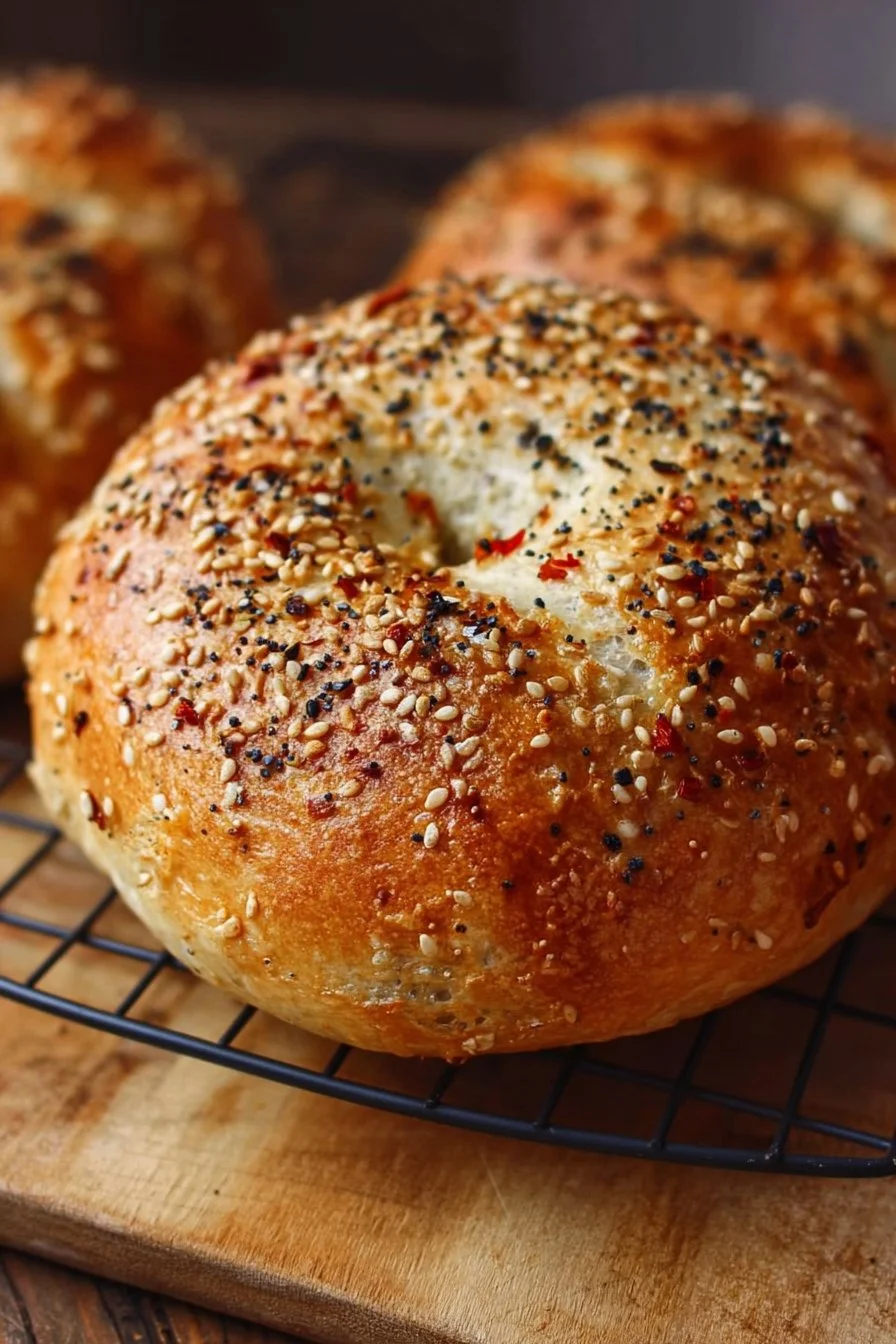
Everything Bagel Bread is a no-knead, crusty loaf studded with everything bagel seasoning — sesame, poppy, garlic, onion and salt — that gives a familiar bagel flavor with the ease and crumb of a rustic boule. It’s perfect for weekend brunch, sandwich-making, or anytime you want a bold-flavored loaf without hours of hands-on work. If you like simple artisan-style loaves, try this version for a crunchy exterior and tender interior; for a different quick method, you might also enjoy a 4-ingredient artisan bread that’s similarly hands-off.
Why you’ll love this bread
This recipe delivers big flavor with almost no fuss. It uses a long, room-temperature ferment (12–24 hours) to develop depth and chew without kneading. The everything bagel seasoning creates an aromatic, savory crust that feels special for breakfasts, sandwiches, or as a centerpiece for a casual dinner.
“We sliced this still-warm and the house smelled like a bagel shop — crunchy crust, pillowy center, and the seasoning made every bite memorable.” — a tester’s short review
Reasons to make it:
- Minimal active time: most of the work is hands-off fermentation.
- Big texture contrast: crackly crust from the Dutch oven; open, chewy crumb inside.
- Versatile: serve with butter, cream cheese, soups, or use for deli-style sandwiches.
- Pantry-friendly: uses basic flour, yeast, salt, and a jar of seasoning.
Step-by-step overview
This is a straightforward no-knead bread. Mix flour, yeast, salt and part of the seasoning, add warm water, then let the shaggy dough rest at room temperature for 12–24 hours. Shape loosely on floured parchment, score, rest 30 minutes while you preheat a Dutch oven to 450°F, top with the remaining seasoning, and bake covered then uncovered until deep golden. Cool at least 30 minutes before slicing to finish the crumb-setting.
What you’ll need
- 3-1/4 cups (about 410 g) bread flour or all-purpose flour (bread flour gives a chewier crumb; AP is fine)
- 1 teaspoon instant yeast (or 1-1/4 teaspoons active dry yeast)
- 1 teaspoon fine salt
- 2 tablespoons everything bagel seasoning, divided (1 Tbsp in dough, 1 Tbsp for topping)
- 1-1/2 cups (360 ml) warm water, about 100–110°F (38–43°C)
Notes and substitutions:
- If using active dry yeast, dissolve it briefly in the warm water before mixing. If your kitchen is cool, use the shorter end of the fermentation window (12 hours) to avoid overproofing.
- For a whole-wheat blend, substitute up to half the flour with whole wheat; expect a denser crumb and add 5–10% more water.
- No everything seasoning? Make your own with sesame seeds, poppy seeds, dried onion flakes, dried garlic flakes, and coarse salt.
If you need a much faster, no-fuss loaf, consider trying a speedy 20-minute homemade bread technique instead.
Step-by-step instructions
- In a large bowl, whisk together 3-1/4 cups flour, 1 teaspoon instant yeast, 1 teaspoon salt, and 1 tablespoon everything seasoning.
- Pour the 1-1/2 cups warm water in slowly. Use a large fork to stir until the mixture is just combined. The dough will be shaggy and sticky — that’s correct.
- Cover the bowl tightly with plastic wrap or a reusable cover. Let it sit at room temperature for 12–24 hours. Longer fermentation = more flavor; check at 12 hours for a domed, bubbly surface.
- When ready to bake, scatter a little flour on a sheet of parchment. Turn the dough out onto the parchment and dust the top with flour. Gently fold the edges under to form a loose ball; don’t overwork it.
- Use a sharp knife or lame to cut an X across the top. Let the shaped dough rest uncovered for 30 minutes while you preheat the oven.
- Place a Dutch oven (with lid) in the oven and preheat to 450°F (230°C) for 30 minutes. A very hot pot gives the best oven spring and crust.
- Brush or spritz the dough lightly with warm water to help the seasoning stick. Sprinkle the remaining tablespoon of everything bagel seasoning evenly over the top.
- Using the parchment as a sling, lower the loaf into the hot Dutch oven. Cover with the lid immediately.
- Bake covered for 30 minutes. Remove the lid and bake another 5–10 minutes until the crust is deep golden brown. If the crust browns too fast, tent with foil.
- Transfer the loaf to a cooling rack. Wait at least 30 minutes before slicing to allow the crumb to finish setting.
Safety and pro notes:
- Preheating the Dutch oven is important — placing cold ceramic into a hot oven can crack it. Follow manufacturers’ care instructions.
- Use an oven mitt and long tongs or the parchment to avoid burns when placing and removing the covered pot.
Best ways to enjoy it
- Split and toast with cream cheese, smoked salmon, capers and thin red onion for a bagel-inspired sandwich.
- Use thick slices for hearty grilled cheese or turkey sandwiches.
- Serve warm with herb butter alongside soups and salads.
- For a brunch spread, slice and top with avocado, tomato, or soft cheese and honey.
Storage and reheating tips
- At room temperature: keep the loaf in a paper bag or loosely wrapped in a clean towel for 1–2 days to preserve crust. Sealing in plastic will soften the crust but keep the crumb moist.
- Refrigeration: not recommended for storing bread long-term — it speeds staling. If you must, wrap tightly and use within 2–3 days.
- Freezing: slice the cooled loaf, wrap slices tightly in plastic or foil, and place in a freezer bag for up to 3 months. Toast or reheat directly from frozen.
- Reheating: for a revived crust, sprinkle the loaf lightly with water and warm in a 350°F oven for 5–10 minutes. For single slices, toast as usual.
Pro chef tips
- Water temperature: keep it warm but not hot (100–110°F). Too hot kills yeast; too cool slows fermentation.
- Fermentation window: 12–24 hours at room temp is forgiving. If your kitchen is very warm, check sooner.
- Don’t over-flour: a little stickiness helps oven spring and an open crumb. Use flour to handle, not to dry the dough out.
- Scoring: a simple X is enough. Deeper cuts give more expansion but be consistent to avoid tearing.
- Dutch oven alternative: if you don’t have one, bake on a preheated baking stone or sheet and add steam by placing a tray of hot water in the oven during the first 10 minutes.
Creative twists
- Seeded crust boost: add extra sesame and poppy seeds on top for a nuttier bite.
- Cheesy everything: press grated parmesan or asiago into the top before baking for a savory cheese crust.
- Herb infusion: fold a tablespoon of chopped fresh rosemary or thyme into the dough before the long ferment.
- Gluten-free attempt: try a trusted gluten-free artisan loaf base and incorporate seasoning, but expect a different texture and adjust hydration.
Common questions
Q: Can I use active dry yeast instead of instant?
A: Yes. Use 1-1/4 teaspoons active dry yeast and proof it briefly in the warm water for 5–10 minutes until foamy before mixing with the dry ingredients.
Q: My dough seems flat after 24 hours — is it ruined?
A: Not necessarily. If it’s flattened but bubbly, shape it gently and proceed. If it smells overwhelmingly sour or alcohol-like, the yeast has likely exhausted; discard and start fresh.
Q: Can I turn this into actual bagels with boiling?
A: The dough is similar in flavor but wetter than typical bagel dough. To make bagels, reduce hydration, shape into firm rings, briefly proof, boil, then bake — follow a tested bagel recipe for best results.
Q: How long should I wait to slice the bread?
A: At least 30 minutes. Slicing too early can leave the crumb gummy because steam hasn’t finished evaporating and starches haven’t fully set.
Q: Is it safe to leave the dough at room temperature for 24 hours?
A: Yes — for typical kitchen environments. If your kitchen is over 80°F (27°C), shorten the fermentation to avoid overproofing and excessive sourness.
If you want more make-ahead or quick artisan-style bread ideas, the links earlier in the article point to useful alternatives and time-saving methods.
Print
Everything Bagel Bread
- Total Time: 12-24 hours (fermentation) + 55 minutes
- Yield: 1 loaf
- Diet: Vegetarian
Description
A no-knead, crusty loaf studded with everything bagel seasoning for a bold flavor and a chewy crumb, perfect for brunch or sandwiches.
Ingredients
- 3-1/4 cups (about 410 g) bread flour or all-purpose flour
- 1 teaspoon instant yeast (or 1-1/4 teaspoons active dry yeast)
- 1 teaspoon fine salt
- 2 tablespoons everything bagel seasoning, divided
- 1-1/2 cups (360 ml) warm water (100–110°F or 38–43°C)
Instructions
- Whisk together flour, yeast, salt, and 1 tablespoon everything seasoning in a large bowl.
- Pour in warm water slowly and stir until combined; dough will be shaggy.
- Cover the bowl tightly with plastic wrap and let sit at room temperature for 12–24 hours.
- Scatter flour on parchment and turn out dough, dusting top with flour and forming a loose ball.
- Cut an X across the top of the dough and let rest for 30 minutes while preheating the oven.
- Preheat a Dutch oven at 450°F (230°C) for 30 minutes.
- Brush the dough lightly with warm water and sprinkle with remaining everything seasoning.
- Lower the loaf into the hot Dutch oven using parchment, cover with the lid.
- Bake covered for 30 minutes, then uncover and bake for 5–10 minutes until deep golden brown.
- Transfer the loaf to a cooling rack and cool for at least 30 minutes before slicing.
Notes
For variations, try adding extra seeds on top or incorporating herbs into the dough.
- Prep Time: 15 minutes
- Cook Time: 40 minutes
- Category: Bread
- Method: Baking
- Cuisine: American