
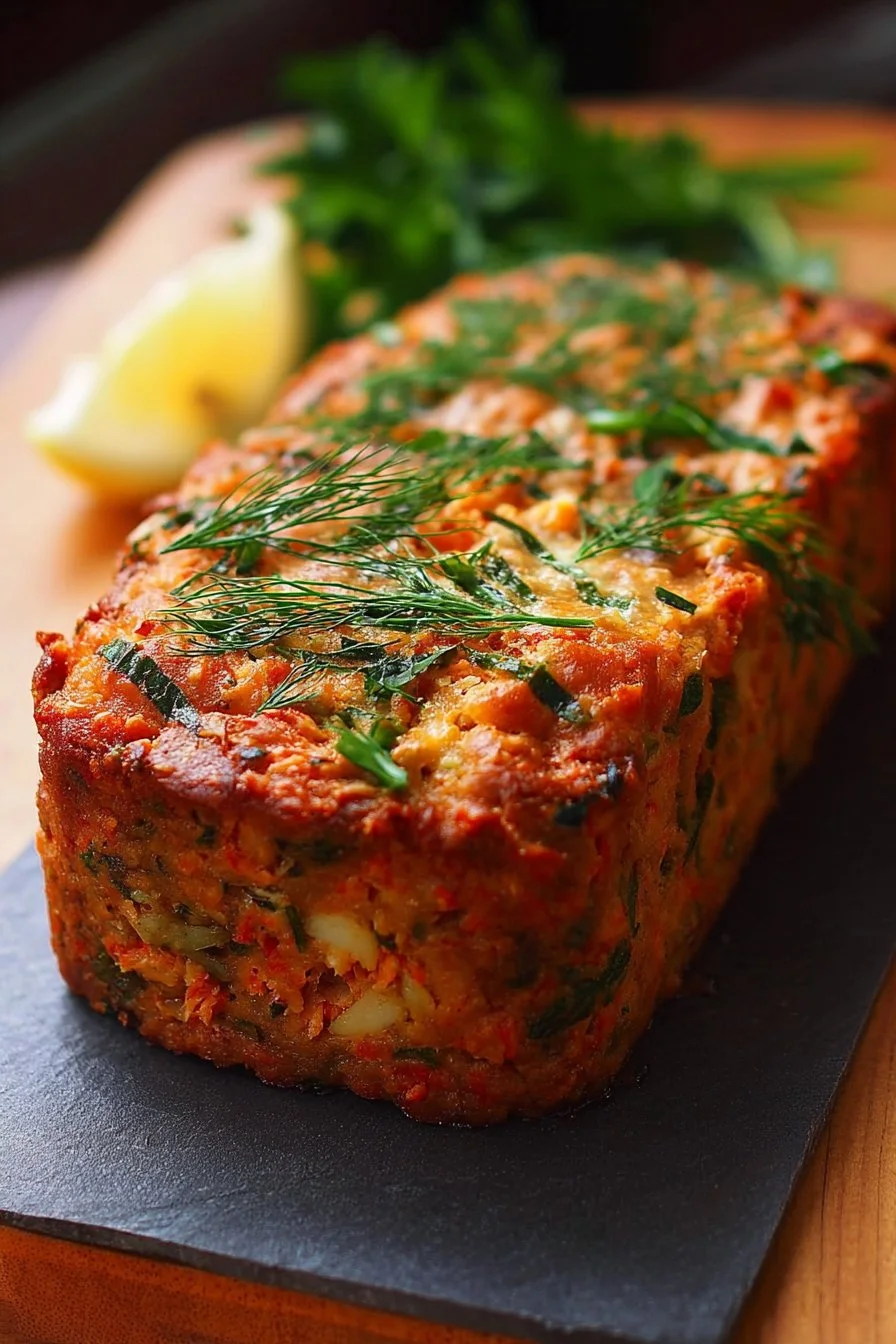
Bright, savory, and softly textured, this Delightful Salmon Loaf is the kind of recipe that feels like a warm kitchen hug. Flaked canned salmon melds with breadcrumbs, eggs, and just enough dill and lemon to keep things bright — the loaf holds together with a tender, sliceable texture and develops a pretty golden crust in the oven. It’s an easy, no-fuss dinner that also works beautifully for brunch, packed lunches, or a light supper with crisp greens. If you enjoy fuss-free salmon dishes, you might also like these crispy air-fryer bang-bang salmon bites for another fast seafood option.
Why You’ll Love This Delightful Salmon Loaf
- Simple and pantry-friendly — uses one can of high-quality salmon and basic staples.
- Quick to mix and bake — minimal hands-on time, perfect for busy weeknights.
- Tender, sliceable texture with a golden top that’s pleasing to the eye and palate.
- Bright herbal notes from dill and a fresh lemon tang balance the rich salmon flavor.
- Versatile serving options — serve warm, at room temperature, or chilled.
- Great for meal prep — slices pack well for lunches or picnics.
- Kid-friendly and mild — a good way to introduce more seafood to picky eaters.
- Comforting but lighter than heavier meatloaves, making it suitable year-round.
What Is Delightful Salmon Loaf?
This is a baked salmon loaf made from canned salmon mixed with breadcrumbs, eggs, onion, dill, and lemon. It’s similar in concept to a classic seafood loaf or meatloaf but lighter in flavor and quicker to pull together since the salmon is already cooked and canned. Expect a moist interior with flaky salmon pieces, a gently savory onion base, and bright herbal and citrus notes from dill and lemon juice. The cooking method is straightforward — mix, press into a loaf pan, and bake until golden. People typically serve it as a main course for a casual dinner, at brunch with a salad, or sliced for sandwiches and packed lunches. Overall the vibe is comforting, homey, and unfussy — a reliably satisfying dish that doesn’t require a lot of technique.
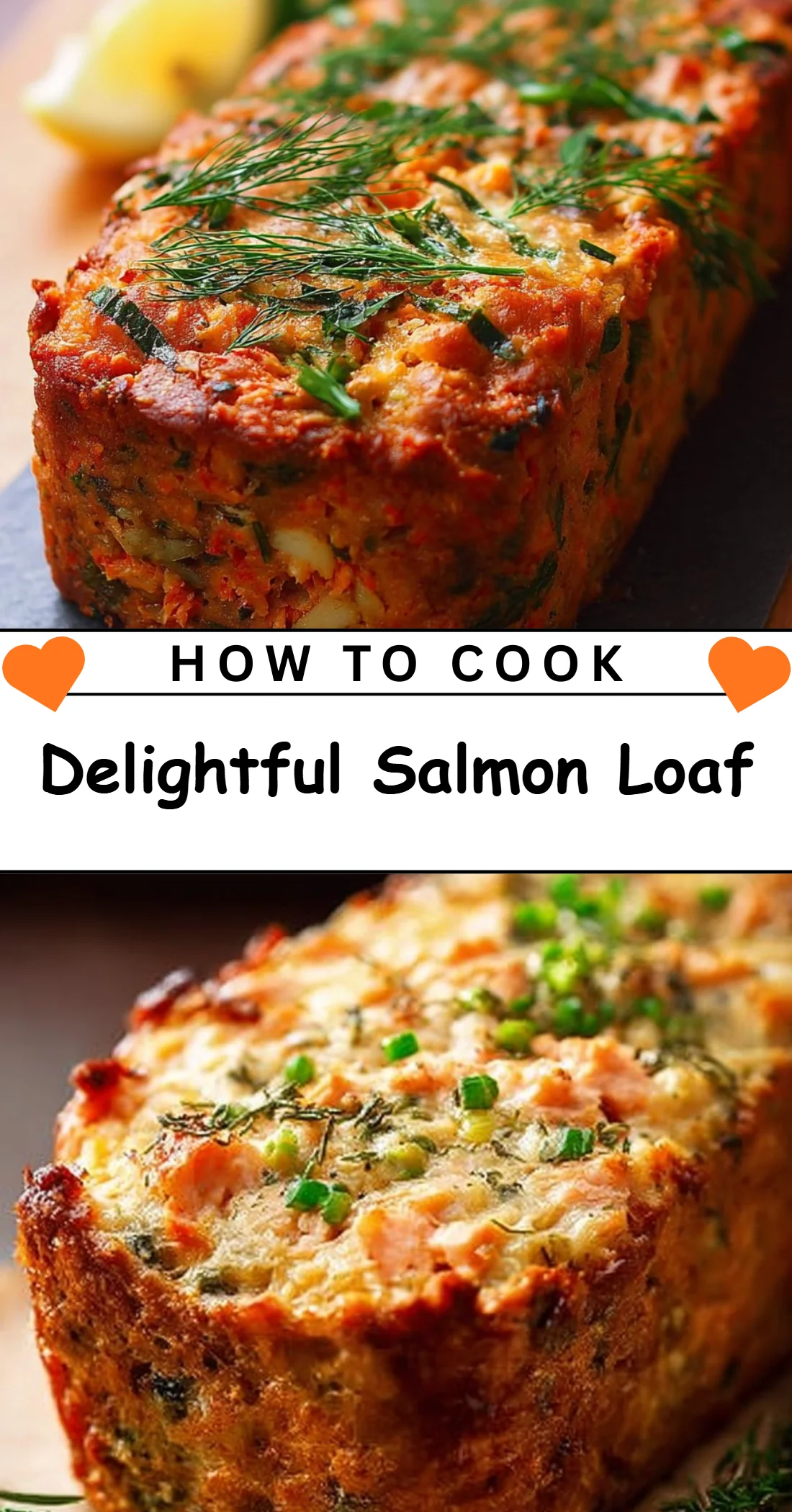
Ingredients for Delightful Salmon Loaf
For the Base
- 1 can (14.75 oz) high-quality canned salmon, drained
- 1 cup plain breadcrumbs
- 2 large eggs
- 1 medium onion, finely chopped
- 2 tablespoons fresh dill (or 1 tablespoon dried dill)
- 2 tablespoons lemon juice
- Salt and pepper to taste
Ingredient Notes (Substitutions, Healthy Swaps)
- Breading alternatives: For a gluten-free loaf, swap the plain breadcrumbs for gluten-free breadcrumbs or crushed gluten-free crackers (measure equal volume). If you’re short on breadcrumbs, crushed plain crackers or panko can work in roughly the same amount.
- Dill options: Fresh dill gives a bright herbaceous lift; if using dried, use half the amount (1 tablespoon) as listed. If you don’t have dill, parsley is a mild substitute (optional).
- Onion choices: Yellow or white onion add sweetness and savory depth; for a milder flavor, use finely chopped shallot.
- Eggs: Eggs act as the binder. For an egg allergy, a commercial egg replacer could help bind the loaf, but texture will change.
- Lemon: Bottled lemon juice works fine in a pinch, but fresh lemon juice gives the cleanest flavor.
- Lower-sodium tip: Choose low-sodium canned salmon if you’re watching sodium, and taste before adding extra salt.
Step-by-Step Instructions
Step 1 – Preheat and prepare the pan
Preheat the oven to 350°F (175°C). Grease a loaf pan lightly with oil or nonstick spray, or line it with parchment paper for easy removal.
Visual cue: The pan should be evenly greased or lined so the loaf releases cleanly after baking.
Step 2 – Flake the salmon
Drain the canned salmon thoroughly and transfer it to a mixing bowl. Use a fork to flake the salmon into bite-sized pieces, removing any large bones if desired.
Pro cue: A few small bones are edible and soft, but pull out any large rib bones for a smoother texture.
Step 3 – Mix the ingredients
To the bowl with the flaked salmon add the breadcrumbs, finely chopped onion, eggs, dill, lemon juice, and salt and pepper to taste. Gently fold the ingredients together until just combined — avoid overmixing to keep the loaf tender.
Visual cue: The mixture should hold together when pressed but still show visible flakes of salmon and bits of onion and herb.
Step 4 – Shape and transfer
Press the mixture evenly into the prepared loaf pan, smoothing the top with the back of a spoon or spatula.
Pro cue: Press firmly enough so the loaf holds together, but not so hard that it becomes dense — aim for compact but airy.
Step 5 – Bake
Bake the loaf in the preheated oven for 45–50 minutes, or until the top turns golden and the loaf feels set in the center.
Visual cue: A golden-brown top and slightly firm center indicate doneness. The edges may pull away slightly from the pan.
Step 6 – Cool and slice
Allow the salmon loaf to cool for 10–15 minutes in the pan before slicing. This resting time helps the loaf set so slices hold together.
Pro cue: Use a serrated or sharp knife and slice with a gentle sawing motion for clean pieces.
Pro Tips for Success
- Drain very well: Excess liquid from the canned salmon can make the loaf soggy. Press the can with a spoon or use a paper towel to blot if needed.
- Chop onions finely: Small, even pieces distribute better and prevent large onion bites.
- Don’t overmix: Overworking the mixture makes the texture dense; fold until just combined.
- Test for doneness: The loaf should be set and not wobble in the center; a toothpick inserted in the center should come out mostly clean.
- Let it rest: Cooling for 10–15 minutes makes slicing neater and keeps the loaf from falling apart.
- Season boldly: Taste a tiny bit of the mixture before baking (cook a small pinch in a pan) if you’re unsure about salt and seasoning, then adjust.
- Pan size matters: Use a standard loaf pan so the loaf bakes evenly; a very large or small pan will change baking time.
Flavor Variations (Optional)
- Spicy version: Stir in a pinch of cayenne or a dash of hot sauce to the mixture for a gentle heat kick.
- Herby boost: Add extra fresh herbs like parsley or chives alongside the dill for deeper herbal complexity.
- Citrus-forward: Grate a bit of lemon zest into the mix in addition to the lemon juice for brighter citrus notes.
- Cheesy twist: Fold in a small amount of grated hard cheese (like Parmesan) for added umami and a slightly richer flavor.
- Onion swap: For a sweeter, caramelized flavor, sauté the finely chopped onion briefly until soft and cool before adding to the mix.
(These variations are optional — the base recipe remains the same and will still work if you skip extras.)
Serving Suggestions
- Classic plate: Serve slices warm with a simple mixed green salad dressed in lemon vinaigrette.
- Sandwiches: Cool slices on crusty bread or soft rolls with crisp lettuce and a smear of tart lemon mayo or plain yogurt.
- Brunch board: Add sliced loaf to a brunch spread alongside boiled eggs, toast points, and a bright fruit salad.
- Light dinner: Pair with steamed green beans and roasted new potatoes for an easy weeknight meal.
- Picnic-friendly: Slice and pack at room temperature for a picnic or potluck; it travels well.
- For a different salmon dinner idea, try the Amazing Texas Roadhouse-style salmon in 30 minutes when you want a quicker skillet or oven salmon option.
- Occasion pairing: Works nicely for casual gatherings, Mother’s Day brunches, or meal-prep lunches.
Make-Ahead, Storage & Reheating
- Make-ahead: You can assemble the mixture and store it covered in the refrigerator for up to 24 hours before baking. Keep the loaf pan covered tightly in the fridge if already shaped.
- Refrigerator storage: Once baked and cooled, store the salmon loaf in an airtight container for up to 3–4 days.
- Reheating methods:
- Oven: Reheat slices at 325°F (160°C) on a baking sheet for 10–12 minutes until warmed through.
- Microwave: Place slices on a microwave-safe plate; cover loosely and heat in 30-second intervals until warm (texture will be softer).
- Texture changes: Refrigeration firms the loaf slightly and can make slices denser; gently reheating helps return some moisture and tenderness.
Storage and Freezing Instructions
- Freezing: This salmon loaf freezes well. Wrap cooled slices individually in plastic wrap and place them in a freezer-safe container or zip-top bag for up to 2 months.
- Thawing: Thaw in the refrigerator overnight before reheating. Reheat gently in a low oven to restore texture.
- If you prefer not to freeze: For best freshness, make only what you’ll eat within 3–4 days and refrigerate the rest. Freezing is a good option for longer storage without losing too much quality.
Nutrition Facts (Per Serving)
| Calories | Protein | Carbs | Fat | Fiber | Sodium |
|———|——–|——|—–|——|——-|
| 180 kcal | 17 g | 6 g | 9 g | 1 g | 420 mg |
Nutrition values are estimates and may vary depending on ingredients and portion sizes.
FAQ About Delightful Salmon Loaf
Q: My loaf fell apart when I sliced it. How can I prevent that?
A: Let the loaf rest 10–15 minutes after baking to set. Pressing the mixture firmly but not overly tight before baking helps too. Also ensure eggs are included as the binder.
Q: The center was too moist after baking. What went wrong?
A: Excess moisture often comes from under-draining the canned salmon or too many wet ingredients. Drain the salmon well and blot with a paper towel if needed. Bake until set and slightly firm in the center.
Q: Can I use fresh salmon instead of canned?
A: This recipe is designed for canned salmon. Fresh salmon would require pre-cooking, different moisture control, and adjustments to binding ratios.
Q: How long does the loaf last in the fridge?
A: Store in an airtight container for 3–4 days. Reheat slices gently to retain texture.
Q: Can I make this gluten-free?
A: Yes — substitute gluten-free breadcrumbs or crushed gluten-free crackers in equal volume as a simple swap.
Q: Is it okay to serve the loaf chilled?
A: Absolutely — the loaf is delicious warm or at room temperature, making it handy for lunches or picnic platters.
Notes
- For prettier slices, chill the loaf briefly before slicing; a slightly chilled loaf cuts cleanly.
- A final squeeze of fresh lemon on top brings brightness right before serving.
- Taste and adjust seasoning before baking if you’re using low-sodium canned salmon.
- Garnish with a few extra sprigs of fresh dill or a light lemon wedge for an elevated presentation.
- If you prefer a crisper top, broil for 1–2 minutes at the end — watch closely to avoid burning.
- Slice thickness: Aim for ¾-inch slices for balanced portions that reheat well.
Enjoy this comforting, easy salmon loaf as an everyday dinner or a handy make-ahead option. The flavors are simple, approachable, and adaptable — a reliable go-to when you want seafood without fuss.
Print
Delightful Salmon Loaf
- Total Time: 60 minutes
- Yield: 4 servings
- Diet: Pescatarian
Description
A comforting and easy baked salmon loaf made from canned salmon mixed with breadcrumbs, eggs, onion, dill, and lemon.
Ingredients
- 1 can (14.75 oz) high-quality canned salmon, drained
- 1 cup plain breadcrumbs
- 2 large eggs
- 1 medium onion, finely chopped
- 2 tablespoons fresh dill (or 1 tablespoon dried dill)
- 2 tablespoons lemon juice
- Salt and pepper to taste
Instructions
- Preheat the oven to 350°F (175°C) and prepare a loaf pan.
- Drain the canned salmon thoroughly and flake into a mixing bowl.
- Mix the salmon with breadcrumbs, onion, eggs, dill, lemon juice, salt, and pepper until just combined.
- Press the mixture evenly into the prepared loaf pan.
- Bake for 45–50 minutes until golden and firm in the center.
- Cool for 10–15 minutes before slicing.
Notes
For gluten-free, substitute breadcrumbs with a gluten-free option. Adjust seasoning if using low-sodium salmon.
- Prep Time: 10 minutes
- Cook Time: 50 minutes
- Category: Main Course
- Method: Baking
- Cuisine: American