
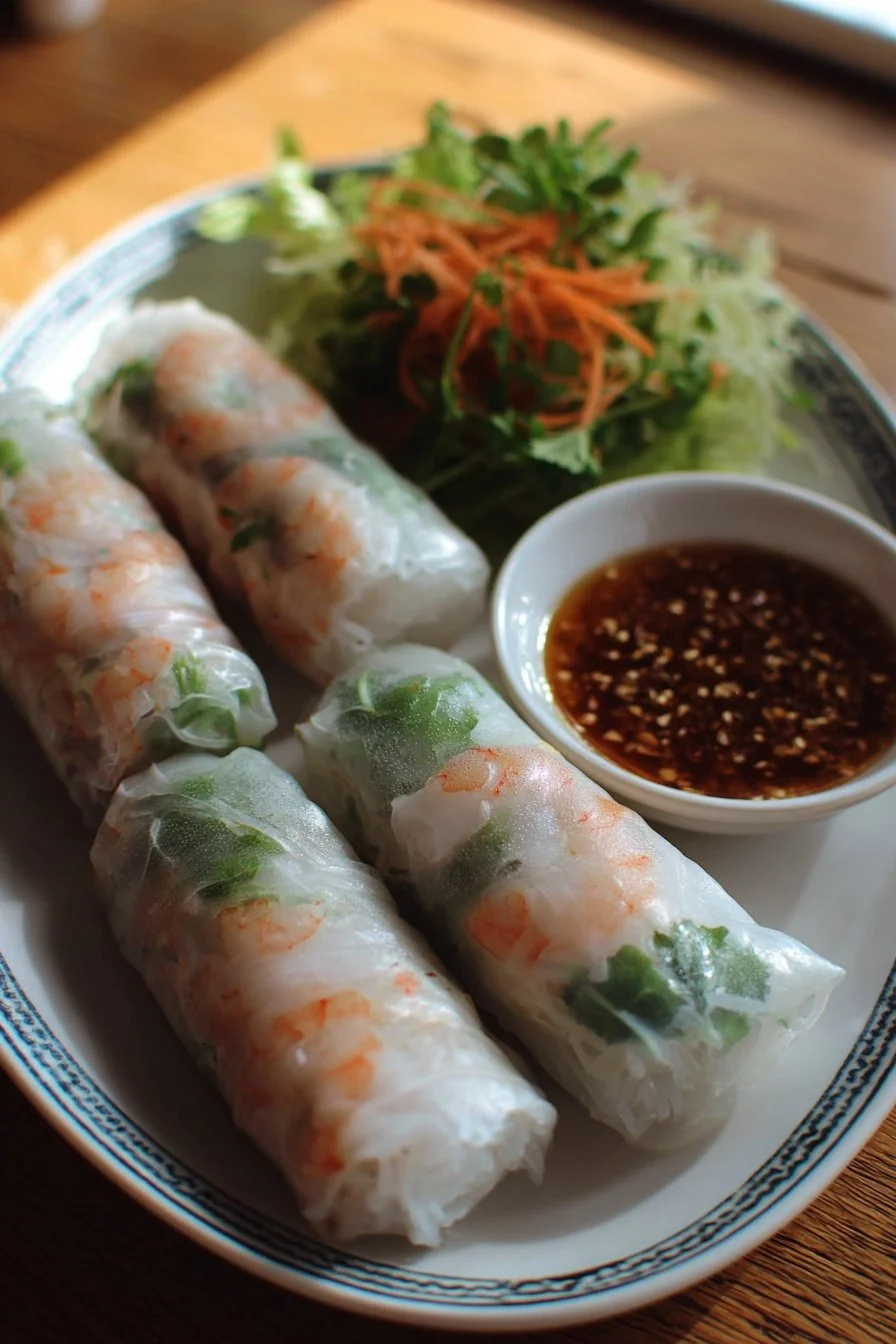
Bright, fresh, and impossibly satisfying, these Vietnamese spring rolls balance silky poached pork belly and tender shrimp with crisp lettuce, cooling cucumber, and a parade of bright herbs. The rice paper gives a delicate chew while banh hoi and vermicelli add a subtle noodle layer—then a rich, savory peanut-hoisin sauce brings everything together. They’re deceptively easy to assemble once the proteins are cooked, and they make an elegant starter, picnic food, or interactive dinner where everyone rolls their own. If you like hands-on, make-ahead finger foods, you might also enjoy a crisped take linked in this recipe for crispy rice paper spring rolls that finishes the wrappers for a different texture.
Why You’ll Love This Vietnamese Spring Rolls
- A beautiful contrast of textures: tender pork, plump shrimp, soft noodles, and crisp veggies.
- Deep umami from the pork and hoisin, bright herbal freshness from cilantro and mint.
- Make-ahead friendly: proteins and sauce can be prepared in advance for quick assembly.
- Interactive and social — set up a rolling station and let guests build their own.
- Versatile: serve as an appetizer, light lunch, or party platter.
- Gluten-flexible: rice paper and rice noodles are naturally gluten-free (watch the hoisin).
- Crowd-pleasing peanut sauce keeps everyone coming back for more.
What Is Vietnamese Spring Rolls?
Vietnamese spring rolls are fresh, not fried, handheld rolls made by wrapping proteins, herbs, vegetables, and thin rice noodles in a softened rice paper wrapper (bánh tráng). Texturally they’re soft and pliant with pops of freshness from herbs and cucumber; flavor-wise they balance savory meat and umami sauce with bright, herbal lift. The proteins here are gently poached—pork belly cooked until tender and shrimp briefly cooked in the same stock—so the rolls are tender and clean-tasting. They’re commonly served at family meals, celebrations, or as a light main for warm-weather dinners. Overall, they feel like elegant comfort food: light, satisfying, and endlessly shareable.
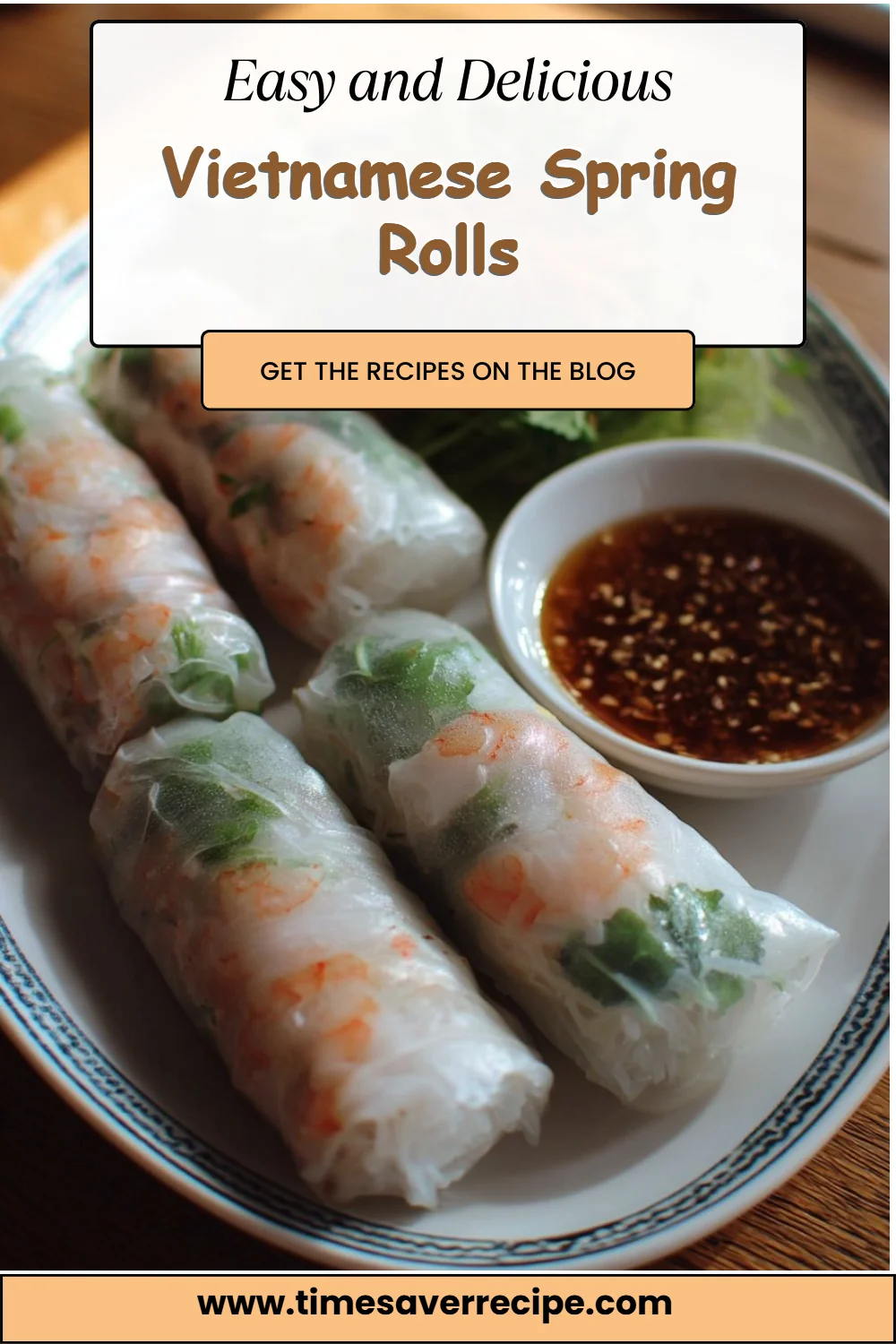
Ingredients for Vietnamese Spring Rolls
For the Base
- 1.5 lb shrimp, 16–20 count, peeled and deveined
- 2 lb pork belly, skin removed or left on
- 1 slice ginger (about 1-inch piece), smashed
For the Wrappers & Noodles
- 18 sheets rice paper (bánh tráng)
- 1 pack banh hoi (18 pieces)
- 1/2 pack vermicelli rice noodles
For the Produce & Herbs
- 1 head lettuce (butter or romaine), leaves washed and dried
- 1 cucumber, julienned
- Fresh cilantro, mint, and chives (small bunches)
For the Peanut Sauce
- 1/3 cup smooth peanut butter
- 3.5 tbsp hoisin sauce
- 1/2 tbsp fish sauce
- 1/4 tbsp rice vinegar
- 1/4 tbsp sesame oil
- 1/2–3/4 cup reserved cooking stock (from poaching the pork and shrimp)
- 1 tbsp crushed peanuts
- Thai pepper slices or chili paste to taste
For Serving
- Additional crushed peanuts and sliced Thai pepper or chili paste
Ingredient Notes (Substitutions, Healthy Swaps)
- Pork belly: If you want a slightly leaner result while keeping the same cooking method, choose a fattier cut sliced thinner (still part of the pork family); note this will change richness. (Do not remove pork if you want the same flavor profile.)
- Shrimp: Use medium-large shrimp (16–20 count) as specified; frozen-thawed is fine.
- Banh hoi & vermicelli: Both are rice-based—if you can’t find banh hoi, increase vermicelli slightly or use more rice paper to preserve texture.
- Peanut butter: Use natural or reduced-fat peanut butter if preferred, but it may change creaminess.
- Hoisin & fish sauce: For a milder sodium profile, use low-sodium hoisin and reduce fish sauce slightly; taste and adjust.
- Gluten note: The core recipe is mostly gluten-free, but hoisin can contain wheat—use a gluten-free hoisin to keep the whole dish GF.
Step-by-Step Instructions
Step 1 – Poach the proteins
- In a large pot, add the pork belly, shrimp, and smashed ginger. Cover with cold water and bring to a gentle simmer.
- Simmer the pork until tender, about 1–1.5 hours. The shrimp will cook much faster—remove them as soon as they turn opaque (2–4 minutes).
- Reserve 1/2–3/4 cup of the cooking liquid (stock) for the peanut sauce and set aside.
Visual cue: The pork should be fork-tender and easy to slice; shrimp should be opaque and springy.
Pro cue: Keep the simmer gentle—aggressive boiling will toughen the proteins and cloud the stock.
Step 2 – Cook vermicelli and separate banh hoi
- Cook the vermicelli rice noodles according to package directions, then rinse under cold water and drain well.
- Carefully separate the banh hoi into layers without tearing. They’re fragile—handle gently.
Visual cue: Noodles should be pliable but not mushy; banh hoi should peel into thin nest-like sheets.
Pro cue: Rinse noodles in cold water to stop cooking and firm their texture for rolling.
Step 3 – Prep produce
- Wash and dry lettuce leaves. Julienne the cucumber and trim cilantro, mint, and chives.
- Arrange everything buffet-style so assembly is quick and neat.
Visual cue: A clean, colorful assembly station prevents wet ingredients from making rice paper sticky.
Pro cue: Pat lettuce leaves completely dry—water droplets make rice paper soggy during rolling.
Step 4 – Make the peanut sauce
- In a bowl, whisk together peanut butter, hoisin, fish sauce, rice vinegar, and sesame oil.
- Gradually add 1/2–3/4 cup reserved cooking stock until the sauce is smooth and pourable.
- Stir in crushed peanuts and add Thai pepper slices or chili paste to taste.
Visual cue: Sauce should be glossy and pourable, thick enough to coat rolls but not congealed.
Pro cue: Add stock slowly—stop when you reach the desired consistency. Warm stock helps the peanut butter loosen easily.
Step 5 – Soften rice paper & assemble rolls
- Dip a rice paper sheet in warm water for 5–8 seconds until pliable, then lay flat on a damp board.
- On the lower third, layer lettuce, a small amount of vermicelli, a piece of banh hoi, a few herb sprigs, cucumber, a slice of pork belly, and a shrimp (or two) as preferred.
- Fold the sides in, then roll tightly from the bottom to form a compact cylinder.
Visual cue: Rolls should be neat, with ingredients visible through the rice paper and no air pockets.
Pro cue: Work quickly—rice paper firms as it cools. Keep unused wrappers covered with a damp towel.
Step 6 – Serve
- Plate the rolls with the peanut sauce on the side. Sprinkle crushed peanuts over the sauce and offer chili on the side.
- Serve immediately for best texture.
Visual cue: Rolls should glisten lightly; sauce should pool attractively beside them.
Pro cue: Have extra herbs and cucumber on the table for guests to add inside or garnish.
Pro Tips for Success
- Timing: Poach the pork belly well in advance and slice thinly—cold pork slices are easier to handle when assembling.
- Gentle simmer: Maintain a low simmer for the pork to keep the cooking liquid clear and flavors clean.
- Wrapper prep: Use warm (not hot) water to soften rice paper; over-soaking makes tearing likely.
- Prevent sogginess: Dry all veggies thoroughly and assemble rolls just before serving when possible.
- Sauce consistency: If the peanut sauce firms up after standing, whisk in a tablespoon of warm reserved stock to loosen it.
- Presentation: Trim ends and serve on a single-layer platter so rolls don’t stick together.
- For a crisper finish: If you want a crisped edge, try a crisping approach after assembling—see my method for crispy oven-baked egg rolls for inspiration on how to get a crunch without deep frying.
Flavor Variations (Optional)
- Spicy: Add extra chili paste to the peanut sauce or include sliced Thai pepper inside the roll for heat.
- Citrusy lift: Add a squeeze of lime to the peanut sauce for brightness.
- Extra crunch: Add thinly sliced jicama or bell pepper for a satisfying snap.
- Herb-forward: Increase mint and cilantro if you prefer a greener, more aromatic roll.
- Less rich sauce (lighter): Reduce peanut butter by a tablespoon and increase stock for a lighter dip.
- Smoky pork: After poaching, sear sliced pork briefly in a hot pan for a mild caramelized finish (optional, keeps base ingredients intact).
Serving Suggestions
- Pair with: Light jasmine rice or a small bowl of clear broth for a fuller meal.
- Occasions: Perfect for summer dinners, potlucks, baby showers, or casual dinner parties.
- Plating idea: Slice rolls in half on a diagonal to show the colorful cross-section and arrange around a central bowl of sauce.
- Side salads: Serve with a quick cucumber-lime salad for extra refreshment.
- Drinks: Pairs well with iced green tea or a bright citrus mocktail.
- Party tip: Set up a DIY rolling station with small bowls of herbs and sliced veg so guests can customize.
Make-Ahead, Storage & Reheating
- Make-ahead components: The pork belly, shrimp (cooled), vermicelli, banh hoi, and sauce can all be prepared 1–2 days ahead. Store each component separately in airtight containers.
- Assembling ahead: Fully assembled rolls are best eaten the same day; kept more than a few hours they tend to soften and become gummy.
- Refrigeration: Store unassembled components in the fridge up to 2 days. Keep cooked proteins wrapped tightly to prevent drying.
- Reheating: Gently warm sliced pork in a microwave for 15–30 seconds or in a skillet until just warm. Reheat shrimp very briefly if needed—avoid overcooking.
Storage and Freezing Instructions
- Freezing assembled rolls: Not recommended—the rice paper and fresh herbs will lose texture and become soggy when thawed.
- Freezing components: Cooked pork belly (sliced) freezes well for up to 2 months in a freezer-safe bag; thaw in the refrigerator overnight before use. Sauce can be frozen but may separate—rehydrate with a little warm stock and whisk.
- Alternative: If you need long-term storage, freeze the pork and thaw the rest fresh for the best texture.
Nutrition Facts (Per Serving)
Assumes recipe yields 18 rolls and a serving equals 3 rolls (6 servings total). Values are estimates.
| Calories | Protein | Carbs | Fat | Fiber | Sodium |
|———|——–|——|—–|——|——-|
| 1,030 kcal | 53 g | 67 g | 90 g | 3 g | 1,200 mg |
Nutrition values are estimates and may vary depending on ingredients and portion sizes.
FAQ About Vietnamese Spring Rolls
Q: My rice paper tears when I soak it—what did I do wrong?
A: You likely soaked it too long or used water that was too hot. Dip for 5–8 seconds in warm (not boiling) water and lay flat immediately.
Q: How can I stop the rolls from getting soggy?
A: Dry all produce thoroughly, avoid over-soaking the wrappers, and assemble just before serving. Store components separately if you need to make them ahead.
Q: Can I substitute the pork belly with another protein?
A: Optional swaps are possible, but to keep the recipe’s identity, maintain a similarly cooked protein. If you change the pork, expect changes in richness and texture.
Q: How do I know when the pork belly is done?
A: The pork is done when it’s fork-tender and easily pierced—about 1–1.5 hours at a gentle simmer.
Q: Can I make the peanut sauce thicker or thinner?
A: Yes—add more peanut butter for thickness or more reserved stock for a thinner, more pourable sauce.
Q: Can assembled rolls be refrigerated overnight?
A: They can, but expect the wrappers to soften and textures to change. For best results, keep components separate and assemble within 24 hours.
Notes
- Slice the pork thinly across the grain for the best bite and presentation.
- A little extra hoisin drizzled in the roll can amplify the savory notes if you prefer.
- Garnish the plated sauce with crushed peanuts and a few herb leaves for a restaurant-style finish.
- If you want more color, add thin carrot ribbons or purple cabbage—keep them very thin to avoid overpowering the roll.
- Always taste the peanut sauce before serving and adjust fish sauce, vinegar, or chili to personal preference.
Vietnamese Spring Rolls
- Total Time: 120 minutes
- Yield: 18 rolls (6 servings)
- Diet: Gluten-Free
Description
Bright, fresh Vietnamese spring rolls filled with poached pork belly, shrimp, and a variety of herbs and vegetables, served with a savory peanut-hoisin sauce.
Ingredients
- 1.5 lb shrimp, 16–20 count, peeled and deveined
- 2 lb pork belly, skin removed
- 1 slice ginger (about 1-inch piece), smashed
- 18 sheets rice paper (bánh tráng)
- 1 pack banh hoi (18 pieces)
- 1/2 pack vermicelli rice noodles
- 1 head lettuce (butter or romaine), leaves washed and dried
- 1 cucumber, julienned
- Fresh cilantro, mint, and chives (small bunches)
- 1/3 cup smooth peanut butter
- 3.5 tbsp hoisin sauce
- 1/2 tbsp fish sauce
- 1/4 tbsp rice vinegar
- 1/4 tbsp sesame oil
- 1/2–3/4 cup reserved cooking stock (from poaching)
- 1 tbsp crushed peanuts
- Thai pepper slices or chili paste to taste
- Additional crushed peanuts and sliced Thai pepper or chili paste for serving
Instructions
- Poach the proteins: In a large pot, add pork belly, shrimp, and smashed ginger. Cover with cold water and simmer. Pork takes about 1–1.5 hours; shrimp should be removed after 2–4 minutes once opaque.
- Cook vermicelli and separate banh hoi: Cook vermicelli according to package directions and rinse. Carefully separate banh hoi into layers.
- Prep produce: Wash and dry lettuce leaves, julienne cucumber, and trim herbs. Arrange buffet-style.
- Make the peanut sauce: Whisk peanut butter, hoisin, fish sauce, rice vinegar, and sesame oil together, adding reserved stock gradually until smooth.
- Soften rice paper & assemble rolls: Dip rice paper in warm water for 5–8 seconds, lay flat, and layer with ingredients. Fold sides and roll tightly.
- Serve: Plate rolls with peanut sauce on the side, topped with crushed peanuts and chilies.
Notes
Poach pork belly ahead for easier assembly. Keep rice paper moist while assembling.
- Prep Time: 30 minutes
- Cook Time: 90 minutes
- Category: Appetizer
- Method: Poaching
- Cuisine: Vietnamese