
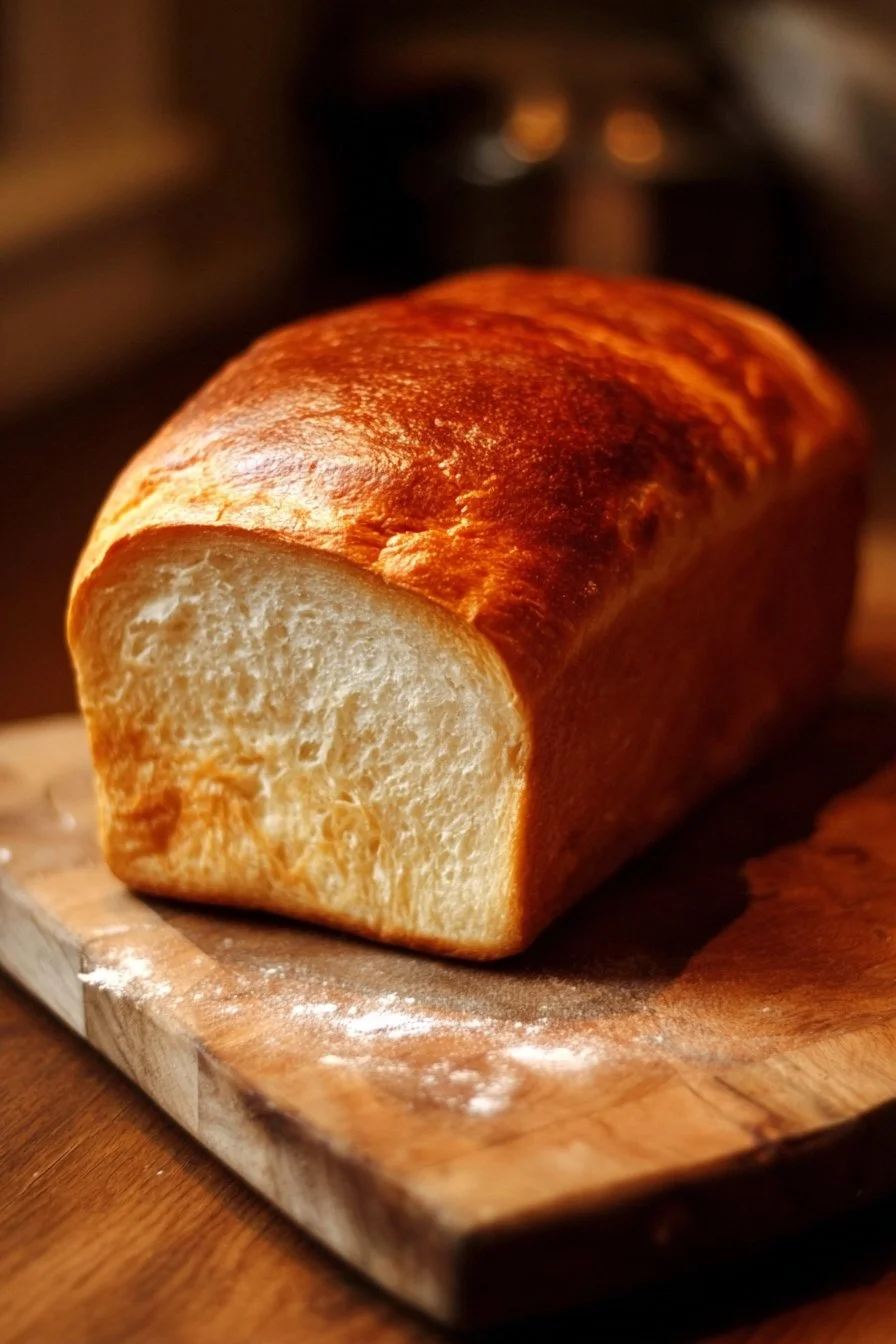
Warm, pillowy sandwich bread doesn’t have to mean a long grocery run or expensive ingredients. This thrifty homemade sandwich bread uses pantry staples — flour, yeast, a little sugar and oil — and delivers a tender loaf perfect for toast, sandwiches, and peanut-butter-and-jelly nostalgia. If you’re juggling busy weeknights but still want fresh bread, this recipe pairs well with faster methods like a 20-minute homemade bread when time is tight, but here you’ll get the full, classic loaf experience.
Why you’ll love this dish
This loaf is comfort food at its most practical: budget-friendly, forgiving for beginners, and versatile enough for breakfasts, packed lunches, or a simple dinner side. It produces an even crumb that slices neatly — ideal for sandwiches or thick-cut toast.
“Soft, simple, and reliably good — we make this every week for school lunches.” — home cook review
Perfect occasions: weekday meal prep, family sandwiches, or when you want homemade bread without specialty flour or equipment. The modest ingredient list also makes it great for first-time bread bakers.
Preparing Thrifty Homemade Sandwich Bread
Before you start: this dough is straightforward. You proof yeast in warm water with sugar, add oil and salt, then work in flour until a soft, slightly tacky dough forms. After a first rise to double, you shape, proof again in a greased 9×5-inch pan, then bake until golden and the center hits about 190°F (88°C). Expect about 2½ to 3 hours from start to finish, most of which is inactive rising time.
What you’ll be doing, stepwise:
- Activate yeast in warm sugar water (about 10 minutes).
- Mix in oil, salt and flour to form a dough.
- Knead until smooth and elastic (3–10 minutes depending on method).
- First rise until doubled (≈1½ hours).
- Shape, pan, second rise (≈1 hour).
- Bake 25 minutes at 350°F (175°C), cool before slicing.
What you’ll need
- 1 cup hot water (about 105–115°F / 40–46°C) — warm to the touch, not scalding
- 2 tablespoons sugar — feeds the yeast and browns the crust
- 2–3/4 teaspoons active dry yeast — a little extra gives a reliable rise
- 3 cups all-purpose flour or bread flour — bread flour gives a chewier crumb
- 1/4 cup vegetable oil (or melted butter for richer flavor)
- 1 1/2 teaspoons salt
Notes/substitutions:
- For a dairy-free loaf, use vegetable oil and water only.
- Swap half the white flour for whole wheat for nuttiness (expect slightly denser bread; add 1–2 tbsp extra water).
- Instant yeast can be used in the same amount; add it directly to the flour and reduce proofing time slightly.
Step-by-step instructions
- Warm the water until it feels hot but comfortable against your wrist (105–115°F / 40–46°C). Stir in the sugar until dissolved.
- Sprinkle the active dry yeast evenly over the surface. Let sit 8–12 minutes until foamy and fragrant — this shows the yeast is alive.
- Pour the foamy yeast mixture into the bowl of a stand mixer. Add the oil (or melted butter) and salt.
- With the mixer on low, add the flour gradually, about 1 cup at a time, until a shaggy dough forms. If mixing by hand, combine in a large bowl with a wooden spoon.
- Knead on low in the mixer for 3–4 minutes with the dough hook, or knead by hand on a lightly floured surface for 8–10 minutes, until the dough is smooth, slightly tacky, and elastic. A good windowpane test (stretch a piece thin enough to see light without tearing) indicates adequate gluten development.
- Lightly oil a bowl, place the dough inside, turn to coat, and cover with a clean towel. Let rise in a warm, draft-free spot until doubled in size, about 1½ hours. Ideal ambient temperature is around 75°F (24°C).
- Gently punch the dough down to release excess air. Shape into an oval and place seam-side down in a greased 9×5-inch loaf pan. Cover loosely with plastic wrap and proof until the dough has nearly doubled and rises about 1 inch above the pan rim, about 1 hour.
- Preheat your oven to 350°F (175°C) while the dough finishes proofing. Bake the loaf for about 25 minutes, until the crust is golden-brown and the internal temperature reaches 190°F (88°C). If the top browns too quickly, tent loosely with foil for the final 5–10 minutes.
- Remove the bread from the pan and cool on a rack for 20–30 minutes before slicing to allow the crumb to set. Slicing too soon makes the bread gummy.
How to serve Thrifty Homemade Sandwich Bread
This bread shines sliced thick for avocado toast, thin for deli sandwiches, or cubed and toasted for croutons. For an open-faced breakfast, spread with butter and honey; for lunches, it makes sturdy grilled cheese or perfectly even PB&J.
If you prefer a crisper, artisan-style crust, consult a guide on achieving a crunchier loaf like this crusty homemade artisan bread to learn techniques (steam, higher bake temperature, and different shaping) that can be adapted to this recipe.
Storage and reheating tips
- At room temperature: wrap fully cooled bread in plastic wrap or place in a bread box — it will stay fresh 2–3 days.
- Refrigeration is not recommended for daily storage; it accelerates staling. Only refrigerate if your kitchen is very humid and mold risk is high.
- Freezing: slice the cooled loaf and freeze in airtight freezer bags for up to 3 months. Thaw slices at room temperature or toast directly from frozen.
- Reheating: refresh slices in a 350°F oven for 5–8 minutes or toast. For whole loaves, wrap in foil and warm at 300°F for 10–15 minutes.
Pro chef tips
- Temperature matters: yeast loves warmth but not heat. 105–115°F (40–46°C) activates yeast best; hotter water can kill it.
- Measure flour by spooning into your cup and leveling with a knife, or weigh if possible (3 cups all-purpose ≈ 360–375g depending on how you spoon).
- A tacky dough yields the best crumb; don’t over-flour when kneading. Use a bench scraper to handle sticky dough.
- Use the oven thermometer technique: if your oven runs hot or cold, adjust bake times/temperatures. The internal temp of 190°F is the surest doneness test.
- For extra shine and softness, brush the warm loaf with melted butter immediately after baking.
Creative twists
- Seeded top: brush the shaped loaf with an egg wash and sprinkle sesame, poppy, or sunflower seeds before baking.
- Herb loaf: fold 1–2 tablespoons chopped fresh herbs (rosemary, thyme) into the dough for an aromatic sandwich bread.
- Slightly sweet milk bread: replace half the water with warm milk and increase sugar to 3 tablespoons for a richer, brioche-like crumb.
- Whole grain swap: replace up to 1 cup of the flour with whole wheat and increase water by 1–2 tablespoons to maintain hydration.
Common questions
Q: How long does this take from start to finish?
A: Active hands-on time is about 20–30 minutes. With two rises included, total time is roughly 2½–3 hours.
Q: Can I use instant yeast instead of active dry?
A: Yes. Use the same amount; mix instant yeast directly with the flour and skip the initial foam-proofing step if you prefer. You may still proof briefly to check activity.
Q: My loaf sank after baking — why?
A: Common causes: over-proofing (dough rose too long), too weak a structure (not enough kneading), or oven temperature too low. Next time reduce proofing time slightly and ensure you develop a smooth, elastic dough.
Q: Is it safe to use warm tap water?
A: Yes if the temperature is in the 105–115°F range. If unsure, use a thermometer. Water hotter than 120°F can kill yeast; cooler water slows the rise.
Q: Can I double the recipe?
A: Yes, double all ingredients and use a larger bowl or divide into two pans. Rising times may be slightly longer for larger dough masses.
If you want recipe ideas for quick loaves or crusty artisan styles, those linked guides above are good next steps to expand your homemade bread repertoire.
Print
Thrifty Homemade Sandwich Bread
- Total Time: 165 minutes
- Yield: 1 loaf
- Diet: Vegetarian
Description
A budget-friendly, homemade sandwich bread that is soft, simple, and versatile for any meal.
Ingredients
- 1 cup hot water (about 105–115°F / 40–46°C)
- 2 tablespoons sugar
- 2–3/4 teaspoons active dry yeast
- 3 cups all-purpose flour or bread flour
- 1/4 cup vegetable oil or melted butter
- 1 1/2 teaspoons salt
Instructions
- Warm the water until it feels hot but comfortable against your wrist (105–115°F / 40–46°C). Stir in the sugar until dissolved.
- Sprinkle the active dry yeast evenly over the surface. Let sit 8–12 minutes until foamy and fragrant.
- Pour the foamy yeast mixture into the bowl of a stand mixer. Add the oil and salt.
- With the mixer on low, add the flour gradually, about 1 cup at a time, until a shaggy dough forms.
- Knead on low in the mixer for 3–4 minutes or by hand for 8–10 minutes, until the dough is smooth, slightly tacky, and elastic.
- Lightly oil a bowl, place the dough inside, turn to coat, and cover with a clean towel. Let rise in a warm spot until doubled in size, about 1½ hours.
- Punch down the dough to release excess air. Shape into an oval and place seam-side down in a greased loaf pan.
- Cover loosely and proof until the dough nearly doubles, about 1 hour.
- Preheat your oven to 350°F (175°C) while the dough finishes proofing.
- Bake the loaf for about 25 minutes, until golden-brown and reaching an internal temperature of 190°F (88°C).
- Remove the bread from the pan and cool on a rack for 20–30 minutes before slicing.
Notes
For a dairy-free loaf, use vegetable oil and water only. You can substitute half the white flour for whole wheat for added nuttiness.
- Prep Time: 30 minutes
- Cook Time: 25 minutes
- Category: Bread
- Method: Baking
- Cuisine: American