
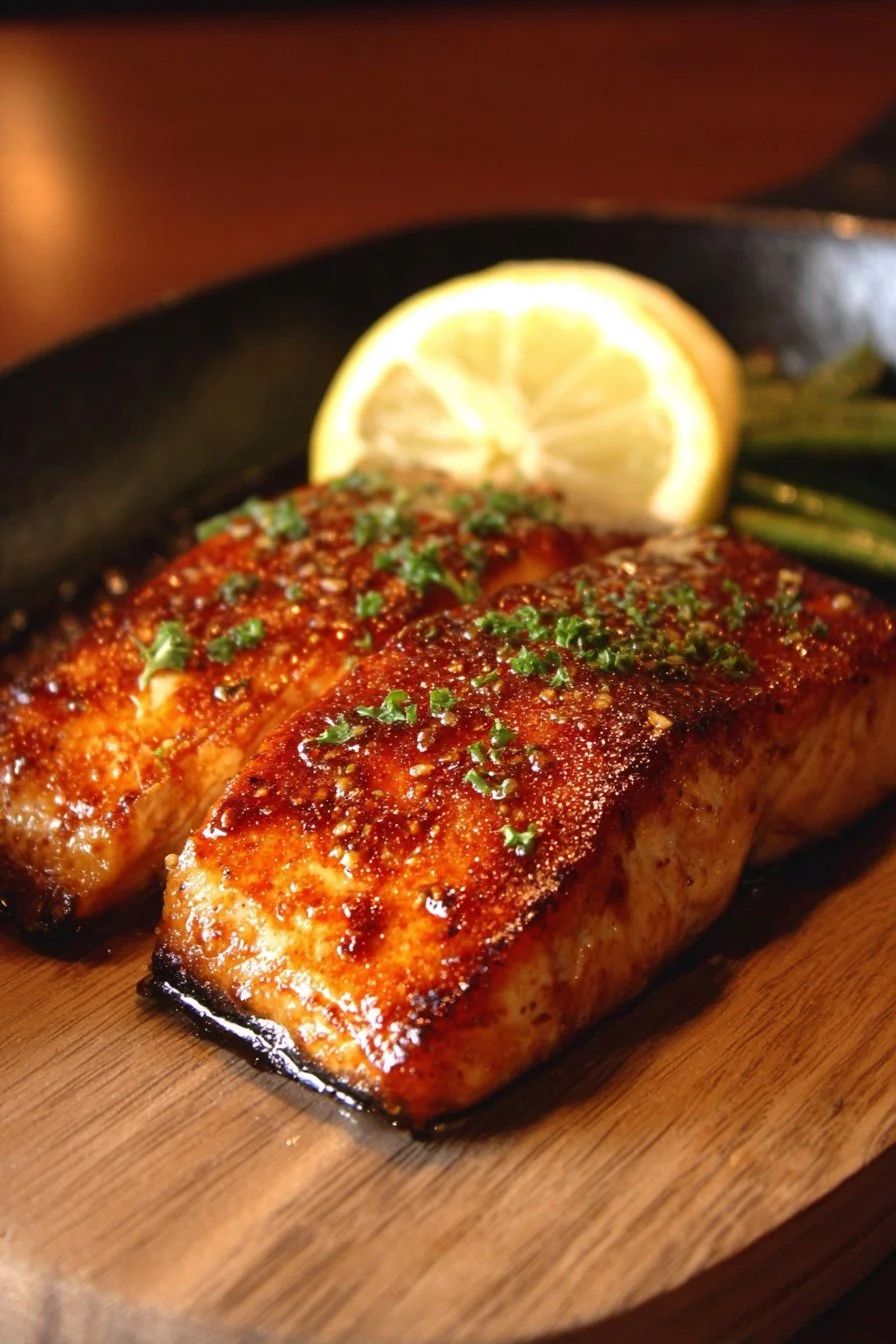
This Texas Roadhouse–style salmon delivers sticky-sweet caramelized glaze, a buttery finish, and a tender, flaky texture that feels both comforting and a little indulgent. The brown sugar and honey create a glossy crust while soy sauce and garlic powder bring depth — the kind of combination that makes weeknight salmon feel special without fuss. It’s easy to pull together in about 25 minutes from start to finish, and it pairs beautifully with simple sides like roasted potatoes or steamed greens. If you’d rather shave off prep time, I sometimes make a quicker version you can follow in just 30 minutes: a 30-minute Texas Roadhouse-style salmon that keeps the same flavor profile.
Why You’ll Love This Texas Roadhouse-Style Salmon
- Rich, balanced glaze: sweet brown sugar and honey meet savory soy sauce for complex flavor in one brush-on glaze.
- Buttery finish: melted butter gives a luxurious mouthfeel and helps the glaze caramelize.
- Quick and hands-off: oven-baked for consistent results, with a brief broil to finish.
- Weeknight-friendly: minimal ingredients and straightforward steps; great for busy evenings.
- Crowd-pleasing: familiar sweet-savory flavors appeal to picky eaters and dinner guests alike.
- Versatile serving options: pairs well with rice, potatoes, salads, or simple steamed vegetables.
- Controlled portioning: 6 oz fillets are a satisfying individual portion without overdoing it.
- Easy to customize: small swaps (tamari, maple syrup, lower sugar) let you tweak for diet preferences.
What Is Texas Roadhouse-Style Salmon?
Texas Roadhouse-style salmon is a home-friendly take on the popular restaurant dish known for its sweet, glaze-forward crust and juicy interior. The salmon is brushed with a brown sugar-based glaze that includes soy sauce, butter, and honey, then baked until just cooked through and briefly broiled to caramelize the top. Flavor-wise it’s sweet with a savory backbone and a faint garlic note, rounded out by paprika and black pepper for mild warmth and color. People serve it mainly as a dinner entrée — think comfort-food weeknights or casual dinner parties — and its approachable flavors make it a favorite when you want something both satisfying and easy to execute.
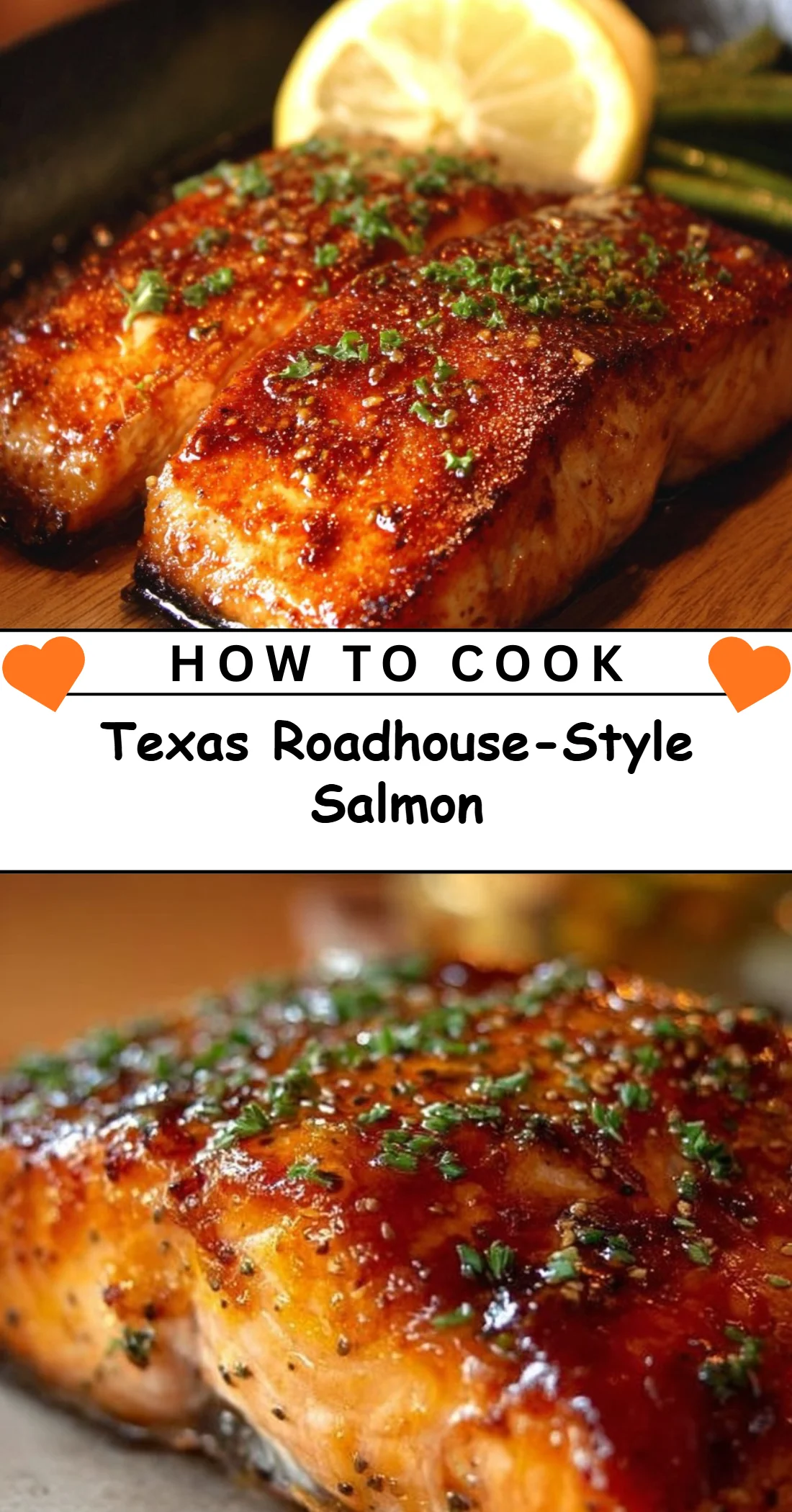
Ingredients for Texas Roadhouse-Style Salmon
For the Salmon
- 4 salmon fillets (about 6 oz each), skin on or skin removed if preferred
For the Glaze
- 1/4 cup brown sugar, packed
- 2 tablespoons soy sauce (low-sodium or tamari)
- 2 tablespoons butter, melted
- 1 tablespoon honey (maple or agave syrup can be used)
- 1 teaspoon garlic powder
- 1/2 teaspoon black pepper
- 1/4 teaspoon paprika
For Serving
- 2 tablespoons fresh parsley, chopped
Ingredient Notes (Substitutions, Healthy Swaps)
- Soy sauce: Use low-sodium soy sauce or tamari (gluten-free) if you need to cut sodium or avoid gluten. Tamari keeps the same savory depth.
- Honey: The recipe already allows maple syrup or agave if you prefer plant-based sweeteners or a different flavor note.
- Butter: Melted butter adds richness; for a dairy-free swap, use melted dairy-free spread or refined coconut oil (small change in flavor).
- Brown sugar: To reduce sweetness, cut the brown sugar to 3 tablespoons or substitute with coconut sugar for a slightly different caramel note.
- Salmon portions: If your fillets are larger or smaller than 6 oz, adjust baking time slightly (see Pro Tips below).
- Seasonings: The recipe relies on garlic powder, black pepper, and paprika; stick to these for the signature taste. You can increase black pepper for more bite.
Step-by-Step Instructions
Step 1 – Prep and preheat
Preheat your oven to 400°F (200°C) and line a baking sheet with parchment paper. Pat the salmon fillets dry with paper towels and arrange them skin-side down on the prepared sheet.
Visual cue: Fillets should look dry on the surface and evenly spaced so heat circulates.
Pro cue: Use room-temperature salmon for more even cooking — remove from the fridge 10–15 minutes before baking.Step 2 – Make the glaze
In a small bowl, whisk together the brown sugar, soy sauce, melted butter, honey, garlic powder, black pepper, and paprika until smooth and combined.
Visual cue: The glaze will be glossy and pourable, not grainy; brown sugar should be dissolved into the liquids.
Pro cue: Warm (not hot) melted butter helps brown sugar dissolve more easily — whisk until uniform.Step 3 – First glaze and initial bake
Brush about half of the glaze evenly over the tops of the salmon fillets. Place the baking sheet in the preheated oven and bake for 8 minutes.
Visual cue: Edges of the salmon will begin to turn opaque and the glaze will darken slightly.
Pro cue: Brushing only half the glaze now prevents burning while allowing layers of flavor to build later.Step 4 – Second glaze and finish baking
Remove the salmon from the oven and brush the remaining glaze over the fillets. Return to the oven and bake for an additional 8–10 minutes, or until the internal temperature reaches 145°F (63°C).
Visual cue: The salmon should flake easily with a fork and the glaze will look sticky and slightly thickened.
Pro cue: If your fillets are thicker than typical 6 oz pieces, err toward the 10-minute end; thinner fillets will be done sooner.Step 5 – Broil briefly for caramelization
Switch the oven to broil and broil for 30–60 seconds to achieve a caramelized top — watch closely so it doesn’t burn.
Visual cue: The glaze will bubble and form darkened, glossy spots; color should be deep golden to lightly charred at edges.
Pro cue: Keep the oven door slightly ajar (if safe) and stand by the oven; broiling times vary dramatically between ovens.Step 6 – Rest, garnish, and serve
Remove from the oven and let the salmon rest 2 minutes. Sprinkle with chopped parsley and serve immediately.
Visual cue: Resting lets juices redistribute and the glaze set into a slightly tacky finish.
Pro cue: Short resting time prevents overcooking while keeping the glaze glossy and the fish moist.
Pro Tips for Success
- Heat control: Bake at a steady 400°F (200°C) for even cooking; broil only at the very end to avoid burning the sugar.
- Thickness matters: For fillets over 1 inch thick, add 2–4 minutes to the second bake; for thin fillets, check at 6–7 minutes.
- Doneness test: Use an instant-read thermometer for accuracy — 145°F (63°C) at the thickest part is USDA-recommended.
- Even glazing: Use a silicone basting brush and apply glaze in thin layers to prevent it from sliding off or pooling.
- Avoid dryness: Don’t skip the brief rest — it helps keep the salmon moist instead of drying out on the plate.
- Watch the broiler: Brown sugar caramelizes quickly; keep the oven door open a crack and broil for no more than 60 seconds.
- Leftover glaze: If you have leftover glaze, don’t reuse it if it has touched raw fish — reserve some for brushing after the initial bake if you want extra sauce.
Flavor Variations (Optional)
- Spicier (optional): Increase black pepper to 1 teaspoon and add a pinch of smoked paprika if you want a smoky heat without changing ingredients.
- Less sweet (optional): Cut brown sugar to 3 tablespoons and keep honey at 1 tablespoon for a milder glaze.
- Richer butter note (optional): Use brown butter (clarified to avoid burning) in place of melted butter for a nuttier finish.
- Tamari or low-sodium (optional): Swap soy sauce for tamari or low-sodium soy sauce as noted in the ingredients for a gluten-free or lower-salt option.
- Plant-based sweetener (optional): Use maple syrup or agave instead of honey (already listed) for a vegan-friendly glaze.
- Skin-on vs skin-off (optional): Leave the skin on for easier handling and crisping under the broiler; remove it beforehand if preferred.
Serving Suggestions
- Classic sides: Serve with buttery mashed potatoes or garlic mashed cauliflower (for lower carbs).
- Vegetables: Pair with roasted green beans, sautéed spinach, or steamed broccoli to keep the plate bright.
- Grains: A bed of steamed jasmine rice or quinoa soaks up the glaze nicely.
- Salad pairing: Serve atop a crisp mixed greens salad for a lighter meal.
- Occasion ideas: This is elegant enough for a casual dinner party and simple enough for a family weeknight.
- Quick air-fryer companion: If you enjoy air-fryer-style salmon, try air fryer bang-bang salmon bites for a crunchy, shareable starter or side.
Make-Ahead, Storage & Reheating
- Make-ahead: Whisk the glaze up to 24 hours ahead and store in the fridge; bring it to room temperature and give a quick stir before using. You can also pat the salmon dry and season it, then keep covered in the fridge for a few hours before baking.
- Refrigerator storage: Store cooked salmon in an airtight container for up to 3 days.
- Reheating: Reheat gently in a 275–300°F (135–150°C) oven for 8–12 minutes until warmed through to avoid drying. Alternatively, reheat in a covered skillet over low heat with a splash of water and a lid to steam gently.
- Microwave caution: Use the microwave only for short bursts (30–45 seconds), covered, and be aware it will soften the glaze and can make the fish slightly denser.
- Texture changes: Reheated salmon will be firmer than freshly baked salmon and the glaze may lose some of its initial gloss; gentle reheating minimizes this.
Storage and Freezing Instructions
- Freezing cooked salmon: Cooked salmon can be frozen, but the texture will be slightly altered (firmer and more crumbly). Wrap tightly in plastic wrap and foil, or use a vacuum sealer, and freeze up to 2 months.
- Freezing raw salmon: If you plan to freeze, freeze raw fillets before glazing for best texture and thaw in the refrigerator before making the glaze and baking.
- Thawing: Thaw overnight in the refrigerator; avoid quick-thawing in warm water to preserve texture.
- If you prefer not to freeze: Prepare the glaze ahead and keep raw fillets refrigerated for up to 1–2 days before cooking for best freshness.
Nutrition Facts (Per Serving)
| Calories | Protein | Carbs | Fat | Fiber | Sodium |
|———|——–|——|—–|——|——-|
| 360 kcal | 34 g | 17 g | 22 g | 0.5 g | 650 mg |
Nutrition values are estimates and may vary depending on ingredients and portion sizes.
FAQ About Texas Roadhouse-Style Salmon
Q: My glaze burned under the broiler — what did I do wrong?
A: The sugar caramelizes quickly; broil only 30–60 seconds and watch constantly. If it’s burning, reduce broil time or broil from a lower rack position.Q: How can I tell when the salmon is perfectly cooked without a thermometer?
A: Check for flakiness at the thickest part — the flesh should be opaque and separate into flakes easily, but still moist.Q: Can I use less brown sugar without ruining the recipe?
A: Yes — reduce brown sugar to 3 tablespoons for a less-sweet glaze; the soy sauce and butter will still provide balance.Q: Is this recipe safe for skin-on fillets?
A: Absolutely. Placing fillets skin-side down helps hold them together and can result in slightly crisper skin after broiling.Q: How long will leftovers keep in the fridge?
A: Store in an airtight container for up to 3 days. Reheat gently to preserve moisture.Q: Can I double the recipe for a crowd?
A: Yes — scale ingredients proportionally and bake fillets in a single layer on multiple pans or in batches for even cooking.
Notes
- Plating idea: Serve the salmon on a smear of mashed potatoes or alongside a bright lemony salad (keep lemon optional) for contrast.
- Small upgrade: Finish with an extra pat of butter or a light drizzle of reserved warmed glaze just before serving for added shine.
- Seasoning adjustment: Taste the glaze before brushing; if it feels too salty, add a touch more honey or brown sugar to balance.
- Presentation tip: Wipe any glaze spill from the plate edges before garnishing with parsley for a clean, restaurant-style look.
- Timing tip: If entertaining, bake salmon just before guests arrive, broil at the table if possible (with care), and serve immediately for best texture.
- Leftover idea: Flake chilled leftover salmon into salads or grain bowls for quick lunches that still carry the glaze’s sweet-savory flavor.
Texas Roadhouse-Style Salmon
- Total Time: 25 minutes
- Yield: 4 servings
- Diet: Gluten-Free
Description
This Texas Roadhouse-style salmon features a sticky-sweet caramelized glaze with a buttery finish and tender, flaky texture.
Ingredients
- 4 salmon fillets (about 6 oz each), skin on or skin removed if preferred
- 1/4 cup brown sugar, packed
- 2 tablespoons soy sauce (low-sodium or tamari)
- 2 tablespoons butter, melted
- 1 tablespoon honey (maple or agave syrup can be used)
- 1 teaspoon garlic powder
- 1/2 teaspoon black pepper
- 1/4 teaspoon paprika
- 2 tablespoons fresh parsley, chopped
Instructions
- Preheat your oven to 400°F (200°C) and line a baking sheet with parchment paper. Pat the salmon fillets dry with paper towels and arrange them skin-side down on the prepared sheet.
- Whisk together the brown sugar, soy sauce, melted butter, honey, garlic powder, black pepper, and paprika until smooth and combined.
- Brush about half of the glaze evenly over the tops of the salmon fillets. Place the baking sheet in the preheated oven and bake for 8 minutes.
- Remove the salmon from the oven and brush the remaining glaze over the fillets. Return to the oven and bake for an additional 8–10 minutes, or until the internal temperature reaches 145°F (63°C).
- Switch the oven to broil and broil for 30–60 seconds to achieve a caramelized top — watch closely so it doesn’t burn.
- Remove from the oven and let the salmon rest for 2 minutes. Sprinkle with chopped parsley and serve immediately.
Notes
For a lower-sodium option, use low-sodium soy sauce or tamari. You can also substitute honey with maple syrup or agave syrup for a plant-based option.
- Prep Time: 15 minutes
- Cook Time: 10 minutes
- Category: Main Course
- Method: Baking
- Cuisine: American