
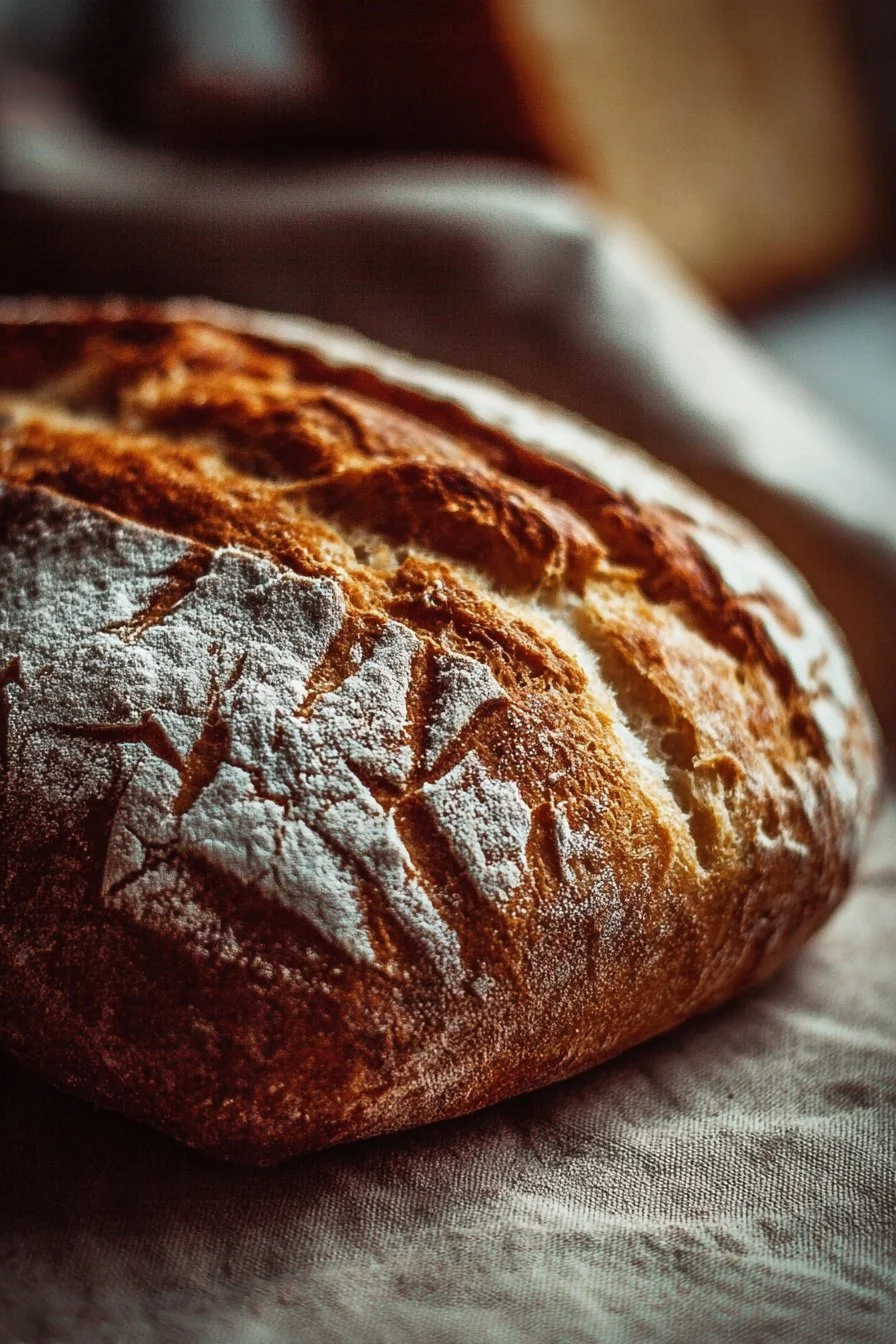
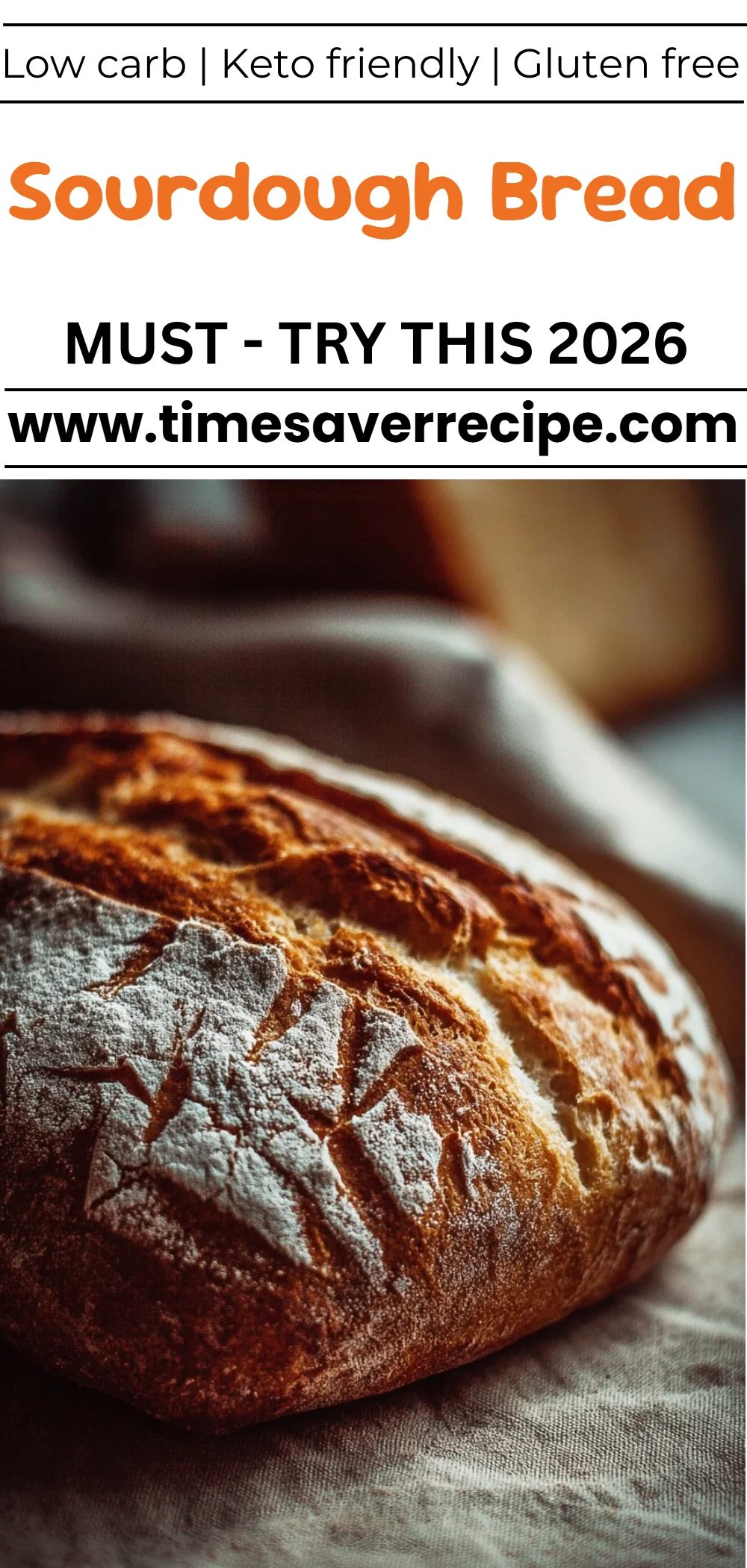
This sourdough loaf is a deeply flavorful, chewy-crusted bread with a tender, open crumb that’s perfect for breakfast toast, grilled cheese, or just tearing apart with a smear of butter. The tang from a fed starter comes through without overpowering, and the long fermentation gives real depth — crisp exterior, soft, slightly sour interior. The method is straightforward: mix, rest, a few gentle stretch-and-folds, a chill overnight in the fridge, then a high-heat bake in a Dutch oven for that show-stopping oven spring. If you want reassurance on technique, the no-fail method is a helpful reference for nervous bakers. Make this loaf once and you’ll see why sourdough feels like a homemade ritual that rewards patience.
Why You’ll Love This Sourdough Bread
- Robust, tangy flavor balanced by a naturally sweet crumb — not too sour, just right.
- A crackly, deeply browned crust and an airy, chewy interior make great sandwiches and toast.
- Hands-on time is minimal: most of the process is resting and fermenting.
- Uses a fed, bubbly starter (no commercial yeast required) for authentic sourdough character.
- Overnight refrigeration fits easily into a busy schedule — bake fresh in the morning.
- Versatile: great for breakfast, soup dipping, brunch, or hearty sandwiches.
- Teaches essential sourdough techniques (autolyse, stretch-and-fold, cold proofing) that build confidence.
What Is Sourdough Bread?
Sourdough bread is a loaf made from a natural, wild-yeast starter instead of commercial yeast. The starter — a mix of flour and water fermented over days — leavens and flavors the dough, producing mild tanginess and complex, toasty notes. This recipe yields a loaf with a dark, blistered crust and an open, tender crumb thanks to long bulk fermentation and a final cold proof in the refrigerator. People typically serve sourdough at breakfast, brunch, or with soups and stews; it’s a weekend-baking favorite and also a comforting weeknight treat when you want fresh bread on the table. The overall vibe is rustic and cozy — approachable slow baking that rewards a little patience.
Ingredients for Sourdough Bread
For the loaf
- 4 cups (500 g) bread flour or all-purpose flour
- 1 2/3 cups (375 g) warm water (about 75–80°F / 24–27°C)
- 1 cup (200 g) active sourdough starter (fed and bubbly)
- 2 teaspoons (10 g) fine salt
Ingredient Notes (Substitutions, Healthy Swaps)
- Flour: Bread flour gives more structure and chew because of higher protein. All-purpose works fine if that’s what you have; the texture will be slightly softer.
- Water temperature: Aim for warm water (75–80°F / 24–27°C) to keep your starter active. If your kitchen is very cool, you can increase water temperature slightly, but don’t exceed 85°F (29°C).
- Starter: Use a well-fed, bubbly starter. If your starter is denser or less active, allow a longer bulk fermentation. Do not substitute commercial yeast if you want true sourdough character.
- Salt: Fine salt disperses more evenly. If using coarse salt, dissolve it first in a small portion of the water.
- Gluten-free option (optional): This recipe relies on wheat gluten for structure; a true gluten-free sourdough would require a different formula and is not a simple swap.
- Lower-sodium tweak (optional): Reduce salt to 1 1/2 teaspoons if you need less sodium, but expect a slightly blander flavor and reduced dough strengthening.
You can explore another take on starter maintenance and timing for different kitchens in this detailed sourdough bread guide.
Step-by-Step Instructions
Step 1 – Mix and autolyse
- In a large bowl, whisk together the flour. Pour in the warm water and stir until a rough dough forms. Cover and rest for 30 minutes.
Visual cue: the dough will be shaggy, tacky, and slightly hydrated but not smooth. This rest hydrates the flour and starts gluten development.
Step 2 – Add starter and salt
2. Add the active sourdough starter and salt to the rested dough. Pinch and fold until fully incorporated. Let the dough rest.
Pro cue: Pinch and fold in short bursts — avoid overworking. The dough should feel cohesive and springy after incorporation.
Step 3 – Stretch-and-folds
3. Perform gentle stretch-and-folds every 30 minutes for 2 hours, covering in between sets.
Visual cue: with each fold the dough will become smoother and stronger; it should hold shape better and feel more elastic.
Pro cue: Use wet hands to prevent sticking and to get a good grip on the dough’s edge for a clean fold.
Step 4 – Bulk fermentation
4. Leave the dough to bulk ferment at room temperature for 6–8 hours until it roughly doubles in volume.
Visual cue: the dough will look puffier, show small bubbles on the surface, and hold an impression if gently pressed.
Pro cue: Timing depends on room temperature — warmer kitchens shorten the window, cooler kitchens lengthen it. Trust visual cues over the clock.
Step 5 – Shape and cold proof
5. Turn the dough onto a floured surface, shape it into a round or oval, and place it seam-side up in a floured proofing basket. Refrigerate for 8–12 hours (overnight).
Visual cue: the shaped dough should feel slightly taut and hold a gentle dome in the basket. The fridge will slow fermentation and improve flavor.
Step 6 – Bake in a Dutch oven
6. Preheat the oven to 450°F (232°C) with your Dutch oven inside. Invert the dough onto parchment, score the top, and place it in the hot Dutch oven. Bake covered for 20 minutes, then uncovered for an additional 25 minutes until deeply browned. Transfer to a wire rack and cool for at least 1 hour before slicing.
Visual cue: the crust should be deeply caramelized, and the loaf should sound hollow when tapped on the bottom.
Pro cue: Preheating the Dutch oven guarantees steam and oven spring. Score confidently with a sharp blade for controlled expansion.
Pro Tips for Success
- Use a digital scale for consistent results — baking by weight is much more reliable than cups.
- Keep your starter active: feed it 4–12 hours before mixing so it’s at peak activity and bubbly.
- Warm kitchen? Shorten bulk fermentation. Cool kitchen? Add more time — dough is forgiving as long as you watch volume and texture.
- Don’t skip the cold proof — it develops flavor and makes scoring easier.
- Score the dough just before baking; shallow, decisive cuts lead to nicer ear formation.
- Use parchment for easier transfer and cleanup. If you prefer, bake on a preheated baking stone with a steam tray instead of a Dutch oven.
- If the interior is gummy after baking, it likely needed more bake time; let the loaf cool fully — slicing too early often causes a gummy texture.
Flavor Variations (OPTIONAL)
- Herb and garlic (optional): Fold in a tablespoon of finely minced garlic and 2 tablespoons chopped fresh herbs after the autolyse. (Adds flavor; optional.)
- Seeded top (optional): Brush the loaf lightly with water before scoring and sprinkle sesame or sunflower seeds on top for texture.
- Olive and rosemary (optional): Gently press chopped olives and rosemary into the dough during shaping for a savory loaf.
- Cheesy twist (optional): Fold in 1/2 to 1 cup grated hard cheese during one of the stretch-and-fold sessions for melty pockets.
- Whole grain boost (optional): Replace up to 20% of the flour with whole wheat for nuttier flavor — expect a slightly denser crumb.
(Variations are optional and do not change the base recipe; they introduce additional ingredients if you choose to use them.)
Serving Suggestions
- Thick slices toasted and topped with butter and flaky sea salt for breakfast.
- Use for classic grilled cheese or open-faced sandwiches at lunch.
- Serve alongside hearty soups (tomato, lentil, or minestrone) for dipping.
- Slice thin for crostini with olive tapenade or ricotta and honey.
- Bring to brunch with jam, butter, and soft-boiled eggs for a crowd.
- Present a rustic bread board with cheeses, cured olives, and fresh fruit for entertaining.
Make-Ahead, Storage & Reheating
- Make-ahead: The shaped dough can be refrigerated 8–12 hours overnight and baked the next morning for fresh bread. You can also prepare the dough up to the end of bulk fermentation and refrigerate earlier; allow it to warm slightly before shaping.
- Refrigerator storage: Once baked, cool completely, then store wrapped in a clean kitchen towel or loose paper bag for up to 3 days. Avoid airtight plastic for long-term storage — trapped moisture softens crust.
- Reheating: Refresh slices in a 375°F (190°C) oven for 5–8 minutes, or toast slices until crisp. A quick spritz of water before reheating restores some crust.
- Texture changes: Crust softens over time; reheating crisps it up again. The crumb will stale gradually but stays flavorful for several days.
Storage and Freezing Instructions
- Freezing: This loaf freezes very well. Slice before freezing and store slices in a freezer-safe bag with as much air removed as possible. Toast or reheat slices straight from frozen — 1–2 minutes in a toaster or 8–10 minutes at 350°F (175°C) in the oven works well.
- If you don’t freeze: If you prefer not to freeze, keep the loaf wrapped and consume within 2–3 days for best texture. Avoid microwaving — it makes bread chewy and rubbery.
Nutrition Facts (Per Serving)
| Calories | Protein | Carbs | Fat | Fiber | Sodium |
|———|——–|——|—–|——|——-|
| 180 kcal | 6 g | 38 g | 1 g | 2 g | 330 mg |
Nutrition values are estimates and may vary depending on ingredients and portion sizes.
FAQ About Sourdough Bread
Q: My dough didn’t rise much during bulk fermentation — what happened?
A: The starter may not have been active enough, the room may have been too cool, or the dough was under-hydrated. Use a bubbly starter and rely on visual cues (doubling, bubbles) rather than strict times.
Q: Why is my crumb dense or gummy?
A: Common causes are underproofing, using too much flour while shaping, or slicing the bread before it cooled fully. Ensure bulk fermentation reached the right volume and cool the loaf completely before cutting.
Q: How do I know when the loaf is fully baked?
A: Look for deep, even browning and a hollow sound when tapping the bottom. Internal temperature should be around 200–205°F (93–96°C) if you use a thermometer.
Q: Can I shorten the cold proof to bake the same day?
A: Yes, but the flavor will be less developed. A shorter bench rest and a warm final proof can work, but the overnight chill yields better flavor and easier scoring.
Q: How do I keep my starter ready for baking?
A: Feed it regularly and use it at peak activity — bubbly and slightly domed. If you bake infrequently, store the starter in the fridge and feed it 1–2 times before use to reactivate.
Q: What’s the best way to re-crisp the crust without drying the crumb?
A: Briefly reheat in a hot oven (375°F / 190°C) for 5–10 minutes. A light spray of water before reheating helps restore crust texture.
Notes
- Plating idea: Slice thick and arrange on a wooden board with small bowls of butter, jam, and a pinch of flaky sea salt for a rustic presentation.
- Small flavor upgrade: Rub a warm slice with a cut clove of garlic before adding olive oil for a simple garlic toast.
- Seasoning adjustment: If reducing salt, taste a piece after baking and add a sprinkle of finishing salt to the slice if needed.
- Presentation tip: A clean, sharp razor or lame creates a defined score and attractive oven spring; practice on smaller pieces of dough if you’re new to scoring.
- Slice care: Use a serrated bread knife and a gentle sawing motion to preserve crumb structure.
- Troubleshooting: If your starter is sluggish, give it a couple of feedings at room temperature before planning to bake to ensure reliable rise.
Enjoy the ritual — sourdough rewards attention, but it’s forgiving. With a little practice, this loaf will be a staple in your kitchen.
Print
Sourdough Bread
- Total Time: 75 minutes
- Yield: 1 loaf
- Diet: Vegetarian
Description
A deeply flavorful, chewy-crusted sourdough loaf with a tender, open crumb that’s perfect for breakfast or sandwiches.
Ingredients
- 4 cups (500 g) bread flour or all-purpose flour
- 1 2/3 cups (375 g) warm water (about 75–80°F / 24–27°C)
- 1 cup (200 g) active sourdough starter (fed and bubbly)
- 2 teaspoons (10 g) fine salt
Instructions
- Mix the flour and warm water in a large bowl until a rough dough forms. Cover and let rest for 30 minutes.
- Add the active sourdough starter and salt to the rested dough. Pinch and fold until fully incorporated, then let it rest.
- Perform gentle stretch-and-folds every 30 minutes for 2 hours, covering in between sets.
- Leave the dough to bulk ferment at room temperature for 6–8 hours until it doubles in volume.
- Turn the dough onto a floured surface, shape it, and place it seam-side up in a floured proofing basket. Refrigerate for 8–12 hours (overnight).
- Preheat the oven to 450°F (232°C) with your Dutch oven inside. Invert the dough onto parchment, score the top, and bake covered for 20 minutes, then uncovered for an additional 25 minutes until deeply browned. Transfer to a wire rack and cool for at least 1 hour before slicing.
Notes
Use a digital scale for consistency. Don’t skip the cold proof; it develops flavor and makes scoring easier.
- Prep Time: 30 minutes
- Cook Time: 45 minutes
- Category: Bread
- Method: Baking
- Cuisine: French