
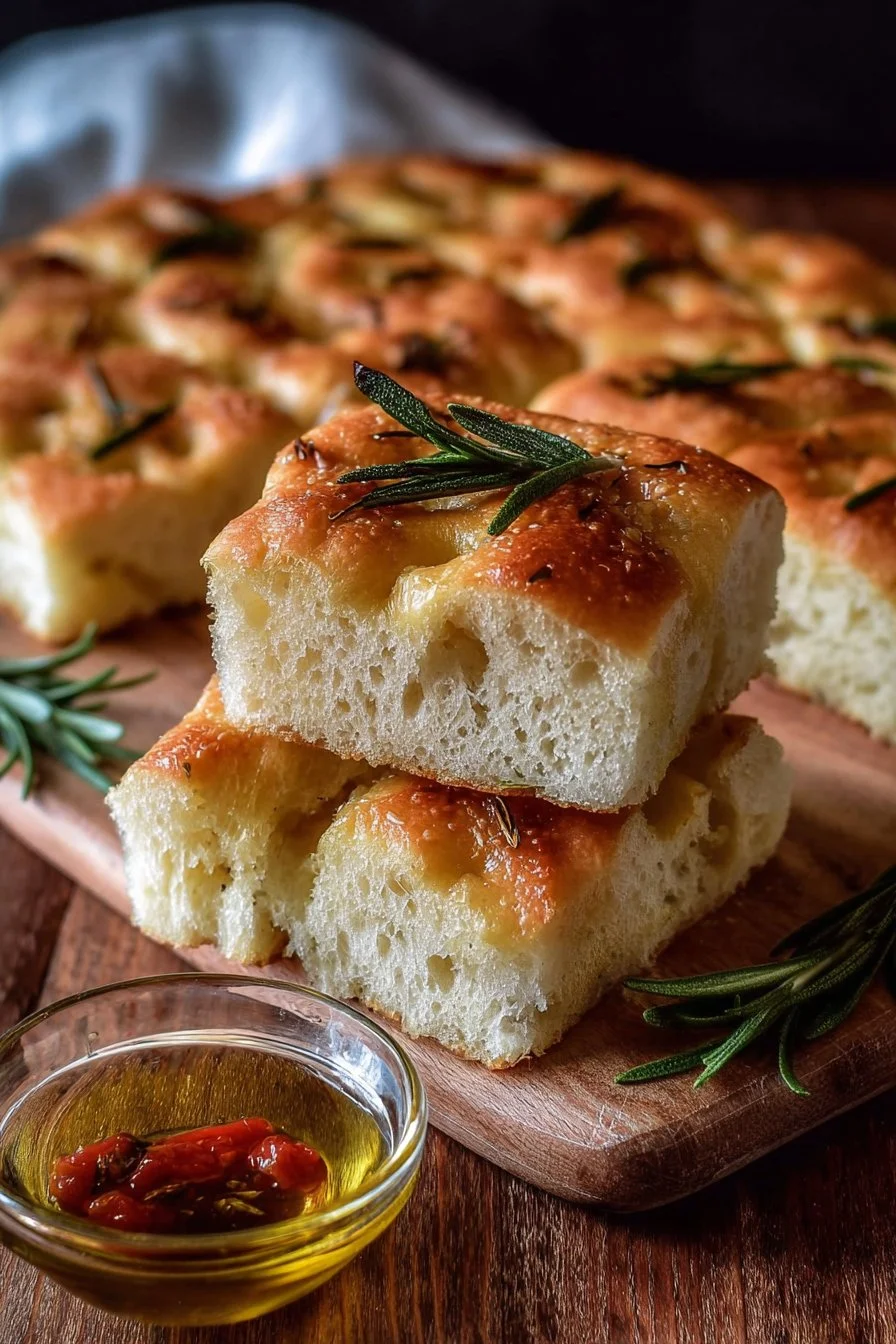
There’s something irresistible about focaccia: a golden, olive-oil–kissed crust giving way to a pillowy, tender interior studded with juicy bursts of cherry tomato and aromatic rosemary. This Mini No-Knead Focaccia is everything you want from bakery-style bread without the fuss—no kneading, minimal hands-on time, and big flavor. It crisps up nicely around the edges, stays soft inside, and finishes with crunchy sea salt flakes that make every bite sing. It’s perfect alongside a soup, as a sandwich base, or simply torn and dipped in extra olive oil. If you like simple, forgiving bread recipes, try this small-format focaccia—if you prefer a larger loaf, consider my take on focaccia bread for more ideas.
Why You’ll Love This Mini No-Knead Focaccia
- Low-effort: No kneading required—just mix, rise, and bake.
- Hands-off flavor development: Long, slow rise concentrates flavor and improves texture.
- Fast option available: Chill overnight or proof quickly in a warm spot when short on time.
- Crisp exterior, tender crumb: Olive oil creates a thin, golden crust while keeping the inside soft.
- Versatile toppings: Cherry tomatoes and rosemary work beautifully, but you can customize.
- Perfect portion: A single mini focaccia is ideal for two people or for one with leftovers.
- Beginner-friendly: Straightforward steps and forgiving dough make it ideal for bakers of any level.
- Great for gatherings: Attractive, rustic presentation that’s easy to scale.
What Is Mini No-Knead Focaccia?
Mini No-Knead Focaccia is a small, single-pan version of the classic Italian flatbread known for its dimpled surface, olive oil richness, and airy crumb. It tastes savory and slightly salty, with bright pops from cherry tomatoes and an herbal lift from fresh rosemary. The cooking method relies on a no-knead dough that ferments slowly (either in the fridge or a warm spot) to develop texture and flavor without hands-on work. Typically served as a side, snack, or part of a casual meal, this focaccia feels like comforting home baking—ideal for weeknight dinners, brunches, or as an impressive garnish for a simple soup. If you enjoy minimal-labor bread, you might also explore variations of no-knead bread for other easy favorites.
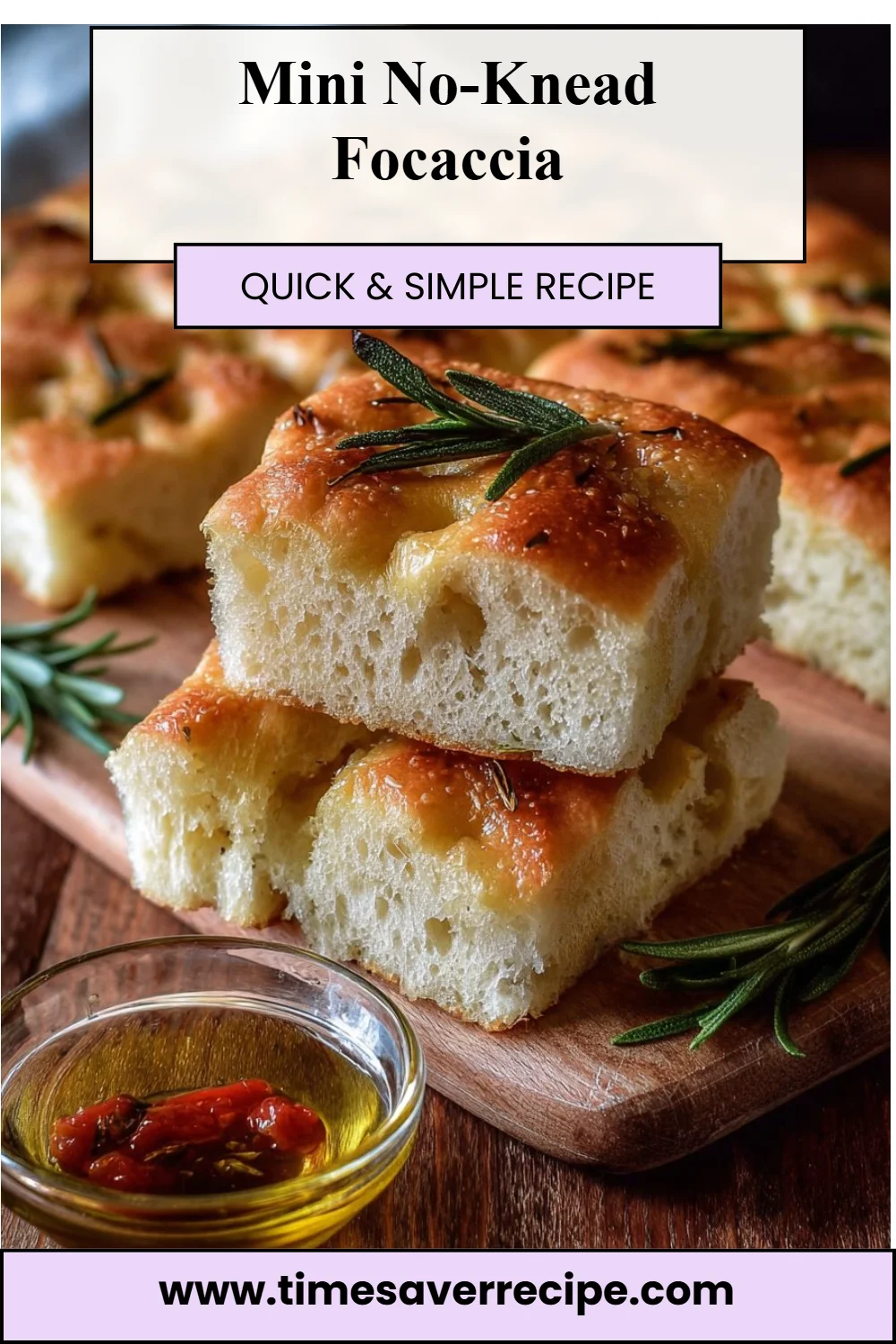
Ingredients for Mini No-Knead Focaccia
For the Dough
- 1/2 cup lukewarm water (about 105–115°F / 40–46°C)
- 1/2 + 1/8 tsp active dry yeast (about 5/8 tsp)
- 1/2 tsp granulated sugar
- 1 cup all-purpose flour
- 1/2 tsp fine salt
- 4 tsp olive oil, divided
For the Topping
- Cherry tomatoes, halved (for topping)
- Fresh rosemary sprigs (for topping)
- Sea salt flakes (for finishing)
Ingredient Notes (Substitutions, Healthy Swaps)
- Yeast: If you only have instant yeast, use the same amount but stir it directly into the flour rather than activating in water. Because this recipe uses the yeast-activation step, active dry yeast gives reliable proofing.
- Flour: All-purpose flour is what creates the classic focaccia crumb. For a whole-grain twist, substitute up to 25% whole wheat flour, but expect a slightly denser crumb.
- Olive oil: Extra-virgin olive oil gives the best flavor. If you need a lighter option, use a neutral oil (like grapeseed) for less pronounced olive notes.
- Tomatoes & rosemary: These are recommended toppings, but you can omit or substitute other herbs and small vegetables as optional additions (see Variations).
- Salt: Be careful measuring sea salt flakes at the end—those are finishing salt and meant for crunch, not extra bulk seasoning.
Step-by-Step Instructions
Step 1 – Activate the Yeast
In a small bowl, stir 1/2 tsp granulated sugar and 1/2 + 1/8 tsp active dry yeast into 1/2 cup lukewarm water (about 105–115°F / 40–46°C). Wait 5–10 minutes until frothy.
Visual cue: The surface should look bubbly and foamy, indicating the yeast is alive.Step 2 – Mix the Dry Ingredients
In a medium bowl, combine 1 cup all-purpose flour and 1/2 tsp fine salt.
Pro cue: Whisking the flour and salt together ensures even distribution and helps the dough hydrate uniformly.Step 3 – Form the Dough
Pour the frothy yeast mixture into the flour and stir until a sticky dough forms. Drizzle 1 tsp olive oil over the dough, then cover.
Visual cue: The dough will be shaggy and slightly tacky—don’t worry about being smooth.Step 4 – First Rise (Choose Your Method)
- For a slow, flavorful rise: Chill the covered dough in the fridge for 18–24 hours.
- For a quick option: Let the dough rise in a warm spot for 1.5–2 hours.
Pro cue: A long cold ferment adds depth of flavor and improves texture; plan ahead when possible.
Step 5 – Prepare the Pan & Second Rise
Preheat a shallow pan (an 8–9 inch round or similar) by coating it with 2 tsp olive oil. Transfer the dough to the pan and spread it gently with oiled fingers to fill the shape. Let rise for 1–2 hours until puffy.
Visual cue: The dough should look visibly puffed and spring back slowly when pressed.Step 6 – Top, Dimple, and Bake
Preheat oven to 482°F. Dimple the dough with your fingertips, press halved cherry tomatoes and rosemary into the surface, and sprinkle with sea salt flakes. Drizzle any remaining olive oil as desired. Reduce oven temperature to 392°F and bake for 20–25 minutes until golden brown. Remove, rest for 5 minutes, then slice and enjoy.
Pro cue: Dimpling traps pockets of oil and creates the signature focaccia texture; don’t skip it.
Pro Tips for Success
- Measure accurately: Use level spoons and cups so the dough isn’t too dry or too wet—this dough should be sticky.
- Temperature matters: Activate yeast in lukewarm water (105–115°F). Too hot will kill yeast; too cool slows activity.
- Oil your hands: Keep a small pool of oil handy to make shaping and dimpling the dough effortless and prevent sticking.
- Don’t skip the dimpling: It’s both aesthetic and functional—dips hold oil and toppings, improving flavor and texture.
- Watch the bake time: Ovens vary; begin checking at 18 minutes so it doesn’t over-brown. Golden color and a hollow sound when tapped indicate doneness.
- Rest briefly before slicing: Letting the focaccia rest 5 minutes helps the crumb set and keeps slices neater.
- Use flaky finishing salt sparingly: It provides contrast and crunch; a little goes a long way.
Flavor Variations (OPTIONAL)
- Tomato-Rosemary Classic (base recipe): Cherry tomatoes and rosemary for a bright, herbal finish.
- Garlic-Infused Oil: Brush the surface with an extra tsp of olive oil mixed with a small amount of mashed raw garlic before baking for a garlicky aroma.
- Olive & Herb: Scatter thinly sliced olives and extra rosemary for a savory, briny twist.
- Spicy Kick: Add a pinch of red pepper flakes over the top before baking for subtle heat.
- Lemon-Rosemary Finish: Zest a little lemon over the baked focaccia for a fresh citrus lift after baking.
(Keep toppings optional and do not change the dough recipe.)
Serving Suggestions
- Tear-and-share: Serve warm with a small dish of extra olive oil and sea salt for dipping.
- Soup companion: Pair with tomato, minestrone, or a hearty vegetable soup.
- Sandwich base: Slice horizontally and use as a rustic sandwich with fresh greens.
- Brunch board: Add to a spread with cheeses, olives, and charcuterie for a relaxed brunch.
- Appetizer: Cut into wedges and top each with a little ricotta and a drizzle of olive oil for a simple starter.
- Picnic bread: Cool, wrap, and bring along for an outdoor meal—focaccia travels well.
Make-Ahead, Storage & Reheating
- Make-ahead: The dough can complete its first ferment in the fridge for 18–24 hours as instructed—this is the best time to prepare it ahead of serving. After shaping into the pan, you can also cover and refrigerate for a short overnight secondary rise, then bake the next day (allow extra time to come to room temperature).
- Refrigerator storage: Store baked focaccia in an airtight container or wrapped in plastic at room temperature for up to 2 days; refrigerating can dry it out faster. If refrigerated, bring to room temperature before reheating.
- Reheating methods:
- Oven: Warm at 350°F for 8–10 minutes until heated through and crisp on the edges.
- Skillet: Reheat individual slices in a lightly oiled skillet over medium heat for 2–3 minutes per side for a refreshed crust.
- Texture changes: Stored focaccia will lose some crispness but can be revived with oven or skillet reheating.
Storage and Freezing Instructions
- Freezing baked focaccia: This bread freezes reasonably well. Cool completely, wrap tightly in plastic wrap and then foil, and freeze for up to 1 month. Thaw in the refrigerator or at room temperature, then reheat in the oven at 350°F for 10–12 minutes to restore crispness.
- Freezing dough: You can freeze the dough after the first rise in a sealed container for up to 1 week. Thaw overnight in the refrigerator, then allow to come to room temperature and finish the shaping and second rise before baking.
- If you prefer not to freeze: Use leftovers within 2 days or transform stale focaccia into breadcrumbs or croutons for another meal.
Nutrition Facts (Per Serving)
| Calories | Protein | Carbs | Fat | Fiber | Sodium |
|———|——–|——|—–|——|——-|
| 615 kcal | 13 g | 95 g | 18 g | 3 g | 1200 mg |
Nutrition values are estimates and may vary depending on ingredients and portion sizes.
FAQ About Mini No-Knead Focaccia
Q: Why didn’t my dough rise?
A: Check the yeast: water that’s too hot kills yeast and too cool won’t activate it. Make sure the water is 105–115°F and that the yeast froths within 5–10 minutes.Q: My focaccia is dense—what went wrong?
A: Likely under-proofing or too much flour. The dough should be sticky; allow the full rise time and avoid adding extra flour while mixing.Q: How do I know it’s done baking?
A: Golden brown color, firm edges, and a hollow sound when tapped on the bottom indicate doneness.Q: Can I use dried rosemary instead of fresh?
A: You can, but use it sparingly—dried herbs are more concentrated. Fresh rosemary offers a brighter, more aromatic flavor.Q: What’s the best way to re-crisp leftover focaccia?
A: Reheat in a 350°F oven for 8–10 minutes or warm slices in a lightly oiled skillet for a crisp exterior.Q: Can I scale this recipe up?
A: Yes, the method scales well—just keep the ingredient ratios and use a larger pan, adjusting baking time as needed.
Notes
- Presentation tip: Press tomatoes and rosemary into the focaccia in a loose pattern for a rustic, artisanal look.
- Small flavor upgrade: Add a light drizzle of olive oil and a few extra rosemary needles right after baking to enhance aroma.
- Seasoning adjustment: Taste for salt only after baking—finishing sea salt flakes provide surface seasoning and visual appeal.
- Serving size: This mini focaccia is excellent shared between two people as a side or served solo as a hearty snack.
- Leftover idea: Turn slices into croutons by cubing, drying, and toasting for salads or soups.

Mini No-Knead Focaccia
- Total Time: 45 minutes
- Yield: 2 servings
- Diet: Vegetarian
Description
A small, golden crusted focaccia with a tender interior, studded with cherry tomatoes and rosemary, perfect for any meal.
Ingredients
- 1/2 cup lukewarm water (about 105–115°F / 40–46°C)
- 1/2 + 1/8 tsp active dry yeast (about 5/8 tsp)
- 1/2 tsp granulated sugar
- 1 cup all-purpose flour
- 1/2 tsp fine salt
- 4 tsp olive oil, divided
- Cherry tomatoes, halved (for topping)
- Fresh rosemary sprigs (for topping)
- Sea salt flakes (for finishing)
Instructions
- Activate the yeast by stirring 1/2 tsp sugar and the yeast into lukewarm water, wait 5–10 minutes until frothy.
- Mix the flour and fine salt in a medium bowl.
- Pour the yeast mixture into the flour and stir to form a sticky dough, then drizzle 1 tsp olive oil over it.
- Rise the dough either overnight in the fridge for 18–24 hours or in a warm spot for 1.5–2 hours.
- Prepare a shallow pan with 2 tsp olive oil, transfer the dough, and let it rise for 1–2 hours until puffy.
- Dimple the dough, press in cherry tomatoes and rosemary, sprinkle with sea salt, drizzle with olive oil, and bake at 392°F for 20–25 minutes until golden brown.
Notes
Serve warm with olive oil for dipping or pair with soups and salads. Flaky finishing salt enhances flavor.
- Prep Time: 15 minutes
- Cook Time: 25 minutes
- Category: Bread
- Method: Baking
- Cuisine: Italian