
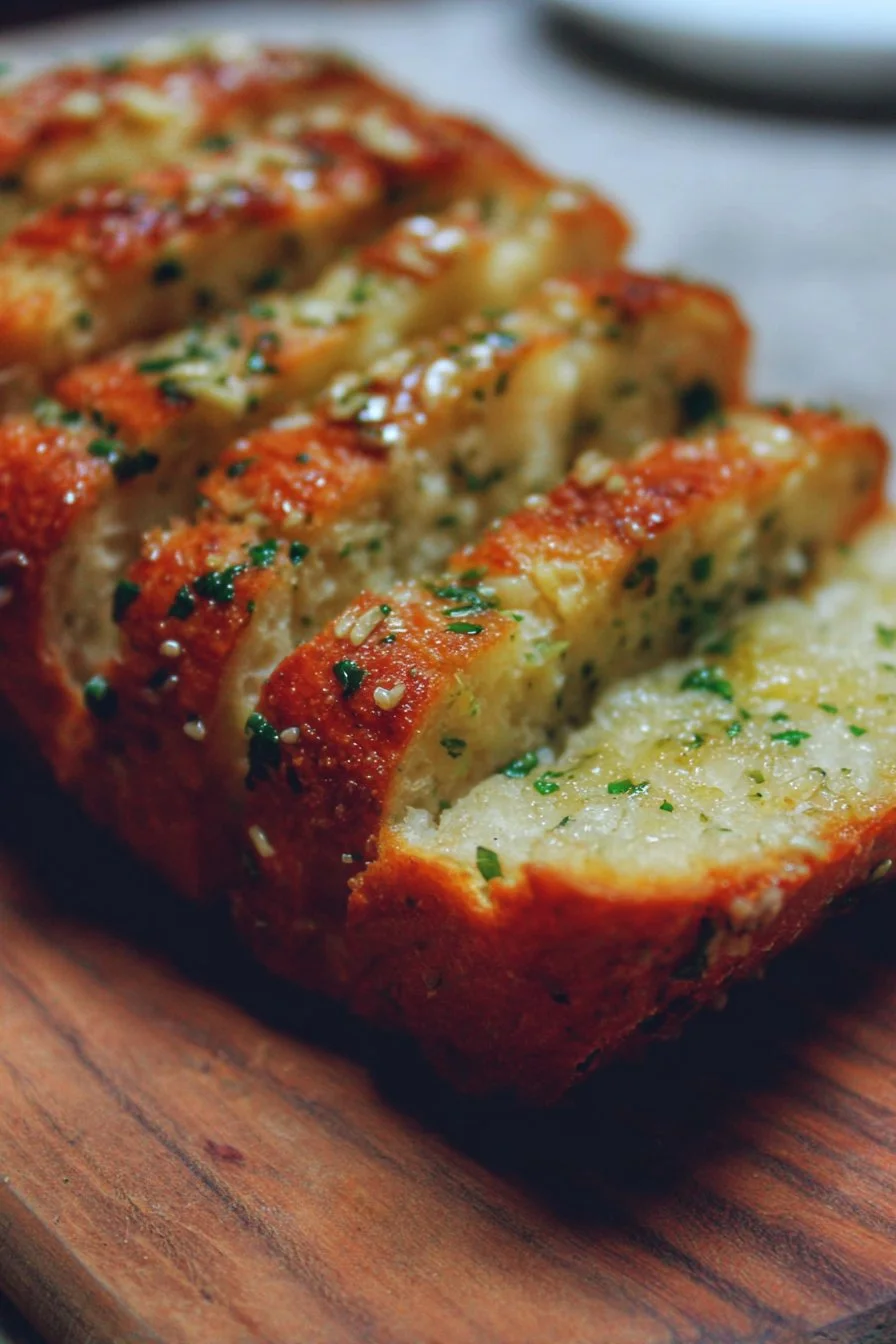
This garlicky loaf delivers a soft, pillowy crumb with a golden, slightly crisp crust and a comforting, buttery garlic aroma that fills the kitchen. It’s a straightforward, old-school yeast bread that tastes like something you’d pick up warm at a drive-through — crusty on the outside, tender and garlicky inside. The texture is tender but sturdy enough for slicing and dunking into sauces or serving alongside a simple bowl of soup. This recipe is approachable for any home baker: no fancy equipment, just basic mixing, a short knead, and a couple of rises. Serve warm with a smear of extra butter or alongside a weeknight pasta; it’s reliably crowd-pleasing. If you enjoy hands-on bread baking, you might also like a similar aromatic loaf like dutch oven garlic rosemary bread for a rustic twist.
Why You’ll Love This Copycat Raising Cane’s Garlic Bread
- Deep garlic flavor delivered simply with garlic powder mixed into the dough for even seasoning.
- Soft, tender crumb thanks to a modest amount of butter and a proper rise.
- Crispy, golden top from an egg wash that gives a bakery-fresh appearance.
- Honest, easy-to-follow steps — no special tools or advanced techniques required.
- Versatile: slice it thick for sandwiches, thin for toasting, or serve with soups and salads.
- Great for crowd feeding — one 9×5 loaf yields several hearty slices.
- Comfort-food appeal that’s nostalgic and satisfying, perfect for weeknights or casual gatherings.
- Makes a lovely base for optional add-ins (see Flavor Variations) while keeping the core recipe intact.
What Is Copycat Raising Cane’s Garlic Bread?
This is a homemade interpretation of the garlic bread sold by a popular fast-casual chain. It’s essentially a soft, yeast-leavened loaf infused with garlic powder and enriched with butter, then brushed with egg for a glossy golden finish. The taste is savory and buttery with a gentle garlic note that complements sandwiches, fried chicken, pasta, or a simple salad. The cooking method is straightforward oven baking in a 9×5-inch loaf pan, resulting in a loaf with a tender interior and a crisp top. People typically serve it warm as a side or snack — think weeknight dinners, potlucks, or as part of a casual gathering. The overall vibe is pure comfort food: unpretentious, filling, and nostalgic.
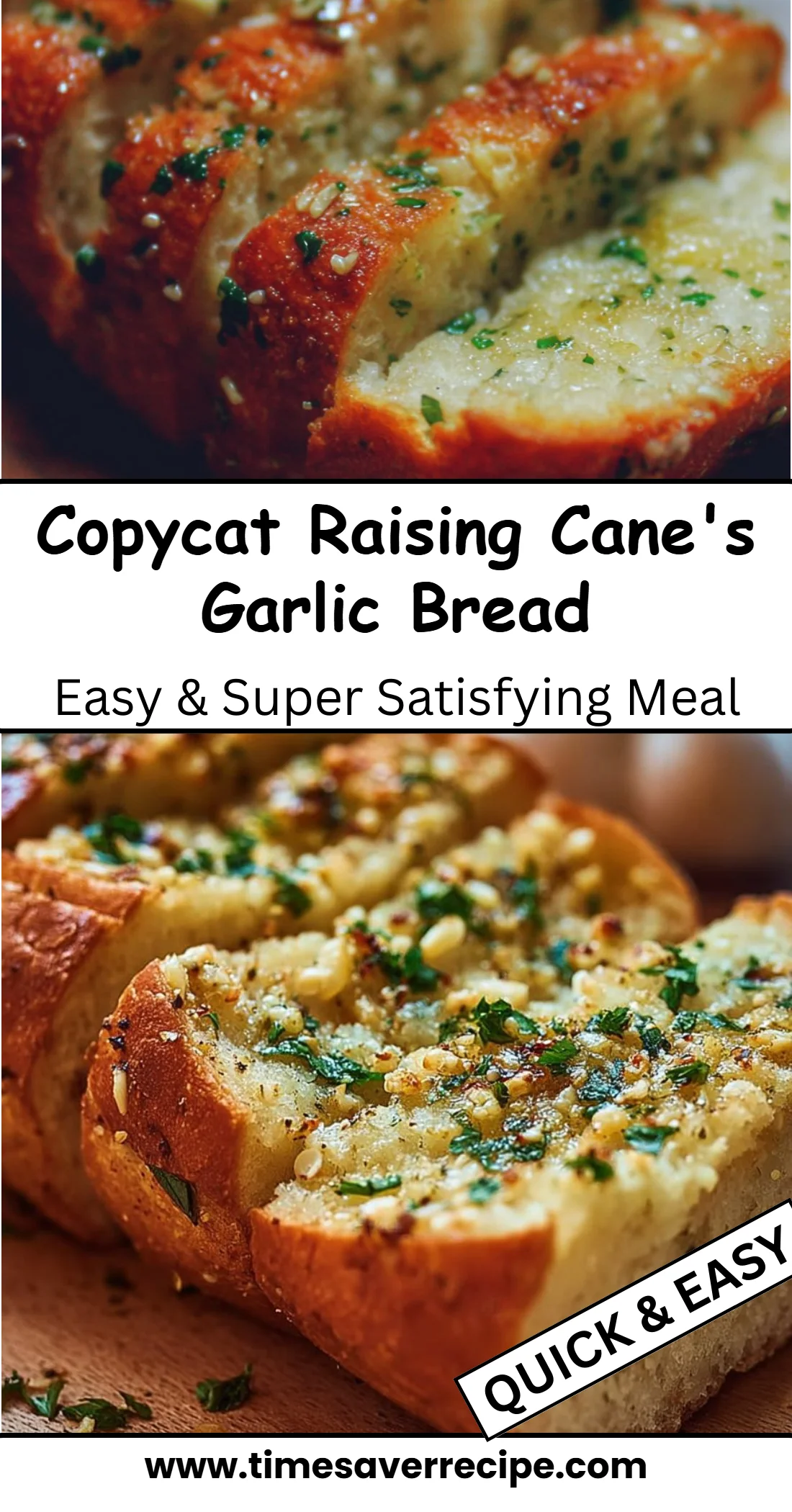
Ingredients for Copycat Raising Cane’s Garlic Bread
For the Dough
- 4 cups all-purpose flour, plus more for dusting
- 1 packet (2 1/4 tsp) active dry yeast
- 1/4 cup granulated sugar
- 1 tsp salt
- 1/2 cup unsalted butter, melted
- 1 cup warm water (about 110°F / 43°C)
- 1/2 tsp garlic powder
- 1 egg, beaten (for egg wash)
Ingredient Notes (Substitutions, Healthy Swaps)
- Dairy alternatives: Swap melted unsalted butter for a dairy-free spread that melts well (use the same volume) if you need a dairy-free option. Texture will be similar but flavor slightly different.
- Lower-fat swap: Reduce butter to 1/3 cup and brush the top lightly with the beaten egg as written to maintain a golden crust; loaf will be a touch less rich.
- Gluten-free option: Use a high-quality 1:1 gluten-free flour blend formulated for yeast baking and add a binder (check the blend’s instructions); baking results vary widely, so treat this as an optional modification rather than a direct swap.
- Sugar alternatives: You can use a mild-flavored liquid sweetener like light agave (slightly less by volume) but keep in mind the yeast prefers granulated sugar; if substituting, ensure the yeast still blooms well.
- Budget substitutions: If you don’t have unsalted butter, use salted butter and reduce added salt slightly (tasting dough is not possible before baking — reduce salt to 1/2 tsp if using salted butter).
Step-by-Step Instructions
Follow these condensed steps based exactly on the original directions.
Step 1 – Activate the yeast
Pour 1 cup warm water (about 110°F / 43°C) into a small bowl. Sprinkle 1 packet (2 1/4 tsp) active dry yeast and 1/4 cup granulated sugar over the water, stir gently, and let sit for about 5 minutes until foamy.
Visual cue: The surface should look bubbly and frothy, indicating the yeast is active.
Step 2 – Mix the dry ingredients
In a large bowl, whisk together 4 cups all-purpose flour, 1 tsp salt, and 1/2 tsp garlic powder until evenly combined.
Pro cue: Whisking aerates the flour slightly and helps distribute the garlic and salt evenly.
Step 3 – Combine wet and dry
Pour the foamy yeast mixture and 1/2 cup melted unsalted butter into the dry ingredients. Stir until a shaggy dough forms and all flour is incorporated.
Visual cue: Dough will look rough and sticky but should come together without large dry patches.
Step 4 – Knead the dough
Turn the dough onto a floured surface and knead for 6–8 minutes until smooth and elastic. If the dough is too sticky, dust your hands and the surface with a little flour, but avoid adding too much.
Pro cue: Kneading develops gluten, giving the loaf structure; use a rhythmic push-fold-turn motion.
Step 5 – First rise
Place the kneaded dough in a greased bowl, cover tightly, and let it rise in a warm place for about 1 hour, or until doubled in size.
Visual cue: The dough should visibly double and hold a slight indentation when gently poked.
Step 6 – Shape the loaf
Punch down the dough to release air. Shape it into a loaf and place it in a greased 9×5-inch pan. Let the shaped loaf rest for 10–15 minutes while you preheat the oven to 350°F (175°C).
Pro cue: A short rest before baking helps the dough relax and prevents tight, misshapen loaves.
Step 7 – Egg wash and bake
Brush the top with the beaten egg for a glossy finish. Bake at 350°F (175°C) for 25–30 minutes, or until the top is golden brown and the loaf sounds hollow when tapped.
Visual cue: The crust will be deeply golden and the loaf will have pulled slightly away from the sides of the pan.
Step 8 – Cool and slice
Remove from the pan and cool on a wire rack. Once slightly cooled, slice and serve warm.
Pro cue: Letting the loaf rest 10–15 minutes before slicing yields cleaner slices and better texture.
Pro Tips for Success
- Temperature matters: Keep water around 110°F (43°C) — too hot will kill the yeast, too cool will slow the rise.
- Measure flour properly: Spoon and level the flour into the measuring cup to avoid a dry, dense loaf.
- Don’t over-flour while kneading: Add just enough to prevent sticking; too much flour makes the bread heavy.
- Watch the rise, not the clock: Oven temperature and room warmth vary — wait for the dough to double rather than rely strictly on time.
- Check doneness: Tap the bottom of the loaf (after removing from pan) — a hollow sound means it’s done.
- Cool before heavy slicing: Very hot bread tears easily; allow a brief rest for cleaner slices.
- Egg wash caution: Use a light hand — too much can create an overly shiny or thick crust.
Flavor Variations (Optional)
- Spicy kick (optional): Add 1/2–1 tsp crushed red pepper flakes to the dry ingredients for heat without changing the dough structure.
- Herby version (optional): Fold in 1–2 tbsp finely chopped fresh parsley or chives to the dough for a brighter herb flavor.
- Cheesy top (optional): After the egg wash, sprinkle 1–2 tbsp grated Parmesan or finely shredded mozzarella on top before baking; increases salt and richness.
- Garlic butter finish (optional): After baking, brush warm slices with a little melted butter mixed with a pinch of garlic powder for a more pronounced garlic profile.
- Toasted garlic rub (optional): Roast additional garlic separately and spread a little on warm slices — optional finishing touch that doesn’t change the base dough.
Serving Suggestions
- Classic pairing: Serve warm with fried chicken, a fresh green salad, or a bowl of tomato soup for a nostalgic meal.
- Sandwich base: Thick slices make a great foundation for grilled chicken sandwiches or turkey melts.
- Brunch accompaniment: Pair with scrambled eggs and avocado for a casual brunch spread.
- Appetizer board: Slice thin and serve with a cheese platter and pickles for a party tray.
- Dipping bread: Cut into chunks and serve with marinara, garlic butter, or herbed olive oil for dipping.
- Picnic friendly: Wrapped and kept warm in a towel, this loaf travels well for outdoor meals.
Make-Ahead, Storage & Reheating
- Make-ahead: You can prepare the dough up to the end of the first rise, then punch down and refrigerate for up to 24 hours. Bring back to room temperature, shape, and proceed with the final rest and bake.
- Refrigerator storage: Store cooled sliced loaf in an airtight container or resealable bag for up to 3 days at room temperature; in the refrigerator, it will last up to 5 days but may dry out faster.
- Reheating: For best texture, reheat slices in a 350°F oven for 5–8 minutes or in a toaster oven. Lightly brush with butter before reheating to refresh softness.
- Texture changes: The crumb will become firmer with time; reheating restores some freshness but won’t perfectly replicate straight-from-oven texture.
Storage and Freezing Instructions
- Freezing: This loaf freezes well. Cool completely, then wrap tightly in plastic wrap and foil or place in a freezer bag. Freeze for up to 3 months.
- Thawing: Thaw overnight in the refrigerator or on the counter a few hours. Reheat in a 325°F oven for 10–15 minutes to refresh.
- If you prefer quick slices: Freeze individual slices separated by parchment, then toast or warm straight from frozen.
- If not recommended: Avoid freezing if you plan to add a fresh buttery garlic finish (optional) right before serving — that fresh finish is best produced after thawing and reheating.
Nutrition Facts (Per Serving)
| Calories | Protein | Carbs | Fat | Fiber | Sodium |
|———|——–|——|—–|——|——-|
| 236 kcal | 5 g | 35 g | 8 g | 1 g | 200 mg |
Nutrition values are estimates and may vary depending on ingredients and portion sizes.
FAQ About Copycat Raising Cane’s Garlic Bread
Q: My dough didn’t rise — what went wrong?
A: Likely the yeast was inactive or the water was too hot/cold. Always proof yeast in warm (not hot) water with sugar and look for foaming within 5–10 minutes.
Q: The loaf is dense — how can I get a lighter crumb?
A: Avoid adding too much extra flour while kneading and ensure the dough had a full first rise (doubled in size). Proper kneading also develops the gluten needed for a softer crumb.
Q: How can I tell when the bread is fully baked?
A: The top should be golden brown and the loaf should sound hollow when tapped on the bottom. Internal temperature around 190–200°F indicates doneness for enriched loaves.
Q: Can I skip the egg wash?
A: Yes — skipping it won’t affect flavor but will reduce the shiny, golden finish. You could brush with a little melted butter after baking instead.
Q: How long will this loaf stay fresh at room temperature?
A: Stored in an airtight container, it will stay fresh for about 2–3 days at room temperature; beyond that it may start to stale.
Q: Can I shape this into rolls instead of a loaf?
A: The directions provided focus on a single loaf, but you can divide dough into portions and shape into rolls. Bake time will be shorter — monitor closely.
Notes
- For a glossy bakery look, apply the egg wash gently and evenly before baking.
- A small sprinkle of coarse sea salt on top after the egg wash adds a nice contrast and crunch.
- For cleaner slices, use a serrated bread knife and saw with gentle pressure rather than pressing down.
- If you want a more pronounced garlic punch, brush warm slices with a little melted butter mixed with additional garlic powder before serving.
- Presentation tip: Serve the loaf on a wooden board with a serrated knife and small butter dish for a casual, inviting display.
- If you enjoy experimenting with shapes and crusts, try this same dough in a longer baguette shape or as individual rolls — baking time will vary.
If you like experimenting with other aromatic artisan loaves that have a similar comforting vibe, try a recipe inspired by roasted garlic rosemary artisan bread for a different crust and herby finish.
Print
Copycat Raising Cane’s Garlic Bread
- Total Time: 45 minutes
- Yield: 8 servings
- Diet: Vegetarian
Description
A soft, buttery garlic bread loaf with a golden, crispy crust, perfect for sandwiches, soups, or casual gatherings.
Ingredients
- 4 cups all-purpose flour, plus more for dusting
- 1 packet (2 1/4 tsp) active dry yeast
- 1/4 cup granulated sugar
- 1 tsp salt
- 1/2 cup unsalted butter, melted
- 1 cup warm water (about 110°F / 43°C)
- 1/2 tsp garlic powder
- 1 egg, beaten (for egg wash)
Instructions
- Pour 1 cup warm water into a bowl. Sprinkle 1 packet yeast and 1/4 cup sugar over the water, stir gently, and let sit for 5 minutes until foamy.
- Whisk together 4 cups flour, 1 tsp salt, and 1/2 tsp garlic powder in a large bowl.
- Pour the yeast mixture and 1/2 cup melted butter into the dry ingredients. Stir until a shaggy dough forms.
- Turn the dough onto a floured surface and knead for 6–8 minutes until smooth and elastic.
- Place the kneaded dough in a greased bowl, cover, and let it rise in a warm place for about 1 hour, or until doubled in size.
- Punch down the dough to release air, shape it into a loaf, and place it in a greased 9×5-inch pan. Let it rest for 10–15 minutes.
- Brush the top with the beaten egg. Bake at 350°F (175°C) for 25–30 minutes, until golden brown.
- Remove from the pan and cool on a wire rack. Slice and serve warm.
Notes
Avoid adding too much flour while kneading to maintain a light crumb. For a more pronounced garlic flavor, brush warm slices with melted butter mixed with garlic powder before serving.
- Prep Time: 15 minutes
- Cook Time: 30 minutes
- Category: Side Dish
- Method: Baking
- Cuisine: American