
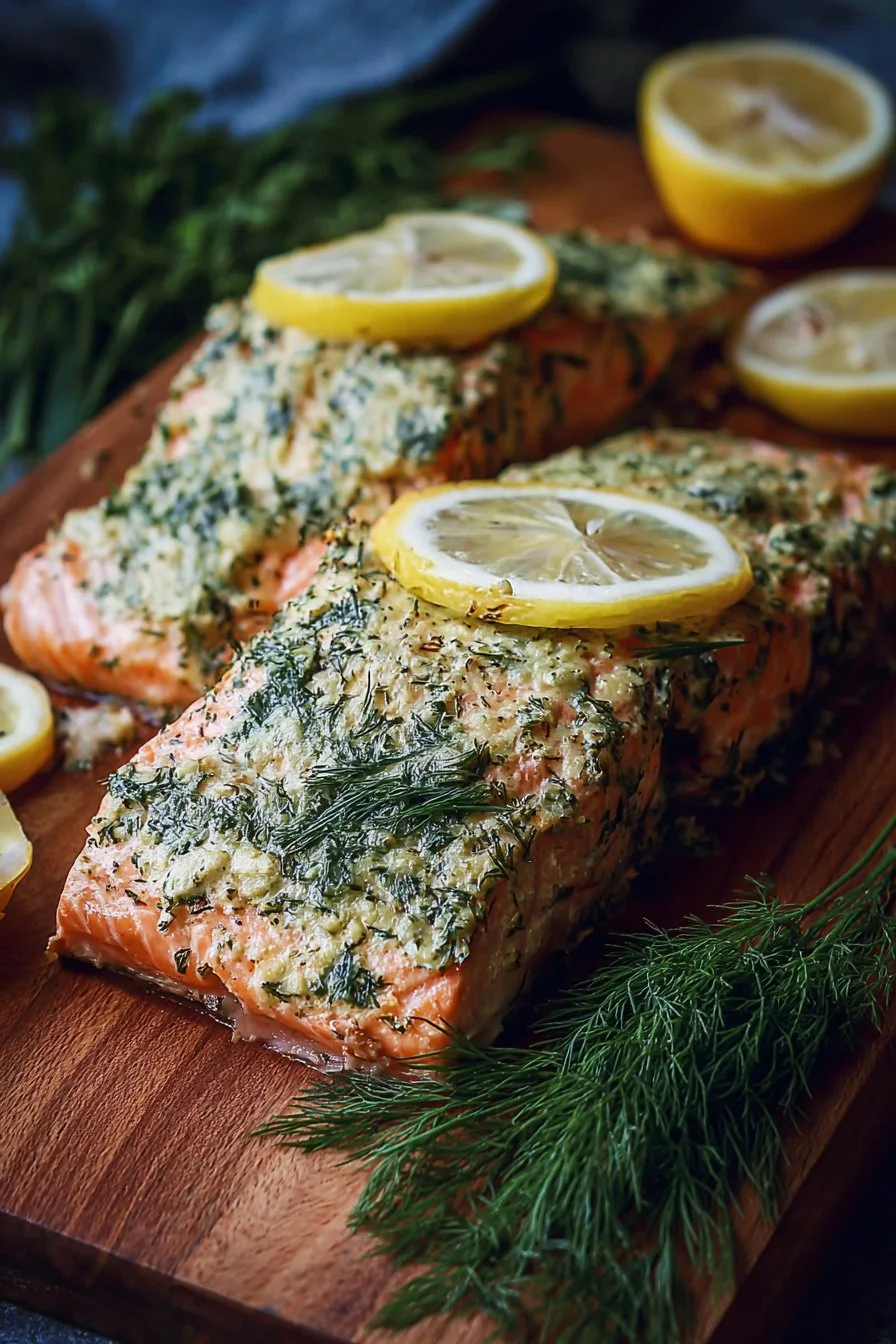
Bright, herbaceous, and wildly satisfying, this Garlicky Dill Baked Salmon delivers a creamy, garlicky crust that locks in moist, flaky fish beneath a blanket of fresh dill. The mayonnaise-based topping keeps the salmon tender while the crushed garlic and bright dill punch through with savory, aromatic flavor. It’s an easy main dish that feels a bit elevated — perfect for a cozy weeknight, a relaxed dinner party, or a simple Sunday supper. Serve it with roasted vegetables or a crisp salad for a complete plate; if you like similar baked salmon ideas, you might also enjoy the texture and richness of baked boursin salmon as another simple one-pan option.
Why You’ll Love This Garlicky Dill Baked Salmon
- Creamy, garlicky topping creates a golden, flavorful crust without fuss.
- The mayonnaise keeps the salmon impossibly moist and prevents drying.
- Fresh dill adds a bright, slightly lemony herb note that pairs beautifully with fish.
- Ready in under 30 minutes from start to finish — perfect for weeknights.
- Simple ingredient list but delivers restaurant-level flavor.
- Versatile: easy to scale for a family dinner or upscale enough for guests.
- Low-effort cleanup when you use foil or parchment on the baking sheet.
- Skin-on fillet bakes evenly and makes it easy to remove flaky portions.
What Is Garlicky Dill Baked Salmon?
Garlicky Dill Baked Salmon is a straightforward baked fish recipe where a mayonnaise-based garlic and fresh dill mixture is spread over a salmon fillet and baked until flaky. The mayonnaise creates a protective, flavorful barrier that seals in moisture, while the crushed garlic and chopped dill infuse the fish during cooking. The result is tender salmon with a creamy, savory top and pops of fresh herb aroma. This method is commonly served as a weeknight main, a casual dinner-party centerpiece, or a special brunch item when guests deserve an easy yet impressive dish. Its overall vibe is cozy, approachable, and slightly elevated — comfort food that still tastes intentional.
Ingredients for Garlicky Dill Baked Salmon
For the Fish
- 2 lbs fresh salmon fillet, skin on (about 900 g)
For the Garlic-Dill Topping
- 1/2 cup mayonnaise (about 120 ml)
- 8 cloves garlic, crushed
- 5 oz fresh dill, chopped (about 140 g)
- 1/2 tsp salt
- 1/4 tsp black pepper
No additional ingredients are required — this short list keeps the flavors clean and focused.
Ingredient Notes (Substitutions, Healthy Swaps)
- Greek yogurt swap (optional): For a lighter topping, substitute plain Greek yogurt for mayonnaise in a 1:1 ratio. The texture will be tangier and slightly less rich.
- Lower-fat option: Use light mayonnaise instead of regular mayo to cut calories while keeping the creamy binding.
- Herb alternatives (optional): If you prefer a milder herb, try substituting half the dill with finely chopped parsley — but keep the bulk of the flavor dill-forward to preserve the recipe’s identity.
- Garlic adjustments: If you love garlic, add an extra clove or two; if you’re sensitive, reduce to 4–6 cloves.
- Salt control: The recipe uses 1/2 tsp salt total; adjust to taste, especially if you’re serving with salty sides.
- Skin-on fish: Keep the skin on for easier handling and juicier results; you can remove it after baking if desired.
Step-by-Step Instructions
Step 1 – Preheat and prepare the pan
Preheat the oven to 400°F (200°C) and line a baking sheet with foil or parchment. This keeps cleanup simple and protects the pan.
Visual cue: The oven should be fully warmed and the lined baking sheet ready before the salmon is seasoned.
Step 2 – Make the garlic-dill mayonnaise
In a small bowl, mix the mayonnaise, crushed garlic, chopped dill, salt, and black pepper until combined and uniform.
Visual cue: The mixture should be pale, speckled with green dill and bits of crushed garlic.
Step 3 – Pat and season the salmon
Pat the salmon dry with paper towels. Optionally season lightly with a pinch of salt and pepper if you like extra seasoning under the topping (remember 1/2 tsp salt total is in the topping).
Pro cue: Drying the surface helps the topping stick and prevents steaming in the oven.
Step 4 – Apply the topping
Place the salmon skin-side down on the prepared baking sheet and spread the garlic-dill mayonnaise evenly on top using a spatula or the back of a spoon.
Visual cue: The fillet will be fully covered with a creamy, herb-speckled layer about 1/8–1/4 inch thick.
Step 5 – Bake
Bake the salmon at 400°F (200°C) for 12–18 minutes until the salmon flakes easily with a fork. Exact time depends on thickness; a thicker fillet needs closer to 18 minutes.
Pro cue: Check doneness at the thickest part; salmon should be opaque and flake but still be moist inside.
Step 6 – Optional broil for color
If you want a golden, slightly crisp top, broil for 1–2 minutes after baking. Keep a close eye so the topping doesn’t burn.
Visual cue: The topping should turn lightly golden but not charred.
Step 7 – Rest and serve
Let the salmon rest for 3–5 minutes before slicing and serving. This helps juices redistribute and makes for neater slices.
Pro cue: Resting yields flakier, juicier portions and prevents the topping from sliding off when sliced.
Pro Tips for Success
- Use room-temperature mayo: It spreads more easily and bakes evenly when not straight from the fridge.
- Don’t overbake: Salmon continues to cook slightly while resting; remove from the oven when it flakes but still looks moist.
- Even topping thickness: Spread a consistent layer to ensure uniform cooking and color.
- Knife test: Use a thin-bladed knife to check the center; it should separate into flakes with gentle pressure.
- Prep ahead: Mix the garlic-dill topping up to a day ahead and refrigerate to save time on busy evenings.
- Watch the broiler: The topping can go from golden to burned in seconds; broil with the oven door slightly open if your oven allows it for better control.
- Scale wisely: If you make a thicker fillet, add a few extra minutes of baking time and check doneness earlier to avoid overcooking.
Flavor Variations (Optional)
- Spicy kick (optional): Stir a pinch of red pepper flakes into the mayo mixture for a subtle heat.
- Lemon-bright (optional): Stir in 1–2 teaspoons lemon zest to the topping for a citrus lift.
- Herby mix (optional): Add a small amount of finely chopped parsley or chives to the dill for a layered herb flavor.
- Cheesy crust (optional): Mix in 1–2 tablespoons grated Parmesan with the mayo for a savory, slightly crisp topping.
- Lighter version (optional): Replace half the mayonnaise with plain Greek yogurt to reduce richness while keeping creaminess.
- Extra garlicky (optional): Use roasted garlic instead of crushed raw garlic for a sweeter, mellow garlic flavor.
(Any additions are optional and keep the original method and main ingredients intact.)
Serving Suggestions
- Classic sides: Serve with roasted baby potatoes and steamed green beans for a balanced, homey plate.
- Light & fresh: Pair with a crisp mixed greens salad dressed simply with olive oil and lemon juice.
- Quick grains: Spoon over a bed of quinoa or rice to soak up the garlicky topping.
- Brunch-friendly: Flake onto a bagel or toast for a savory brunch option.
- Weeknight pairing: A simple cucumber-dill salad complements the fresh herb notes without overpowering the fish.
- For a spice contrast: If you want a bolder pairing, serve alongside a spicy avocado-lime sauce or a Cajun-style salmon dish such as baked cajun salmon with avocado lime sauce for variety at a family dinner.
Make-Ahead, Storage & Reheating
- Make-ahead: Prepare the garlic-dill mayonnaise up to 24 hours in advance and refrigerate in an airtight container. Assemble and bake just before serving for best texture.
- Refrigerator storage: Store cooled leftovers in an airtight container for up to 3 days.
- Reheating: Gently reheat in a 325°F (160°C) oven for 8–10 minutes until warmed through. To preserve moisture, cover loosely with foil. Avoid microwaving if possible — it can dry the fish and make the topping loose.
- Texture changes: The mayonnaise topping will soften once refrigerated; reheating will restore some of the original texture but it won’t be exactly the same as fresh from the oven.
Storage and Freezing Instructions
- Freezing cooked salmon: Freezing is not ideal for mayo-topped cooked salmon because the mayonnaise and garlic-dill topping change texture after thawing and may become watery. If you must freeze, wrap tightly in plastic and foil and use within 1 month; thaw in the refrigerator overnight and reheat gently.
- Freezing raw with topping (not recommended): Don’t freeze the assembled raw salmon with the mayonnaise topping — mayonnaise and fresh herbs don’t freeze well and will degrade flavor and texture.
- Better alternative: If you want to prep ahead for freezing, freeze plain, raw salmon fillets (no topping) for up to 3 months and keep the mayo-dill mixture in the refrigerator to apply fresh before baking.
Nutrition Facts (Per Serving)
| Calories | Protein | Carbs | Fat | Fiber | Sodium |
|———|——–|——|—–|——|——-|
| 520 kcal | 38 g | 2 g | 38 g | 0.5 g | 780 mg |
Nutrition values are estimates and may vary depending on ingredients and portion sizes.
FAQ About Garlicky Dill Baked Salmon
Q: How do I know when the salmon is done?
A: It’s done when it flakes easily with a fork and is opaque in the center. Check the thickest part — it should separate into flakes but still be moist.
Q: Can I use frozen salmon?
A: Thaw frozen salmon completely in the refrigerator before using to ensure even cooking and proper topping adhesion.
Q: My topping slid off during baking — what went wrong?
A: The most common cause is excess moisture on the fish. Pat the fillet dry before applying the topping and spread a slightly thicker layer to help it adhere.
Q: Can I halve the recipe for a smaller fillet?
A: Yes. Reduce ingredient amounts proportionally and check baking time — a thinner piece may need less time (closer to 12 minutes).
Q: How long will leftovers keep?
A: Stored in an airtight container, leftovers keep in the refrigerator for up to 3 days.
Q: Is it safe to eat salmon with mayonnaise that has been baked?
A: Yes. The mayonnaise is an emulsifier and safely bakes as part of the topping. Ensure the fish reaches a cooked, flaky state.
Notes
- Serve on warm plates to keep the salmon from cooling too quickly.
- For cleaner slices, use a sharp, thin-bladed knife and slice gently against the grain.
- If your dill is very robust, use slightly less to avoid overpowering the garlic.
- Small additions like a light sprinkle of freshly cracked black pepper right before serving can elevate presentation.
- If you prefer crisp skin, broil skin-side down for a minute at the end — watch closely to avoid burning.
Garlicky Dill Baked Salmon
- Total Time: 28 minutes
- Yield: 4 servings
- Diet: Paleo
Description
Bright, herbaceous, and satisfying, this Garlicky Dill Baked Salmon features a creamy topping that locks in moist, flaky fish beneath a blanket of fresh dill. Perfect for weeknights or dinner parties.
Ingredients
- 2 lbs fresh salmon fillet, skin on (about 900 g)
- 1/2 cup mayonnaise (about 120 ml)
- 8 cloves garlic, crushed
- 5 oz fresh dill, chopped (about 140 g)
- 1/2 tsp salt
- 1/4 tsp black pepper
Instructions
- Preheat the oven to 400°F (200°C) and line a baking sheet with foil or parchment.
- Mix the mayonnaise, crushed garlic, chopped dill, salt, and black pepper in a small bowl until combined.
- Pat the salmon dry with paper towels and optionally season lightly with salt and pepper.
- Place the salmon skin-side down on the baking sheet and spread the garlic-dill mayonnaise evenly on top.
- Bake the salmon at 400°F (200°C) for 12–18 minutes until it flakes easily with a fork.
- Broil for 1–2 minutes for a golden, slightly crisp top, if desired.
- Let the salmon rest for 3–5 minutes before slicing and serving.
Notes
For a lighter topping, substitute plain Greek yogurt for mayonnaise. Use light mayonnaise for a lower-calorie option. Adjust garlic and salt to taste.
- Prep Time: 10 minutes
- Cook Time: 18 minutes
- Category: Main Course
- Method: Baking
- Cuisine: American