
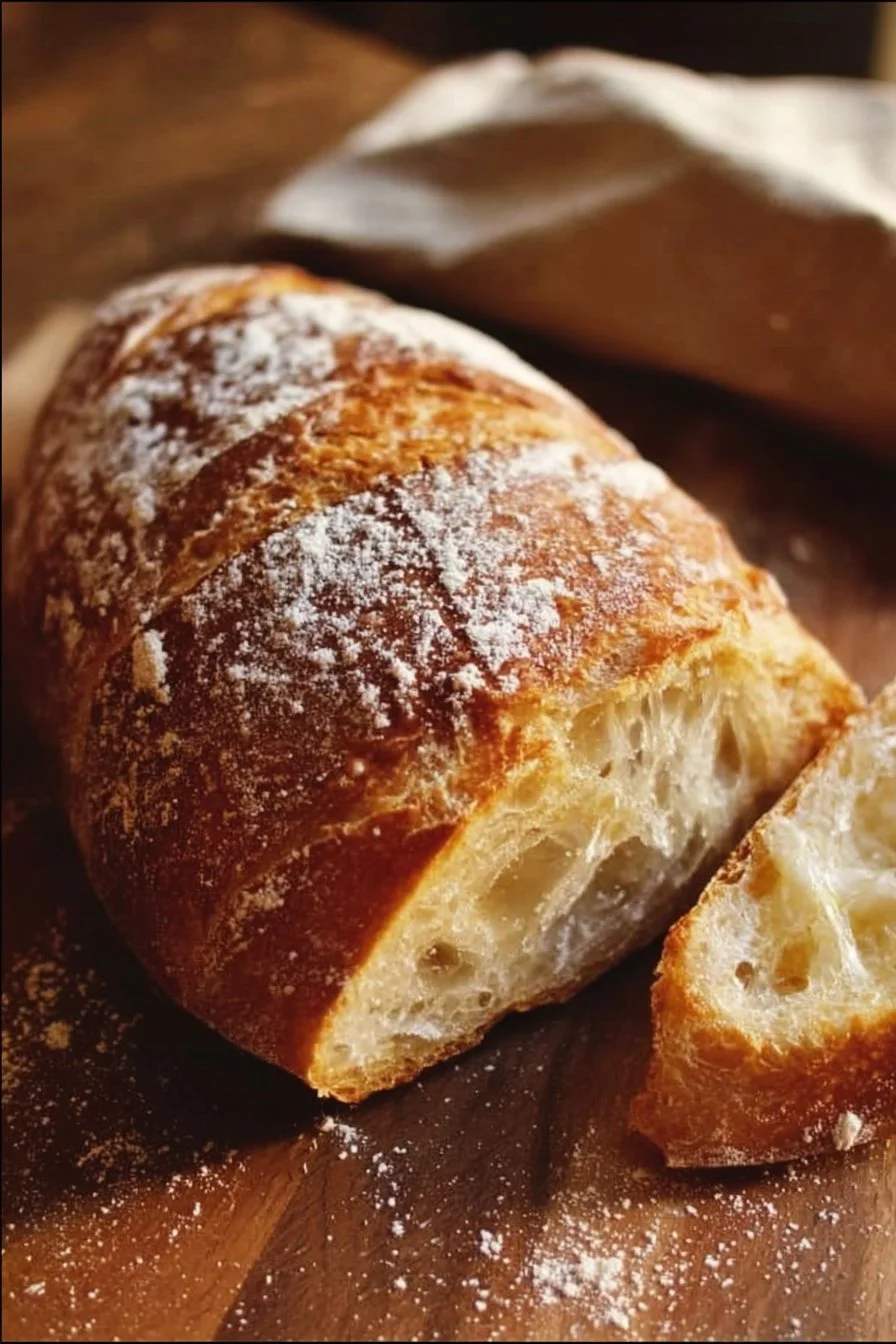
There’s something irresistible about tearing into a warm, crusty loaf straight from the oven — the faint steam, the crackle of the crust, and that soft, chewy interior. This simple Italian-style bread is perfect when you want bakery flavor without fuss; it’s great for weeknight dinners, impromptu guests, or to sop up a big pot of sauce. For an indulgent combo at your next gathering, try serving it alongside a playful, shareable side like chicken Alfredo monkey bread for a hit-every-time pairing.
Why you’ll love this dish
This recipe delivers classic Italian-style bread using pantry staples. It’s forgiving for beginner bakers, quick enough for a weekend bake, and flexible for countless meals — from rustic sandwiches to dinner-centerpiece bread. The high oven temperature and simple dough produce a crisp, golden crust with an open, airy crumb.
“We made this for a family dinner and couldn’t stop tearing at the ends — crisp outside, pillowy inside. One of the easiest breads that tastes like you spent hours.” — home baker review
Perfect occasions: family dinners, soup nights, holiday buffets, or as an impressive homemade gift.
How this recipe comes together
Start by proofing yeast in warm water with a pinch of sugar to ensure activity. Mix that fragrant yeast mixture into flour and salt, then add olive oil for flavor and tenderness. A 10-minute hand-knead develops the gluten structure you want for a proper chew. After a warm first rise, shape and let it proof again briefly so the loaf keeps air pockets, then bake at very high heat to form that signature crunchy crust. Cooling matters — slicing too soon yields a gummy interior.
What you’ll need
- 4 cups (about 500 g) all-purpose flour (substitute up to 1 cup whole wheat for nuttiness, reduce water slightly)
- 2 teaspoons fine salt
- 1 teaspoon granulated sugar (or honey)
- 2 teaspoons active dry yeast (or 2 teaspoons instant yeast; see FAQs)
- 1½ cups warm water (about 105–115°F / 40–46°C)
- 2 tablespoons olive oil (extra-virgin for flavor)
Notes: If you prefer a softer crumb, replace 1–2 tablespoons of water with milk. For a richer crust, brush with olive oil or butter right after baking.
Step-by-step instructions
- In a small bowl, stir warm water, yeast, and sugar. Let sit 5 minutes until foamy — this confirms the yeast is active.
- In a large bowl, whisk together flour and salt to distribute the salt evenly.
- Pour the foamy yeast mix and olive oil into the flour. Stir with a wooden spoon until a shaggy dough forms.
- Turn the dough onto a lightly floured surface and knead for about 10 minutes. The dough should become smooth and elastic; it should spring back slightly when pinched.
- Lightly oil a bowl, place the dough inside, and cover with a damp towel or plastic wrap. Let rise in a warm spot for about 1 hour, or until doubled in size.
- Preheat your oven to 450°F (230°C). If you have a baking stone or steel, place it in the oven to heat; otherwise, use a baking sheet. Place a shallow pan on the lower rack if you plan to add steam.
- Gently deflate the dough, shape it into a loaf (oval or bâtard), and transfer to a lightly floured or parchment-lined baking sheet.
- Cover and let rise another 30 minutes — the loaf should puff noticeably but not double.
- Right before baking, score the top with a sharp blade to control expansion. For extra crust, pour a cup of hot water into the shallow pan in the oven to create steam and close the door quickly. Bake 25–30 minutes until the crust is deep golden and the loaf sounds hollow when tapped. (Internal temp should be around 190–205°F / 88–96°C for fully baked bread.)
- Cool on a rack at least 30 minutes before slicing to finish the crumb structure.
Best ways to enjoy it
Serve warm with softened butter and flaky sea salt, or slice thick for robust sandwiches. It pairs beautifully with soups, stews, and hearty mains — try serving slices alongside classic tomato sauces and meat dishes or a bowl of your favorite ragù. For a crowd-pleasing combo, offer the loaf with herbed olive oil, balsamic reduction, and a side like classic Italian meatballs to soak up every last drop of sauce.
Presentation ideas: slice on a wooden board, add a small dish of flavored oil, or hollow half the loaf for a rustic bread bowl.
Storage and reheating tips
- Room temperature: Keep the loaf in a paper bag or wrapped in a clean kitchen towel for 1–2 days to maintain crusty exterior and avoid condensation. Avoid plastic for short-term storage unless you prefer a softer crust.
- Freezing: Cool completely, wrap tightly in plastic wrap, then foil, and freeze up to 3 months. Slice before freezing for convenient portions.
- Thawing and reheating: Thaw at room temp while still wrapped. To revive frozen or day-old bread, sprinkle lightly with water and bake at 350°F (175°C) for 8–10 minutes, or toast slices until crisp. For a quick crisp-up, use a 350°F oven for 5–7 minutes.
- Safety: Do not keep homemade bread at room temperature longer than 3–4 days; refrigerating will extend life but speeds staling. Freezing is best for longer storage.
Pro chef tips
- Yeast check: If the yeast doesn’t foam within 5–10 minutes, your yeast may be old or the water too hot/cold — start over with fresh yeast.
- Water temperature: Aim for 105–115°F (40–46°C) for active dry yeast; warmer kills it.
- Steam matters: Steam during the first 8–10 minutes of baking helps the crust form and the loaf reach maximum height. Use a hot pan of water or a spray bottle to mist the oven.
- Knead by feel: Dough should be tacky but not overly sticky. If it clings to your hands constantly, add a teaspoon of flour at a time.
- Scoring: Use quick, confident cuts with a lame or sharp knife for clean edges and controlled oven spring.
- Doneness test: Hollow sound when tapped and internal temp near 190–205°F are reliable doneness indicators.
Creative twists
- Garlic-herb: Press roasted garlic and chopped rosemary into the top before the final rise.
- Seeded crust: Brush the loaf with water and roll the top in mixed seeds (sesame, poppy, sunflower) before baking.
- Olive and rosemary loaf: Fold chopped olives and finely chopped rosemary into the dough for a Mediterranean spin.
- Whole wheat swap: Replace 1–2 cups of all-purpose flour with whole wheat, increasing water by a tablespoon or two. Expect a denser crumb.
- Mini loaves: Divide dough into 4 pieces for dinner rolls or small sandwich loaves; reduce second rise to 20 minutes and baking time accordingly.
Common questions
Q: Can I use instant yeast instead of active dry yeast?
A: Yes. Use the same amount of instant yeast and mix it directly with the flour — no proofing required — though proofing the yeast in water first can still help you confirm activity.
Q: My loaf came out dense — what went wrong?
A: Common causes: under-kneading (insufficient gluten development), short first rise, or dead yeast. Ensure the dough is elastic and has doubled during the first rise. Also check your yeast freshness and water temperature.
Q: How do I get a really crispy crust?
A: Bake at high heat (450°F), introduce steam in the first 8–10 minutes, and don’t wrap the bread while it cools. You can also place the loaf on a preheated stone or steel for a crisper bottom.
Q: Is this recipe suitable for gluten-free baking?
A: Not as written. Gluten-free bread requires a different flour blend and often xanthan gum, eggs, or other binders and typically different hydration and baking techniques.
Q: Can I slow the rise in the refrigerator overnight?
A: Yes — after shaping, cover and refrigerate for up to 12–18 hours for improved flavor. Allow the chilled dough to sit at room temp about 30–60 minutes before baking if it’s quite cold.
Irresistible Italian-Style Bread
- Total Time: 45 minutes
- Yield: 8 servings
- Diet: Vegetarian
Description
A simple Italian-style bread that delivers bakery flavor without fuss. Perfect for weeknight dinners or as a side to hearty dishes.
Ingredients
- 4 cups (about 500 g) all-purpose flour
- 2 teaspoons fine salt
- 1 teaspoon granulated sugar (or honey)
- 2 teaspoons active dry yeast (or 2 teaspoons instant yeast)
- 1½ cups warm water (about 105–115°F / 40–46°C)
- 2 tablespoons olive oil (extra-virgin for flavor)
Instructions
- In a small bowl, stir warm water, yeast, and sugar. Let sit for 5 minutes until foamy.
- In a large bowl, whisk together flour and salt.
- Pour the foamy yeast mix and olive oil into the flour. Stir until a shaggy dough forms.
- Knead the dough on a floured surface for about 10 minutes until smooth and elastic.
- Lightly oil a bowl, place the dough inside, and cover. Let rise in a warm spot for about 1 hour.
- Preheat your oven to 450°F (230°C). Prepare your baking method (stone, steel, or baking sheet).
- Gently deflate the dough, shape into a loaf, and transfer to a floured or parchment-lined baking sheet.
- Let rise for another 30 minutes until the loaf puffs.
- Score the top with a blade. Optionally, add steam in the oven.
- Bake for 25–30 minutes until deep golden and sounds hollow when tapped.
- Cool on a rack for at least 30 minutes before slicing.
Notes
For a softer crumb, replace 1–2 tablespoons of water with milk. Brush with olive oil or butter after baking for a richer crust.
- Prep Time: 15 minutes
- Cook Time: 30 minutes
- Category: Bread
- Method: Baking
- Cuisine: Italian