
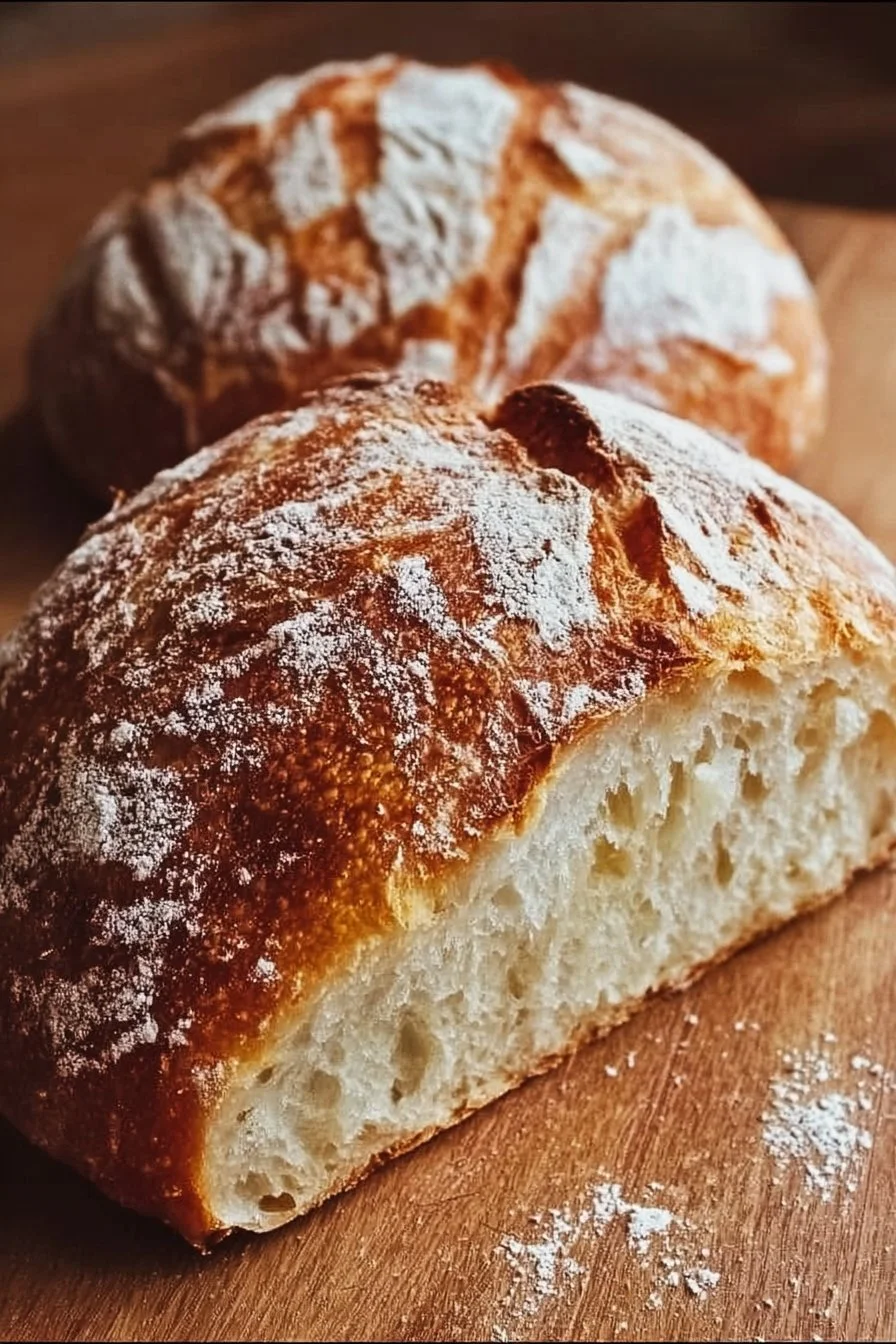
Sourdough that greets the air with a crackly crust and a tender, tangy crumb — this recipe walks you through a simple, reliable method using just starter, flour, water and salt. It’s approachable for bakers who want real sourdough flavor without an intimidating list of steps. If you prefer a quicker, less hands-on loaf to compare technique and oven handling, take a look at this 4-ingredient artisan bread recipe for another simple option.
Why you’ll love this dish
This sourdough loaf gives you a classic balance: a crisp, blistered crust and an open, chewy crumb with a clean, bright tang from a well-maintained starter. It’s great for everything from toast and grilled cheese to a beautiful centerpiece at brunch.
"Perfect crust and a mild tang—this loaf became my weekend ritual. No special equipment besides a Dutch oven, and the overnight retard gives unmatched flavor." — a regular home baker
Reasons to try it:
- Hands-on time is short; most of the work is passive fermentation.
- Uses common pantry ingredients — great for budget-friendly, artisanal baking.
- Overnight cold proofing deepens flavor and fits a busy schedule.
- High hydration (about 75%) creates an open crumb without complicated lamination.
How this recipe comes together
This is a straightforward sourdough workflow:
- Autolyse: mix flour + warm water, rest 30 minutes to hydrate the flour and kick off gluten development.
- Mix: add an active starter and salt, then incorporate.
- Bulk fermentation with periodic stretch-and-folds every 30 minutes for 2 hours to strengthen the dough.
- Long rise (6–8 hours) until roughly doubled — this is where flavor develops.
- Shape, cold retard overnight in the fridge to firm the dough and concentrate flavor.
- Bake in a preheated Dutch oven at 450°F (232°C): covered for steam and rise, then uncovered for crisping.
Expect total wall-clock time of about 12–18 hours (mostly resting and refrigeration); active hands-on time is under an hour.
What you’ll need
- 4 cups (500 g) bread flour or all-purpose flour (bread flour gives a bit more chew; AP is fine)
- 1 2/3 cups (375 g) warm water — about 75% hydration relative to flour weight
- 1 cup (200 g) active sourdough starter (fed, bubbly, doubling within 4–6 hours)
- 2 teaspoons (10 g) fine salt
Notes and substitutions:
- Whole wheat or rye: replace up to 20–25% of the flour to add flavor, but reduce water slightly (they absorb more).
- For a lower hydration loaf (easier to handle), drop water to 340–350 g (68–70%).
- If your starter is less active, extend bulk fermentation and watch the dough, not the clock.
Step-by-step instructions
- In a large mixing bowl, combine the 500 g flour and 375 g warm water. Stir until a shaggy mass forms, making sure no dry pockets remain. Cover and let rest for 30 minutes (autolyse).
- Add 200 g active starter and 10 g salt to the bowl. Mix by folding and pressing the dough until the starter and salt are evenly incorporated. The dough will be sticky but cohesive.
- Cover and let the dough sit at room temperature to begin bulk fermentation.
- For the next 2 hours, perform a stretch-and-fold every 30 minutes (about four sets): pull one side of the dough upward and fold it over, rotate the bowl a quarter turn, repeat until you’ve folded from all sides. These sets strengthen gluten without kneading.
- After the last fold, cover the dough and let it rise undisturbed for 6 to 8 hours at room temperature until it has roughly doubled in volume. Timing depends on your room temperature and starter activity.
- Turn the dough onto a lightly floured surface. Pre-shape into a loose round and rest 15–20 minutes uncovered to relax the gluten.
- Final shape into a tight boule (or bâtard) and place seam-side up into a well-floured proofing basket. Cover and refrigerate overnight (8–18 hours) for cold retard.
- About 45 minutes before baking, preheat your oven to 450°F (232°C) with a Dutch oven inside to heat thoroughly.
- When ready, remove the dough from the fridge. Turn it out onto a sheet of parchment, score the top with a razor or lame to control expansion, and carefully lower the dough (on the parchment) into the hot Dutch oven.
- Bake covered for 20 minutes, then remove the lid and bake another 25 minutes until deep golden-brown and the crust is well blistered.
- Remove the loaf and cool completely on a wire rack at least 1 hour before slicing to let the crumb set.
Quick handling tips within steps: use a bench scraper to move sticky dough; keep folds gentle; trust visual cues (doubled size, jiggly yet springy texture).
Best ways to enjoy it
Sliced thick for buttery toast, as the base for avocado smash, or torn for a rustic soup-night accompaniment — this loaf is versatile. For an indulgent dinner spread, pair thick slices with warm, cheesy bites or a rich casserole like Chicken Alfredo Monkey Bread for contrast in texture and richness.
Serving ideas:
- Breakfast: toasted with cultured butter and jam.
- Lunch: open-faced sandwich with roasted vegetables and goat cheese.
- Dinner: crusty side for stews, chili, or pasta; great for dipping.
Storage and reheating tips
- Room temperature: store loosely wrapped in a clean tea towel or paper bag for 2–3 days to keep crust fair and crumb soft.
- Refrigeration: avoid refrigerating whole bread — it accelerates staling. Only refrigerate prepared sandwiches.
- Freezing: slice and freeze in an airtight bag up to 3 months. Toast or reheat from frozen.
- Reheating: to refresh crust, bake at 350°F (175°C) for 8–10 minutes, or toast slices directly. Spritzing a little water on the crust before reheating helps restore crispness.
Food safety: fully baked sourdough keeps well; ensure it cools fully before wrapping to prevent condensation and sogginess.
Pro chef tips
- Hydration: 375 g water yields ~75% hydration. If your dough feels unmanageably sticky, reduce water by 10–35 g, especially with whole-grain flours.
- Starter activity: always use a bubbly, active starter. Do a float test (small spoonful in water) if unsure — it should float when ready.
- Stretch-and-fold technique: do not tear the dough. Reach under, gently lift through the center, and fold over. Four sets give good strength for this hydration.
- Scoring: aim for a 1/4–1/2-inch deep slash at a shallow angle for a nice ear. A clean, confident cut works better than a shaky one.
- Dutch oven: preheating is crucial for oven spring. If you don’t have a Dutch oven, use a heavy pot with a lid or create steam in the oven with a tray of boiling water (but results may vary).
- Use a thermometer: an internal temp of ~205–210°F (96–99°C) indicates done bread.
Recipe variations
- Seeded loaf: add 60–100 g mixed seeds (sunflower, flax, sesame) folded in during the second stretch-and-fold.
- Olive and rosemary: gently fold 60–80 g chopped olives and 1–2 tbsp chopped rosemary after mixing.
- Cheese swirl: after the initial bulk rise, roll the dough, sprinkle 100 g grated cheese and fold before final shaping.
- Whole-grain: substitute up to 25% whole wheat or spelt flour; expect shorter oven spring and a denser crumb.
Common questions
Q: How long does this take from start to finish?
A: Active hands-on time is under an hour. Total time including rests, rises, and overnight retard is about 12–18 hours, most of which is passive.
Q: Can I bake without a Dutch oven?
A: Yes. Use a heavy pot with a lid, or create steam by placing a tray of boiling water in the oven and misting the loaf at the start of baking. Expect slightly different crust and oven spring.
Q: What if my starter isn’t very active?
A: Feed it twice over 24 hours before using to strengthen activity. If still sluggish, increase bulk fermentation time and look for visual cues (volume increase, bubbles) rather than strict timing.
Q: Can I shape and bake the same day without refrigerating overnight?
A: Yes. A same-day schedule is possible if you prefer — shape and proof at room temperature until puffed (2–4 hours depending on temperature). The flavor will be less pronounced than with an overnight cold retard.
Q: How do I know when the dough is properly proofed after shaping?
A: Gently press a floured fingertip into the dough: if it springs back slowly and leaves a slight indentation, it’s ready. If it springs back quickly, it’s underproofed; if it collapses, it’s overproofed.
If you have questions about feeding your starter, dough hydration, or adapting the recipe to different flours, ask and I’ll walk you through adjustments.
Print
Simple Sourdough Bread
- Total Time: 1080 minutes
- Yield: 1 loaf
- Diet: Vegetarian
Description
A reliable and approachable sourdough loaf with a crisp crust and a tender, tangy crumb, perfect for toast, grilled cheese, or as a centerpiece at brunch.
Ingredients
- 4 cups (500 g) bread flour or all-purpose flour
- 1 2/3 cups (375 g) warm water
- 1 cup (200 g) active sourdough starter
- 2 teaspoons (10 g) fine salt
Instructions
- In a large mixing bowl, combine the flour and warm water. Stir until a shaggy mass forms. Cover and let rest for 30 minutes.
- Add the active starter and salt to the bowl. Mix until evenly incorporated.
- Let the dough sit at room temperature for bulk fermentation, performing a stretch-and-fold every 30 minutes for 2 hours.
- Let rise until roughly doubled in volume (6 to 8 hours).
- Turn the dough onto a floured surface, pre-shape into a loose round, and let rest for 15–20 minutes.
- Final shape into a tight boule and place seam-side up in a proofing basket. Cover and refrigerate overnight (8–18 hours).
- Preheat the oven to 450°F (232°C) with a Dutch oven inside.
- Turn the dough out onto parchment, score the top, and place it in the hot Dutch oven.
- Bake covered for 20 minutes, then uncovered for another 25 minutes until deep golden-brown.
- Cool completely on a wire rack for at least 1 hour before slicing.
Notes
For variations, consider adding seeds, olives, or cheese for additional flavor.
- Prep Time: 60 minutes
- Cook Time: 45 minutes
- Category: Bread
- Method: Baking
- Cuisine: American