
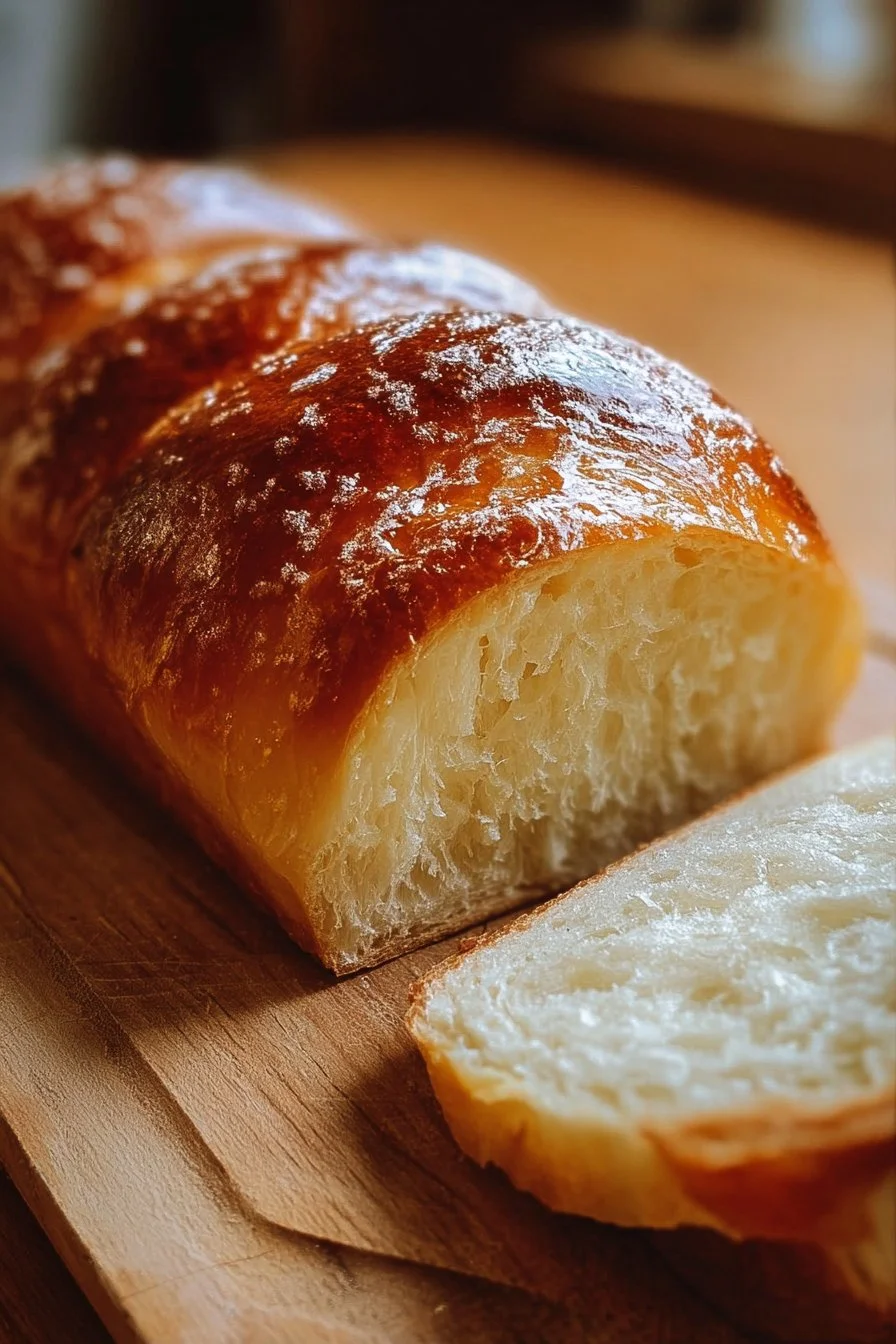
This classic, easy loaf makes soft, tender slices from just pantry staples and a little time. It’s the kind of bread you bake when you want warm sandwiches in the evening, fresh toast for breakfast, or a simple table loaf that disappears fast. If you’re curious how this compares to speedier recipes, I also find the 20-minute homemade bread useful when time is tight.
What makes this recipe special
This is a straightforward, no-fuss white loaf that rewards patience with consistent results. It doesn’t require a stand mixer, long autolyse periods, or special flours—just active dry yeast, all-purpose flour, water, a little sugar, salt, and olive oil.
"Soft crumb, easy to shape, and great for sandwiches—my go-to when I want homemade bread without drama."
Why people bake this at home: it’s budget-friendly, reliably good for beginners, and flexible enough for small adjustments (seeding, swaps, or shaping). It’s ideal for weeknight dinners, simple family breakfasts, or when you want the smell of baking to warm the house.
Step-by-step overview
You’ll proof the yeast, mix and knead a tacky dough, let it double, shape it into a loaf, give it one more rise in the pan, and bake until golden. Total active hands-on time is about 25–35 minutes; most of the clock is passive rising time.
Expect roughly:
- 8–10 minutes kneading
- 1 hour first rise
- 30–45 minutes second rise
- 25–30 minutes baking
What you’ll need
- 3 1/4 cups all-purpose flour (plus extra for the work surface)
- 1 packet (2 1/4 teaspoons) active dry yeast
- 1 1/4 cups warm water (about 105–115°F / 40–46°C)
- 2 tablespoons sugar (feeds the yeast and adds mild sweetness)
- 1 teaspoon salt
- 2 tablespoons olive oil (plus extra for greasing)
Substitutions/notes:
- For a slightly softer crust, replace 1 tablespoon of olive oil with 1 tablespoon of melted butter.
- Whole wheat: replace up to 1 cup of the flour with whole wheat flour; expect a denser loaf and add a touch more water if the dough feels dry.
- If using instant yeast, you can sprinkle it directly into the flour and skip the initial proof step; reduce warm water temperature slightly.
Step-by-step instructions
- In a large mixing bowl, stir the sugar into the warm water until mostly dissolved. Sprinkle the active dry yeast evenly over the surface and let it rest for 5–10 minutes until the mixture turns foamy. That foam proves the yeast is active.
- Stir the salt and olive oil into the yeast mixture until combined.
- Add about half the flour and stir with a wooden spoon or dough scraper until incorporated. Continue adding the remaining flour gradually, mixing until the dough comes together into a soft, slightly tacky ball. You may not need every bit of flour—stop when the dough is cohesive but still springy.
- Turn the dough onto a lightly floured surface and knead by hand for 8–10 minutes. The dough should become smooth, elastic, and slightly tacky but not sticky. Use the push-fold-turn method: push with the heel of your hand, fold it over, then turn 90 degrees and repeat.
- Lightly oil a clean bowl, place the kneaded dough inside, and turn once to coat the top. Cover the bowl with plastic wrap or a damp towel and set it in a warm, draft-free spot to rise for about 1 hour, or until doubled in size.
- Gently punch down the dough to deflate it. Shape it into a loaf by flattening to a rectangle, rolling tightly from the short edge, and pinching the seam closed. Place the shaped loaf seam-side down in a greased 9×5-inch loaf pan. Cover loosely and let rise another 30–45 minutes until puffy and nearly doubled.
- While the dough finishes its second rise, preheat your oven to 350°F (175°C). Bake the loaf for 25–30 minutes, until the top is golden brown and the loaf sounds hollow when tapped on the bottom. An instant-read thermometer inserted into the center should read about 190–200°F (88–93°C).
- Remove the bread from the pan and cool on a wire rack for 20–30 minutes before slicing. Cooling finishes the crumb structure — slicing too soon will give you gummy slices.
Best ways to enjoy it
This loaf is extremely versatile:
- Slice thick for grilled cheese, or thin for elegant tea sandwiches.
- Toasted with jam and butter makes a classic breakfast.
- Use leftover slices for bread pudding, croutons, or homemade stuffing.
- Serve warm with olive oil and flaky sea salt for a simple appetizer.
Pairing ideas: soups (tomato, lentil), robust salads, sharp cheeses, smoked meats, and a simple olive oil-dip with herbs.
Storage and reheating tips
Store at room temperature in a paper bag or wrapped loosely in a kitchen towel for 2–3 days to preserve the crust and avoid trapping moisture. For longer storage, slice and freeze: wrap the loaf or individual slices tightly in plastic wrap and place in a freezer bag for up to 3 months.
To refresh:
- From room temp: reheat slices in a toaster or a 350°F (175°C) oven for 5–7 minutes.
- From frozen: toast slices directly from the freezer or defrost at room temperature for 20–30 minutes, then warm as above.
If you prefer a thicker, crisper crust, try techniques from crusty homemade artisan bread such as using steam in the oven or preheating a baking stone.
Helpful cooking tips
- Water temperature matters: 105–115°F (40–46°C) wakes yeast without killing it. Too hot and the yeast dies; too cool and proofing takes much longer.
- Dough feel beats exact flour weight for home bakers: aim for a dough that’s soft and slightly tacky but not sticky. Add flour sparingly—too much makes a dry loaf.
- Knead until elasticity appears: stretch a small piece; if it forms a thin translucent "window" without tearing, you’ve kneaded enough.
- Rise in a warm place: an oven with just the light on works well. Or heat water, pour into a pan, and set the dough bowl beside it (not over the hot water).
- Don’t skip the second rise in the pan: it gives the final loaf height and a lighter crumb.
Recipe variations
- Garlic-herb loaf: fold 1–2 teaspoons garlic powder and 1 tablespoon chopped fresh herbs into the dough. Brush top with olive oil and sprinkle with coarse salt before baking.
- Seeded top: brush the shaped loaf with water or egg wash and sprinkle sesame, poppy, or sunflower seeds for texture and flavor.
- Milk-enriched version: replace 1/2 cup of water with warm milk and add 1 tablespoon extra sugar for a softer, richer crumb.
- Overnight slow rise: use half the yeast and refrigerate the dough for 8–12 hours after the first mix; bring to room temp, shape, and bake as directed for deeper flavor.
FAQ
Q: How do I know my yeast is still good?
A: Proof it: mix the yeast with warm water and a pinch of sugar. If it becomes foamy within 5–10 minutes, it’s active. If nothing happens, replace it.
Q: Why did my loaf turn out dense?
A: Common causes are under-kneading (insufficient gluten development), insufficient rise time, or too much flour added. Make sure the dough doubled in both rise stages and feel for elasticity while kneading.
Q: Can I make this in a stand mixer?
A: Yes. Use the dough hook on low to medium speed for 6–8 minutes until the dough is smooth and elastic. Watch hydration—mixer actions can change how much flour you need.
Q: Is it safe to keep homemade bread in the fridge?
A: Refrigeration actually speeds staling. For short-term storage, keep at room temperature; for long-term, freeze. If you must refrigerate, expect firmer texture after a day or two.
Q: Can I scale this recipe up or down?
A: Yes. Keep ratios the same and be mindful that rising times may change with larger or smaller dough masses. Dough with more volume often needs more time to double.
If you want quick loaf alternatives or crust-enhancing techniques, check the linked pages above for fast or artisan-style options.
Print
Classic Easy White Loaf
- Total Time: 45 minutes
- Yield: 1 loaf
- Diet: Vegetarian
Description
A simple, straightforward white loaf made with pantry staples, perfect for sandwiches, toast, or as a dinner table staple.
Ingredients
- 3 1/4 cups all-purpose flour (plus extra for the work surface)
- 1 packet (2 1/4 teaspoons) active dry yeast
- 1 1/4 cups warm water (about 105–115°F / 40–46°C)
- 2 tablespoons sugar
- 1 teaspoon salt
- 2 tablespoons olive oil (plus extra for greasing)
Instructions
- In a large mixing bowl, stir the sugar into the warm water until mostly dissolved. Sprinkle the active dry yeast evenly over the surface and let it rest for 5–10 minutes until the mixture turns foamy.
- Stir the salt and olive oil into the yeast mixture until combined.
- Add about half the flour and stir with a wooden spoon until incorporated. Continue adding the remaining flour gradually, mixing until the dough comes together into a soft, slightly tacky ball.
- Turn the dough onto a lightly floured surface and knead by hand for 8–10 minutes until smooth and elastic.
- Lightly oil a clean bowl, place the kneaded dough inside, and cover with plastic wrap or a damp towel. Set it in a warm place to rise for about 1 hour, or until doubled in size.
- Punch down the dough to deflate it. Shape it into a loaf and place it seam-side down in a greased 9×5-inch loaf pan. Cover and let rise another 30–45 minutes until puffy.
- Preheat your oven to 350°F (175°C). Bake the loaf for 25–30 minutes until golden brown.
- Remove the bread from the pan and cool on a wire rack for 20–30 minutes before slicing.
Notes
For a softer crust, replace some olive oil with melted butter. Reheating slices in the toaster or oven can maintain freshness.
- Prep Time: 15 minutes
- Cook Time: 30 minutes
- Category: Bread
- Method: Baking
- Cuisine: American