
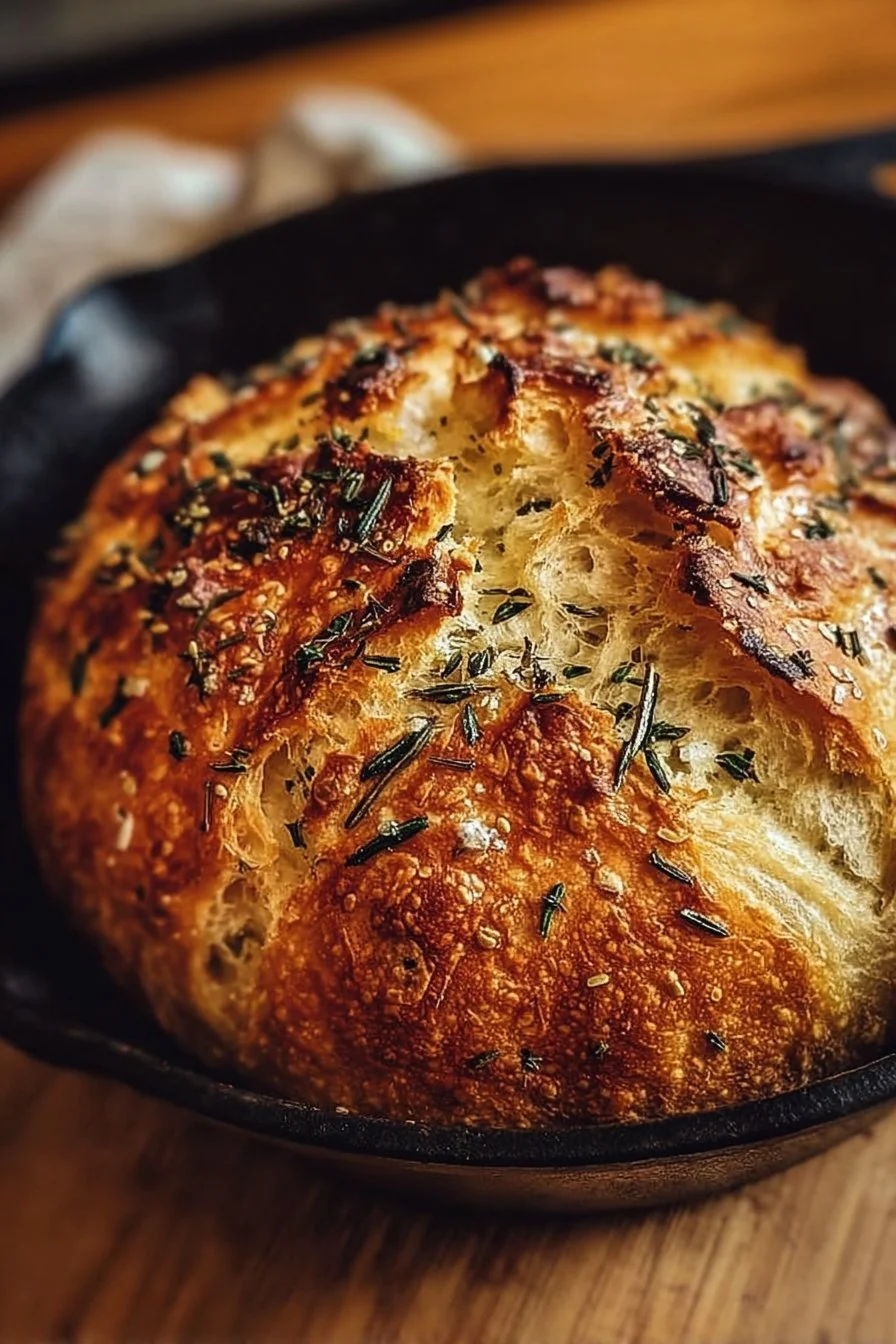
This no-knead garlic herb Dutch oven loaf is rustic, crusty, and packed with fresh garlic and herbs — the kind of bread that makes weeknight dinners feel celebratory. It’s fuss-free: one bowl, a long overnight rise, and a hot Dutch oven that gives you bakery-style crust at home. If you want more garlic-forward mains to go with it, try pairing the bread with a rich seafood dish like brown sugar garlic glazed salmon for an indulgent meal.
Why you’ll love this bread
This recipe gives you artisan-style bread without a mixer or hours of kneading. The slow, 12–18 hour rise builds flavor and structure while you sleep, and the Dutch oven traps steam to create a deep, blistered crust and open crumb that make every slice sing.
“I made this for Sunday supper — crisp crust, fragrant garlic, and rosemary that cut through the richness. Hands-down the best no-knead loaf I’ve tried.”
Reasons to try it:
- Minimal hands-on time: about 10 minutes to mix, then let the dough do the work overnight.
- Incredible texture: chewy interior, crackly crust thanks to the preheated Dutch oven.
- Versatile: great for dunking into soups, building sandwiches, or serving with herb butter.
Step-by-step overview
This is the simple flow so you know what to expect:
- Mix flour, salt, yeast, garlic, and herbs with lukewarm water to form a sticky dough.
- Cover and let ferment at room temperature 12–18 hours until bubbly.
- Shape gently into a round, bench rest 45–60 minutes.
- Heat a Dutch oven to 450°F, score the top, and bake covered 30 minutes, then uncovered 15–20 minutes until deeply golden.
- Cool at least 30 minutes before slicing.
What you’ll need
- 3 cups (about 360 g) all-purpose flour
- 2 teaspoons fine sea salt
- 1/2 teaspoon instant yeast (or active dry yeast)
- 1 1/2 cups (360 ml) lukewarm water (90–100°F / 32–38°C)
- 4 cloves garlic, minced (about 1–2 tablespoons) — use less if you prefer a milder garlic note
- 2 tablespoons fresh herbs, finely chopped (rosemary, thyme, or a mix)
- 1 tablespoon olive oil (optional; brush before scoring for a glossy crust)
Ingredient notes:
- Instant yeast can be mixed in dry; if using active dry yeast, proof briefly in part of the water (5–10 minutes) before adding.
- Use freshly chopped herbs for best aroma; dried herbs work but reduce quantity to 1 teaspoon.
- For a whole-grain boost, swap up to 1 cup of the all-purpose flour for bread flour or whole wheat — expect a slightly denser crumb.
Step-by-step instructions
- In a large bowl, whisk together the flour, salt, and instant yeast until evenly distributed. Add the minced garlic and chopped herbs and stir briefly.
- Pour in the lukewarm water and stir with a wooden spoon until a sticky, shaggy dough forms. Scrape sides so everything is incorporated.
- Cover the bowl tightly with plastic wrap or a damp kitchen towel. Let the dough rise at room temperature for 12–18 hours, or until it’s bubbly and has expanded noticeably.
- When ready, generously flour a work surface and turn the dough out. Gently fold the edges of the dough toward the center to form a smooth round. Handle gently to keep the air pockets intact.
- Let the shaped dough rest, uncovered, for 45–60 minutes while you preheat the oven.
- Preheat a Dutch oven (with the lid on) at 450°F (230°C) for 30 minutes. Use an oven-safe thermometer if you want to be precise.
- Place the dough onto a sheet of parchment paper. Optionally brush the top lightly with olive oil, then score the top with a sharp knife or lame — a single deep slash or a cross works well.
- Using the parchment as a sling, lower the dough into the hot Dutch oven. Cover and bake for 30 minutes.
- Remove the lid and bake uncovered for an additional 15–20 minutes, until the crust is deep golden-brown and sounds hollow when tapped.
- Transfer the loaf to a wire rack and cool at least 30 minutes before slicing to finish the crumb setting.
Best ways to enjoy it
- Tear-and-share with softened herb butter, olive oil, or a splash of balsamic.
- Serve warm alongside roasted vegetables, soups, or a simple charcuterie board.
- Slice thick for sandwiches — it holds up well under saucy fillings. For a decadent seafood pairing, serve warm slices alongside a garlic-rich entrée like Cajun shrimp and salmon in garlic cream sauce to soak up the sauce.
Storage and reheating tips
- Room temperature: Store whole or cut (crumb side down) in a paper bag or bread box for 1–2 days to preserve crust. Avoid sealed plastic for whole loaves — it softens the crust.
- Refrigeration: Not recommended for bread; refrigeration speeds staling.
- Freezing: Slice and freeze wrapped tightly in plastic and foil for up to 3 months. Reheat frozen slices in a 350°F oven for 10–12 minutes.
- Re-crisping: To revive a soft crust, spritz or brush the loaf lightly with water and bake at 350°F for 8–10 minutes.
Pro chef tips
- Temperature matters: lukewarm water (90–100°F) wakes yeast without killing it. If your kitchen is very warm, shorten the 12–18 hour window; if cool, expect the rise to be on the longer side.
- Handle gently: the no-knead method preserves gas bubbles. Overworking the dough flattens them and gives a denser crumb.
- Use a hot Dutch oven: preheating both pot and lid is the simplest way to trap steam and form a blistered crust. Don’t skip the 30-minute preheat.
- Score confidently: the cut gives the loaf a controlled place to expand. A shallow, single slash often yields the best ear for this style.
- Test for doneness: a hollow sound when thumped on the bottom or an internal temperature around 200–210°F indicates a fully baked loaf.
Creative twists
- Cheesy-herb: fold 1/2–1 cup grated Parmesan or sharp cheddar into the dough at shaping.
- Olive & sun-dried tomato: add 1/2 cup chopped olives and 1/3 cup chopped sun-dried tomatoes for Mediterranean flair.
- Garlic grain: swap 1 cup of all-purpose for bread flour and add 2 tablespoons cornmeal to the dough for a slightly nuttier texture.
- Whole-grain version: replace up to 1 cup flour with whole wheat and increase hydration by 1–2 tablespoons if dough feels dry.
Common questions
Q: Can I use active dry yeast instead of instant?
A: Yes. If using active dry yeast, proof it in a little of the lukewarm water (mix with a pinch of sugar if desired) for 5–10 minutes until foamy, then mix into the rest of the ingredients.
Q: How long can I let the dough rise?
A: 12–18 hours at room temperature is ideal. Cooler kitchens can extend the rise toward 18 hours; warmer kitchens may finish closer to 12. For longer fermentation and more sour notes, refrigerate the dough for up to 24–48 hours after the initial mix (bring back to room temperature before shaping).
Q: My loaf didn’t rise well — what went wrong?
A: Common causes: old yeast, water too hot (killed the yeast) or too cold (slow activity), or the dough was handled roughly flattening the gas. Check yeast freshness and water temperature next time, and be gentle when shaping.
Q: Can I skip the Dutch oven and bake on a baking stone?
A: You can, but you’ll need to create steam in the oven (place a pan of hot water on the rack or spritz the oven) to mimic the Dutch oven’s effect. Expect a less blistered, slightly thinner crust.
Q: Is this recipe safe for those with garlic intolerance?
A: Reduce or omit the garlic for low-garlic needs; you’ll still have a flavorful herb-forward bread. For substitutes, consider a small amount of roasted shallot puree for mild sweetness.
If you want a concise printable version of the ingredient amounts and baking schedule, let me know and I’ll format a one-page recipe card.
Print
No-Knead Garlic Herb Dutch Oven Loaf
- Total Time: 780 minutes
- Yield: 1 loaf
- Diet: Vegetarian
Description
Rustic, crusty bread packed with fresh garlic and herbs, perfect for weeknight dinners.
Ingredients
- 3 cups (about 360 g) all-purpose flour
- 2 teaspoons fine sea salt
- 1/2 teaspoon instant yeast (or active dry yeast)
- 1 1/2 cups (360 ml) lukewarm water (90–100°F)
- 4 cloves garlic, minced (about 1–2 tablespoons)
- 2 tablespoons fresh herbs, finely chopped (rosemary, thyme, or a mix)
- 1 tablespoon olive oil (optional)
Instructions
- In a large bowl, whisk together the flour, salt, and instant yeast until evenly distributed. Add the minced garlic and chopped herbs and stir briefly.
- Pour in the lukewarm water and stir with a wooden spoon until a sticky, shaggy dough forms. Scrape sides so everything is incorporated.
- Cover the bowl tightly with plastic wrap or a damp kitchen towel. Let the dough rise at room temperature for 12–18 hours, or until it’s bubbly and has expanded noticeably.
- When ready, generously flour a work surface and turn the dough out. Gently fold the edges of the dough toward the center to form a smooth round.
- Let the shaped dough rest, uncovered, for 45–60 minutes while you preheat the oven.
- Preheat a Dutch oven (with the lid on) at 450°F for 30 minutes.
- Place the dough onto a sheet of parchment paper. Optionally brush with olive oil, then score the top with a sharp knife.
- Using the parchment as a sling, lower the dough into the hot Dutch oven. Cover and bake for 30 minutes.
- Remove the lid and bake uncovered for an additional 15–20 minutes until the crust is deep golden-brown.
- Transfer the loaf to a wire rack and cool at least 30 minutes before slicing.
Notes
Store the bread whole or cut in a paper bag for 1–2 days; freeze sliced for up to 3 months.
- Prep Time: 10 minutes
- Cook Time: 75 minutes
- Category: Bread
- Method: Baking
- Cuisine: American