
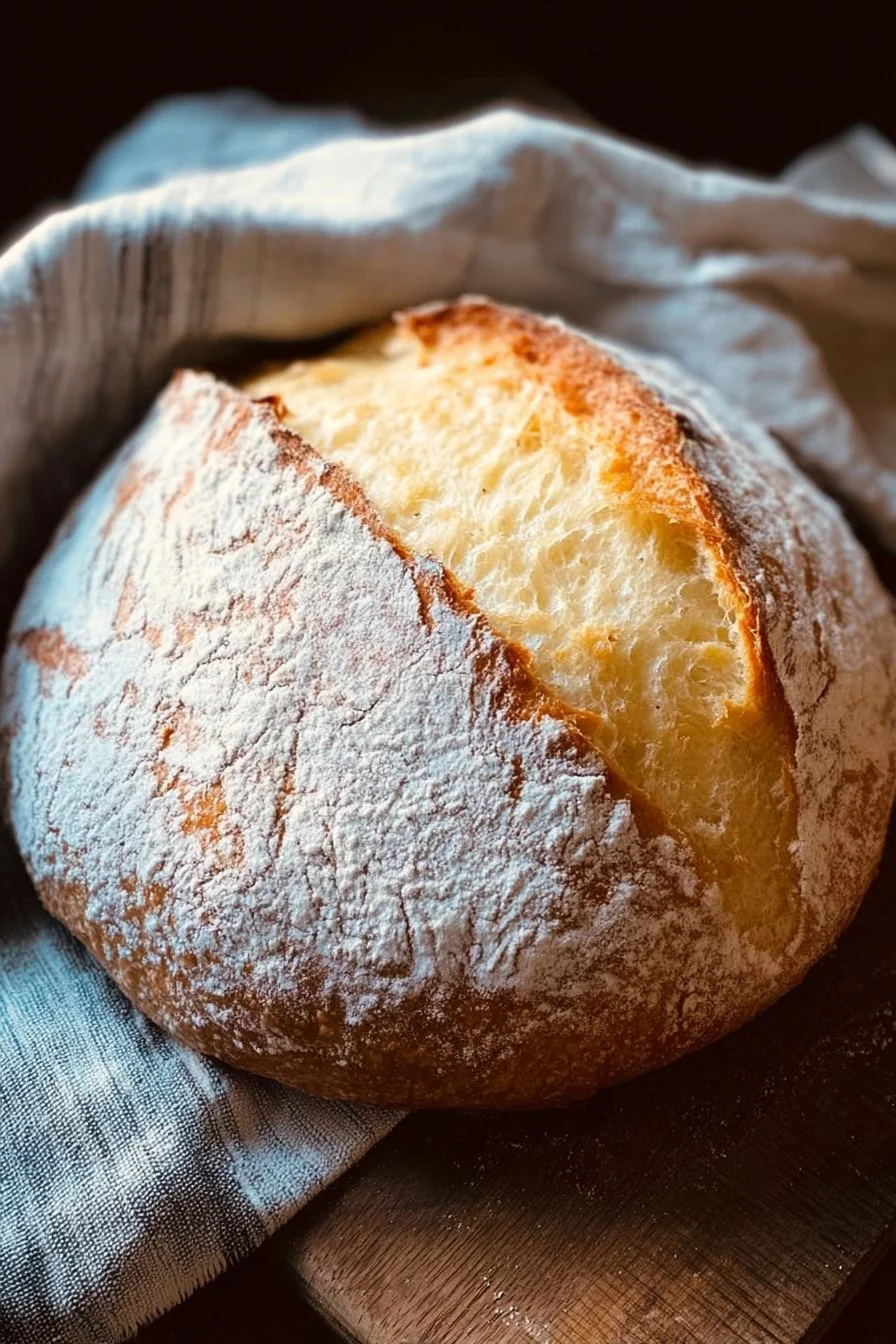
This no-fail sourdough recipe turns simple ingredients into a crunchy, aromatic loaf with a tender crumb—perfect for weekend baking, sandwiches, or a show-stopping table centerpiece. It’s approachable even if you’re still building confidence with your starter: one dough, gentle handling, and predictable timing deliver consistent results. If you want a deeper read on starter maintenance and troubleshooting before you bake, check this sourdough basics and troubleshooting guide.
Why you’ll love this dish
This loaf hits the sweet spot between rustic flavor and reliability. With a straightforward autolyse, a short knead, and flexible fermentation windows, it adapts to busy schedules without sacrificing crust or oven spring. It’s also budget-friendly: flour and water make the base, and the wild-yeast complexity comes from your starter, not pricey add-ins.
"My family prefers this loaf for sandwiches and weekend toasts — dependable every time and full of tangy depth." — a frequent baker
Perfect occasions: weekend brunches, holiday sides, or a daily bread to slice for sandwiches. The recipe scales well and tolerates timing shifts, so it’s a great everyday sourdough.
How this recipe comes together
This recipe follows four clear phases so you’ll know what to expect at each step:
- Hydration and autolyse: the flour and water rest to develop gluten and flavor.
- Salt and starter addition: these finish the dough and begin fermentation.
- Bulk fermentation and shaping: the dough strengthens and rises.
- Final proof and bake: proof at room temp or cold-proof for convenience, then bake in a preheated Dutch oven for reliable crust and oven spring.
Total hands-on time: roughly 20–30 minutes (mixing, kneading, shaping). Passive time: 6–14+ hours depending on fermentation choices.
What you’ll need
- 500 g bread flour (high-protein gives better structure; you can use 20–25% whole wheat but expect a denser crumb)
- 375 g water (75% hydration; room temperature)
- 100 g active sourdough starter (fed and bubbly; 100% hydration starter works well)
- 10 g fine salt
Notes and simple swaps:
- If using a stiff (low-hydration) starter, you can thin it with a tablespoon or two of water before mixing.
- For a softer crust, bake 10–15°F lower and extend uncovered bake by a few minutes.
- Prefer a quicker loaf? Try an alternative 20-minute homemade bread when time is tight.
Step-by-step instructions
- Mix the dough: In a large bowl, combine 375 g water and 500 g bread flour. Stir until a shaggy mass forms. Cover and let rest 30 minutes (autolyse).
- Add salt and starter: Sprinkle 10 g fine salt over the dough. Add 100 g active starter. Mix thoroughly with wet hands or a spatula until fully incorporated.
- Knead briefly: Turn the dough onto a clean surface. Knead about 8–12 minutes until smooth and elastic. If you prefer less hands-on, perform 4–6 stretch-and-folds in the bowl over 1–2 hours during bulk fermentation instead.
- Bulk ferment: Transfer the dough to a lightly greased bowl, cover, and leave at room temperature for 4–8 hours, until the dough roughly doubles. Timing depends on starter strength and room temperature (warmer = faster).
- Bench rest: Turn the dough out and shape gently into a loose ball. Let rest 30 minutes to relax the gluten.
- Final shaping & proof: Form a tight round loaf. Place seam-side up in a well-floured proofing basket. Cover and proof 2–4 hours at room temperature, or refrigerate overnight for a cold proof which improves flavor and fits a busy schedule.
- Preheat your oven: About 30 minutes before baking, preheat to 450°F (230°C) with a Dutch oven (lid on) inside. This creates steam and consistent heat.
- Score and bake: Invert the proofed loaf onto parchment, score the top with a sharp lame or knife, then transfer (on the parchment) into the hot Dutch oven. Cover and bake 30 minutes.
- Finish uncovered: Remove the lid and bake another 15–20 minutes until the crust is deep golden brown and the loaf sounds hollow when tapped.
- Cool fully: Transfer to a wire rack and cool at least 1 hour before slicing; this finishes the crumb and prevents gummy texture.
Best ways to enjoy it
Sourdough shines both simply and dressed up:
- Slice thick and toast with butter and flaky salt for breakfast.
- Use for panini and grilled cheese; the sturdy crumb presses and crisps nicely.
- Serve with soups and stews to soak up broths.
- Turn stale slices into breadcrumbs or croutons to waste nothing.
For plating: place a few slices on a wooden board with softened butter, a small bowl of olive oil and balsamic, and a jar of bright jam for a crowd-friendly presentation.
Storage and reheating tips
- Room temperature: Keep whole or partially sliced loaves in a paper bag or wrapped in a linen bread bag for 2–3 days. Plastic accelerates crust softening but can preserve moisture longer if needed.
- Freezing: Slice first, then freeze in an airtight bag for up to 3 months. Toast or warm slices directly from frozen.
- Refrigeration: Avoid storing bread in the fridge—it accelerates staling. Only refrigerate if you plan to slice and toast soon and need to extend life by a few days.
- Reheating: Refresh slices in a 350°F oven for 5–10 minutes or pop them in a toaster. For a whole loaf, 10–15 minutes at 350°F wrapped loosely in foil revives the crumb.
Pro chef tips
- Use an active starter: Feed your starter 4–8 hours before mixing so it’s bubbly and predictable. An underfed starter gives slow fermentation and less rise.
- Hydration awareness: 75% hydration makes a tacky but manageable dough. If your dough feels impossibly sticky, reduce water by 10–15 g on your next bake.
- Scoring technique: Score with a single decisive motion at a shallow angle for a controlled ear and open crumb. Multiple shallow cuts can deflate the loaf.
- Steam = crust: The Dutch oven traps steam for the first part of the bake. If you don’t have one, use a baking stone and a metal tray with boiling water for steam—careful handling required.
- Watch rather than clock: Oven spring and dough strength matter more than exact hours. If the dough looks under-proofed (tight, not puffy), wait longer.
Creative twists
- Seeded sourdough: Add 50–80 g mixed seeds (sunflower, flax, sesame) to the dough during mixing or sprinkle on top before baking.
- Herb and olive: Fold 60–80 g chopped olives and a tablespoon of chopped rosemary into the dough after bulk fermentation.
- Whole-grain version: Replace up to 25% of bread flour with whole wheat; increase water by 10–20 g to compensate.
- Cheesy loaf: Fold in 80 g grated aged cheddar for a savory pull-apart crumb.
- Gluten-free note: This method is designed for wheat flour and won’t translate directly to gluten-free flours without a different recipe and binders.
Your questions answered
Q: How do I know my starter is active enough?
A: It should double 4–8 hours after feeding, look bubbly, and pass the float test (a teaspoon of starter floats in water).
Q: Can I skip kneading and only stretch-and-fold?
A: Yes. Perform 4–6 stretch-and-folds during the first 1–2 hours of bulk fermentation to develop structure with less hands-on kneading.
Q: What if my loaf is dense after baking?
A: Common causes are under-active starter, under-proofing, or overuse of whole-grain flour without extra water. Ensure the starter is lively and allow the dough to rise until clearly puffy.
Q: Can I bake without a Dutch oven?
A: You can, but results vary. Use a heavy baking sheet and create steam with a hot tray of water in the oven’s bottom, or invest in a baking stone and steam method for better crust and oven spring.
Q: Is refrigeration during proofing safe?
A: Yes—cold proofing overnight in the fridge slows fermentation and develops flavor. Bring the loaf back to room temp for 30–60 minutes before baking if you prefer.
If you try this loaf, take note of small changes (flour brand, starter activity, temperature) and write them down. Those notes are the quickest path to consistent, excellent sourdough.
Print
No-Fail Sourdough Bread
- Total Time: 70 minutes
- Yield: 1 loaf
- Diet: Vegetarian
Description
A straightforward sourdough recipe that turns simple ingredients into a crunchy, aromatic loaf with a tender crumb.
Ingredients
- 500 g bread flour
- 375 g water
- 100 g active sourdough starter
- 10 g fine salt
Instructions
- Mix the dough: In a large bowl, combine 375 g water and 500 g bread flour. Stir until a shaggy mass forms. Cover and let rest 30 minutes.
- Add salt and starter: Sprinkle 10 g fine salt over the dough. Add 100 g active starter. Mix thoroughly with wet hands or a spatula until fully incorporated.
- Knead briefly: Turn the dough onto a clean surface. Knead about 8–12 minutes until smooth and elastic.
- Bulk ferment: Transfer the dough to a lightly greased bowl, cover, and leave at room temperature for 4–8 hours, until the dough roughly doubles.
- Bench rest: Turn the dough out and shape gently into a loose ball. Let rest 30 minutes to relax the gluten.
- Final shaping & proof: Form a tight round loaf. Place seam-side up in a well-floured proofing basket. Cover and proof for 2–4 hours or refrigerate overnight.
- Preheat your oven: About 30 minutes before baking, preheat to 450°F (230°C) with a Dutch oven inside.
- Score and bake: Invert the proofed loaf onto parchment, score the top, then transfer into the hot Dutch oven. Cover and bake 30 minutes.
- Finish uncovered: Remove the lid and bake another 15–20 minutes until deep golden brown.
- Cool fully: Transfer to a wire rack and cool at least 1 hour before slicing.
Notes
For a softer crust, bake at a slightly lower temperature and extend uncovered bake by a few minutes. Best served toasted with butter or used in sandwiches.
- Prep Time: 20 minutes
- Cook Time: 50 minutes
- Category: Bread
- Method: Baking
- Cuisine: American