
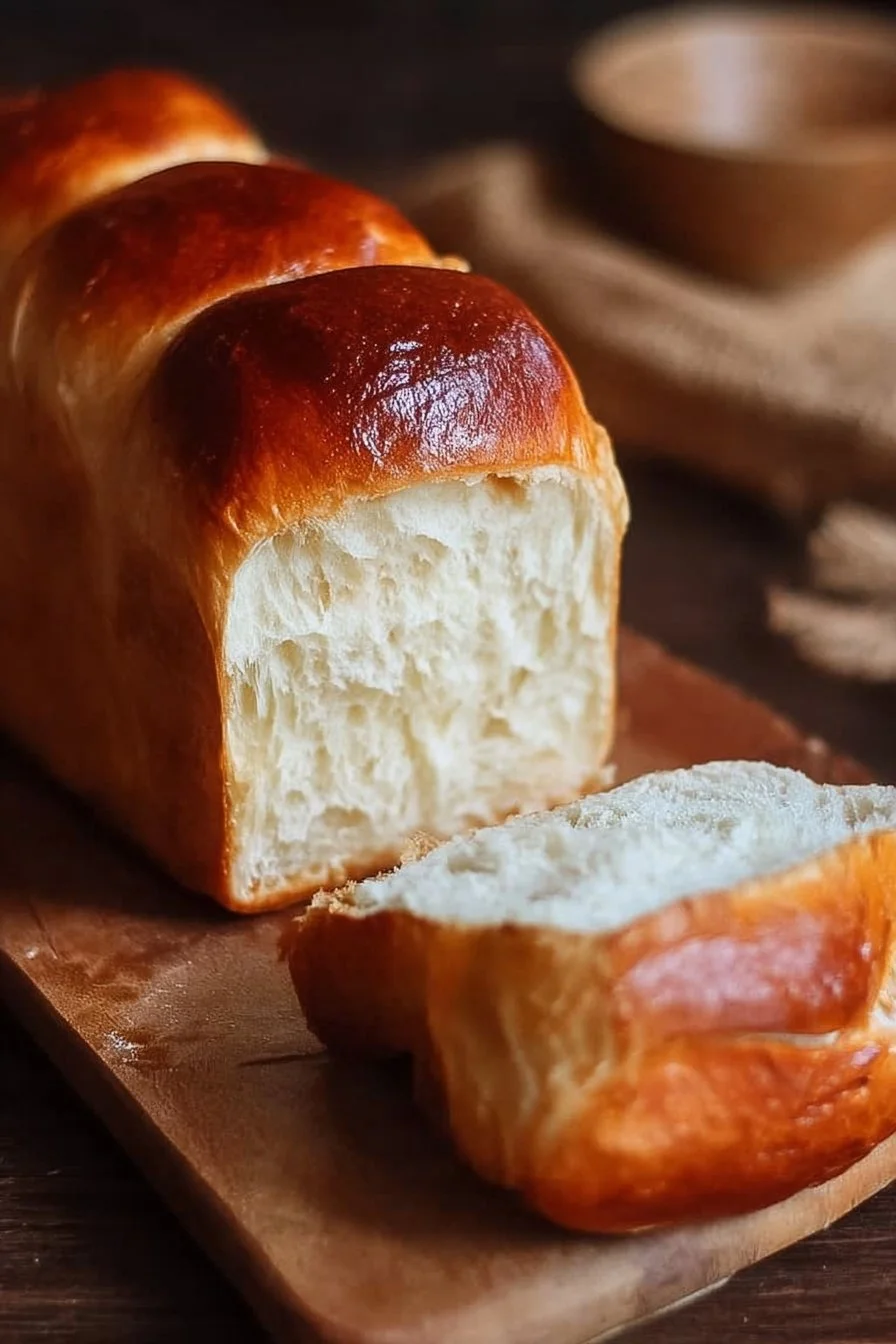
This soft, slightly sweet milk bread loaf bakes up with a tender crumb and a golden, buttery crust — perfect for sandwiches, toast, or a cozy afternoon snack. It’s an everyday loaf that feels special without being fussy: simple ingredients, a couple of short rises, and a straightforward knead. If you appreciate easy homemade loaves, you may also enjoy the 4-ingredient artisan bread for another quick-bake option.
Why you’ll love this dish
Milk bread is a pantry-friendly, crowd-pleasing loaf. It uses familiar ingredients and yields a light, pillowy crumb thanks to the milk and butter. It’s a great bridge between plain sandwich bread and richer enriched breads like brioche — approachable but indulgent.
“Soft, versatile, and reliably delicious — this loaf disappears faster than I can slice it.” — a regular at my weekend kitchen
Reasons to try it:
- Kid-approved texture that’s perfect for PB&J or French toast.
- Budget-friendly and makes good use of basic staples.
- Quick enough for a weekend morning project; makes several sandwiches for the week.
- Adaptable: shape it as a loaf, rolls, or even braided for a special occasion.
Step-by-step overview
You’ll mix the dry ingredients, add the cold liquids to form a rough dough, then knead until smooth. Work softened butter into the dough, proof once, shape, proof again in a loaf pan, brush with butter, and bake. Total active time is mostly kneading and shaping; hands-off rising time is about 90 minutes in two stages.
What you’ll need
- 500 g bread flour (about 3¾ cups) — use high-protein bread flour for better structure.
- 40 g granulated sugar (3 tablespoons) — adds a subtle sweetness and helps browning.
- 1½ teaspoons instant yeast — you can use active dry if you bloom it in warm liquid first.
- 225 g cold water (a little less than 1 cup)
- 115 g cold milk (½ cup) — whole milk gives the best tenderness.
- 9 g sea salt (1½ teaspoons)
- 25 g unsalted butter (1¾ tablespoons), plus extra for coating and brushing — room-temperature for easier incorporation; melted for finishing.
Substitutions and notes:
- For dairy-free: use plant-based milk and vegan butter; expect a slightly different crumb.
- To make whole-wheat: replace up to 100 g of the bread flour with whole-wheat flour and increase hydration by 10–15 g if the dough feels stiff.
Step-by-step instructions
- In a large mixing bowl, whisk together the bread flour, sugar, instant yeast, and sea salt until evenly distributed.
- Pour the cold milk and cold water into the dry mix. Stir with a spoon or spatula until a rough, shaggy dough forms.
- Turn the dough onto a lightly floured surface. Knead for about 10 minutes until the dough is smooth, elastic, and slightly tacky but not sticky.
- Add the unsalted butter in small pieces. Continue kneading until each piece is fully absorbed and the dough becomes glossy and supple. This may take a few more minutes.
- Lightly grease a clean bowl, place the dough inside, and cover with a clean cloth. Let it rise in a warm spot for about 1 hour, or until doubled in size.
- Gently deflate (punch down) the dough, shape it into a loaf by rolling or folding to create surface tension, and place it into a greased 9×5-inch (or similar) loaf pan.
- Cover the pan and let the dough rise again for about 30 minutes, until it’s noticeably puffy.
- Preheat the oven to 180°C (350°F) while the dough finishes its second rise.
- Brush the top with melted butter just before baking for a rich, glossy crust.
- Bake for 25–30 minutes until the top is golden brown and the loaf sounds hollow when tapped on the bottom.
- Remove the pan from the oven. Let the loaf rest in the pan for a few minutes, then transfer to a wire rack to cool completely before slicing.
Best ways to enjoy it
Slice thick for toast, cut thin for elegant tea sandwiches, or use it for a family-style grilled cheese — it’s forgiving and versatile. Warm slices with a smear of butter and jam are classic. For a savory dinner idea, serve thick slices alongside soups or stews. It also pairs beautifully with pulled meats — try it with pulled chicken or your favorite BBQ filling like the best crockpot BBQ chicken for a quick sandwich night.
Storage and reheating tips
- Room temperature: Keep wrapped in a clean tea towel or in a bread box for 2–3 days. Avoid plastic at room temp if you want to preserve crust texture; slide it into a paper bag inside a light cloth if your kitchen is dry.
- Refrigeration: Not recommended for bread longer-term — it accelerates staling. Only refrigerate if your kitchen is very humid or if the loaf has perishable fillings.
- Freezing: Slice and freeze in an airtight bag for up to 3 months. Toast or warm frozen slices straight from the freezer.
- Reheating: For best texture, toast slices or warm the whole loaf in a 160°C (325°F) oven for 8–10 minutes wrapped in foil to refresh softness.
Pro chef tips
- Cold liquids give a slightly slower, more controllable fermentation and a tender crumb. If your kitchen is very cold, allow a bit more time for proofing.
- Knead until the dough passes the windowpane test: stretch a small piece—if it thins without tearing and you can almost see light through it, gluten is developed.
- Incorporate butter gradually and be patient; adding it too fast can tear the dough.
- If the dough feels too sticky after butter, rest it 10 minutes — the butter will become more cohesive with the gluten network.
- Use an instant-read thermometer: fully baked bread internal temp should be about 95–99°C (203–210°F) for enriched loaves. If you don’t have one, the hollow-tap test is reliable.
Creative twists
- Sweet variation: fold in 70–100 g of raisins and 1 teaspoon cinnamon for a breakfast loaf.
- Savory herb: add 1–2 tablespoons of finely chopped fresh herbs (thyme, rosemary) and a teaspoon of garlic powder for an aromatic loaf.
- Enriched upgrade: replace 15–30 g of the water with an extra egg or 15–25 g of heavy cream for richer texture (reduces elasticity a bit; adjust knead time).
- Shape options: make dinner rolls by dividing into small balls; braid for a decorative centerpiece; or make sandwich rolls by dividing into equal portions and proofing on a sheet pan.
Common questions
Q: How long does this bread take from start to finish?
A: Active hands-on time is about 25–35 minutes (mixing, kneading, shaping). Total time including two rises and baking is roughly 2 to 2¼ hours.
Q: Can I use all-purpose flour instead of bread flour?
A: Yes, but expect a slightly softer, less elastic crumb. Bread flour gives better chew and structure because of the higher protein content.
Q: Do I have to use cold milk and water?
A: Cold liquids slow fermentation slightly and make the dough easier to handle; room-temperature liquids will speed up proofing. Either works; just watch the rising times.
Q: Can I make this in a stand mixer?
A: Absolutely. Use the dough hook on low-medium speed. Mix until the dough is smooth and elastic, then add butter slowly and continue until absorbed. Stand mixers shorten knead time.
Q: How do I know when to stop kneading?
A: Look for a smooth, slightly shiny surface and some spring back when pressed. The windowpane test (stretching dough thinly without tearing) is a reliable indicator.
If you want a shorter, fuss-free loaf without many ingredients, the linked artisan bread recipe in the intro offers a fast alternative.
Print
Soft Milk Bread Loaf
- Total Time: 120 minutes
- Yield: 12 slices
- Diet: Vegetarian
Description
A soft, slightly sweet milk bread loaf with a tender crumb and golden crust, perfect for sandwiches, toast, or a cozy snack.
Ingredients
- 500 g bread flour (about 3¾ cups)
- 40 g granulated sugar (3 tablespoons)
- 1½ teaspoons instant yeast
- 225 g cold water (a little less than 1 cup)
- 115 g cold milk (½ cup)
- 9 g sea salt (1½ teaspoons)
- 25 g unsalted butter (1¾ tablespoons), plus extra for coating and brushing
Instructions
- In a large mixing bowl, whisk together the bread flour, sugar, instant yeast, and sea salt until evenly distributed.
- Pour the cold milk and cold water into the dry mix. Stir with a spoon or spatula until a rough, shaggy dough forms.
- Turn the dough onto a lightly floured surface. Knead for about 10 minutes until the dough is smooth, elastic, and slightly tacky but not sticky.
- Add the unsalted butter in small pieces. Continue kneading until each piece is fully absorbed and the dough becomes glossy and supple.
- Lightly grease a clean bowl, place the dough inside, and cover with a clean cloth. Let it rise in a warm spot for about 1 hour, or until doubled in size.
- Gently deflate the dough, shape it into a loaf, and place it into a greased loaf pan.
- Cover the pan and let the dough rise again for about 30 minutes, until puffy.
- Preheat the oven to 180°C (350°F) while the dough finishes rising.
- Brush the top with melted butter just before baking.
- Bake for 25–30 minutes until the top is golden brown and sounds hollow when tapped.
- Let the loaf rest in the pan for a few minutes, then transfer to a wire rack to cool completely before slicing.
Notes
For dairy-free: use plant-based milk and vegan butter. To make whole-wheat: replace up to 100 g of the bread flour with whole-wheat flour.
- Prep Time: 30 minutes
- Cook Time: 30 minutes
- Category: Bread
- Method: Baking
- Cuisine: American