
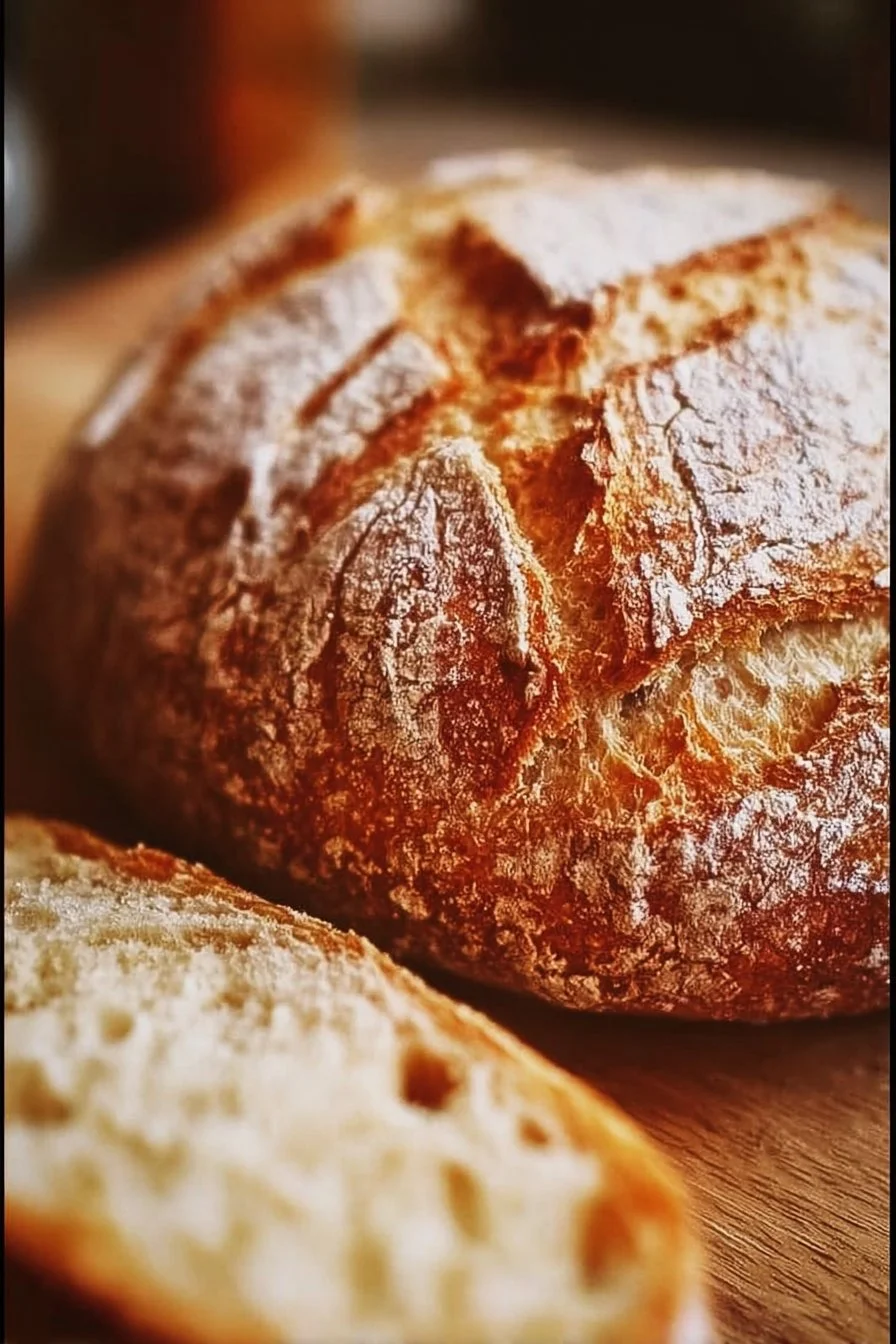
There’s something quietly magical about a loaf that needs nothing but time, a heavy pot, and four pantry staples. This crusty homemade artisan bread is the no-fuss, high-reward loaf that delivers a blistered, crackling crust and an open, tender crumb — perfect for dunking into soup, building a sandwich, or stealing slices straight from the cooling rack. If you enjoy the deep oven-spring you get from baking in a covered pot, try a Dutch oven garlic rosemary bread sometime for a fragrant twist on the same technique.
Why you’ll love this loaf
This recipe is a masterclass in minimalism: no kneading, just patience. Four ingredients, one bowl, and an overnight rest produce complex flavor from a long, gentle fermentation. It’s ideal for busy cooks who want artisan results without babysitting dough.
“I was stunned that something so simple tasted so bakery-fresh — crunchy outside, pillow-soft inside. Weekend ritual from now on.”
Perfect occasions: weekend breakfasts, dinner with soup or stew, dinner parties where you want homemade bread without the fuss, or a fast last-minute bread when friends drop by.
The cooking process explained
Expect to mix dry ingredients, add water, and stir to a shaggy, sticky dough. Cover and leave the bowl at room temperature for 12–18 hours so the yeast slowly ferments the dough and develops flavor. After the long rest, shape the dough briefly, transfer it to a preheated Dutch oven, and bake covered to trap steam (which forms the crust). Finish uncovered to brown and crisp. Total hands-on time is under 20 minutes; most of the work happens while you sleep or go about your day.
What you’ll need
- 3 cups (about 360 g) all-purpose flour — bread flour will give slightly more chew; swap up to 1/3 cup whole-wheat for a nuttier taste.
- 1 1/2 teaspoons salt — kosher or fine sea salt.
- 1/2 teaspoon instant yeast — if using active dry yeast, sprinkle it into warm water and let it bloom first (see FAQ).
- 1 1/2 cups (360 ml) water, room temperature — hydration gives the open crumb; adjust a tablespoon at a time if your flour feels very thirsty or very wet.
Notes: measuring by weight improves consistency. If you want a tangier profile, replace half the water with a bit of sourdough starter (see variations).
Step-by-step instructions
- In a large bowl, whisk together the flour, salt, and instant yeast until evenly distributed.
- Pour in the water and stir with a wooden spoon or spatula until a sticky, shaggy dough forms. Don’t worry about smoothness; the dough should look loose and lumpy.
- Cover the bowl tightly with plastic wrap or a lid and let it sit at room temperature for 12–18 hours, until the surface is dotted with bubbles and the dough is puffed.
- About 30 minutes before baking, place a 4–6 quart Dutch oven (lid on) in the oven and preheat to 450°F (230°C). Preheating the pot gives better oven spring.
- Lightly flour a clean surface. Turn the risen dough out onto it and shape it gently into a round by folding the edges toward the center; handle it minimally to keep the interior airy.
- Transfer the dough to a piece of parchment (or directly into the hot pot if you’re comfortable). Carefully place it into the preheated Dutch oven, cover, and bake for 30 minutes. Use oven mitts — the pot will be extremely hot.
- Remove the lid and continue baking for 15 minutes, or until the crust is deep golden brown. If you like an extra crusty exterior, bake an extra 5–10 minutes while watching closely.
- Remove the loaf and cool on a wire rack at least 45 minutes before slicing; cooling finishes the crumb structure and prevents gummy slices.
Best ways to enjoy it
This bread is a blank canvas. Tear warm slices and dip in olive oil and flaky salt, serve with roasted garlic and melting butter, or use thick-cut pieces for grilled cheese. It’s a natural companion to stew, minestrone, or a simple cheese board. For a crowd-pleasing idea, tear the loaf into chunks and use it to sop up herby pan sauces or fondue.
Storage and reheating tips
- Room temperature: keep the loaf in a paper bag or wrapped in a kitchen towel for up to 48 hours to preserve crust. Plastic will soften the crust but is OK if you prefer softer slices.
- Freezing: slice, wrap tightly in plastic or foil, and freeze for up to 3 months. Reheat slices from frozen in a toaster or warm whole loaf in a 350°F (175°C) oven for 10–15 minutes.
- Avoid refrigeration — cold temperatures accelerate staling. To revive slightly stale bread, sprinkle lightly with water and reheat in a 375°F (190°C) oven for 5–10 minutes.
Pro chef tips
- Weigh flour: 3 cups all-purpose is roughly 360 g; weighing yields consistent hydration.
- Hydration feel: dough should be sticky; if it seems dry, add a tablespoon of water. If puddly, sprinkle a bit more flour.
- Shaping: use wet hands or a bench scraper to prevent sticking and preserve air pockets. Minimal handling = open crumb.
- Parchment sling: shape on parchment so you can lift the dough straight into the hot pot without risking burns.
- Preheat time: let the Dutch oven heat at temperature for at least 30 minutes so it’s truly hot — that’s key to great oven-spring.
- Safety: always use heavy-duty oven mitts and place the pot on an oven-proof trivet before opening; steam will escape when you lift the lid.
Creative twists
- Herb and garlic: press minced garlic and chopped rosemary into the dough surface before baking or brush the finished loaf with garlic butter.
- Cheese-studded: fold in 1 to 1 1/2 cups shredded cheese (cheddar, gruyère) for a savory, melty interior.
- Whole-grain: replace up to 1 cup of white flour with whole-wheat and increase water by 1–2 tablespoons.
- Pull-apart or monkey-bread style: cut the dough into pieces, toss with garlic butter and herbs, and bake in a bundt or pan — for an inspiration on a savory pull-apart, see this chicken alfredo monkey bread.
- Sourdough adaptation: incorporate active sourdough starter and reduce or omit commercial yeast; expect longer rise times and a tangier flavor.
Common questions
Q: Can I shorten the 12–18 hour rise?
A: You can, but flavor and texture will be different. For a faster loaf, increase yeast to 1 to 1 1/2 teaspoons and allow 2–4 hours for a bulk rise, but the crumb will be less developed.
Q: Can I use active dry yeast instead of instant yeast?
A: Yes. Proof active dry yeast by dissolving it in about 1/4 cup of the water at 105–115°F (40–46°C) with a pinch of sugar for 5–10 minutes until foamy, then mix into the remaining ingredients.
Q: Why isn’t my crust blistered or crisp?
A: Common causes are insufficient preheat of the pot, baking uncovered too long, or storing in plastic immediately after baking (which traps steam and softens crust). Ensure a fully preheated pot and finish uncovered to brown the crust; cool on a rack before wrapping.
Q: Is this recipe safe to leave out overnight?
A: Yes. The amounts of yeast are small and room-temperature fermentation for 12–18 hours is standard for no-knead bread. If your kitchen is very warm (>78°F/25°C), choose the shorter end of the window to avoid overproofing.
Q: Can I scale the recipe up or down?
A: Yes. Keep the same hydration ratio (water weight roughly 75–80% of flour weight) and adjust yeast proportionally if you change the fermentation schedule.
If you try this loaf, give it a go the first time exactly as written to learn how your kitchen temperature and flour behave; then experiment with herbs, cheeses, and different flours once you know the baseline. Enjoy the ritual — minimal effort, terrific results.
Print
Homemade Artisan Bread
- Total Time: 60 minutes
- Yield: 1 loaf
- Diet: Vegetarian
Description
A simple, no-knead artisan bread that requires only time and four ingredients, resulting in a crusty loaf perfect for any occasion.
Ingredients
- 3 cups (360 g) all-purpose flour
- 1 1/2 teaspoons salt
- 1/2 teaspoon instant yeast
- 1 1/2 cups (360 ml) water, room temperature
Instructions
- In a large bowl, whisk together the flour, salt, and instant yeast until evenly distributed.
- Pour in the water and stir with a wooden spoon or spatula until a sticky, shaggy dough forms.
- Cover the bowl tightly with plastic wrap or a lid and let it sit at room temperature for 12–18 hours.
- About 30 minutes before baking, place a 4–6 quart Dutch oven (lid on) in the oven and preheat to 450°F (230°C).
- Lightly flour a clean surface, turn the risen dough out onto it, and shape it gently into a round.
- Transfer the dough to a piece of parchment and place it into the preheated Dutch oven, cover, and bake for 30 minutes.
- Remove the lid and continue baking for 15 minutes until the crust is deep golden brown.
- Remove the loaf and cool on a wire rack for at least 45 minutes before slicing.
Notes
Measuring by weight improves consistency. For a tangier flavor, replace half the water with sourdough starter.
- Prep Time: 15 minutes
- Cook Time: 45 minutes
- Category: Baking
- Method: Baking
- Cuisine: American