
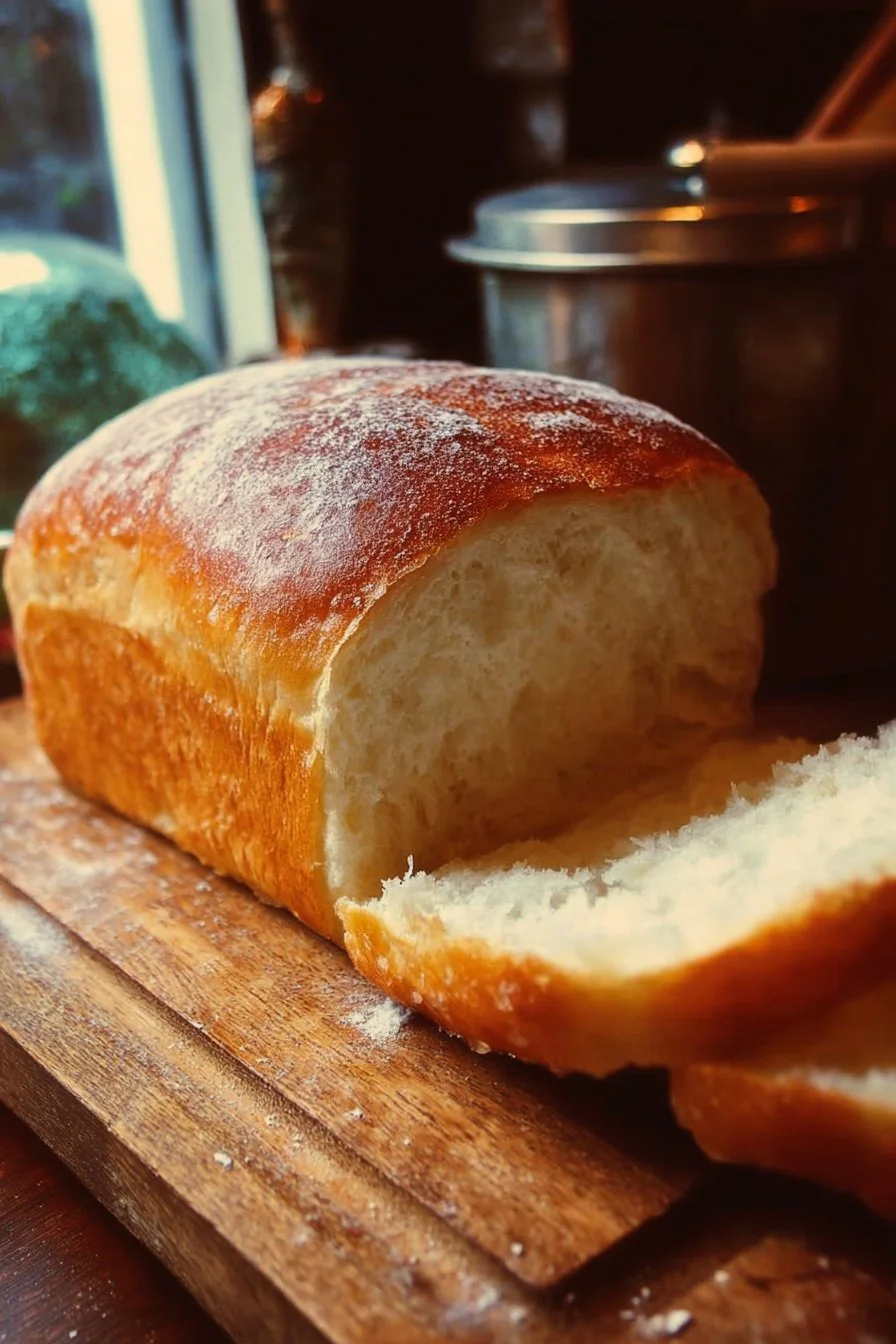
There’s something incredibly comforting about a loaf of white bread pulled warm from the oven — the crackling crust, the pillowy crumb, and the smell that fills the kitchen. This Classic White Bread from Scratch is straightforward, forgiving, and perfect for everything from school sandwiches to homemade toast. If time is tight but you still crave fresh bread, you might also like this 20-minute homemade bread for a speedy alternative.
Why you’ll love this loaf
This recipe is a reliable, all-purpose white bread that hits the sweet spot between soft sandwich texture and sturdy crumb for toasting. It’s great for bakers who want a traditional yeast loaf without complicated techniques.
"We baked this for Sunday breakfast — the kids ate it straight off the cooling rack. Soft, reliable, and great for jam." — home baker review
Reasons to try it:
- Budget-friendly: pantry staples only.
- Kid-approved: mild flavor, soft crumb.
- Versatile: sandwiches, French toast, grilled cheese, or tear-and-share at dinner.
- Learnable: classic methods (bloom yeast, knead, proof) that teach fundamentals of bread baking.
Step-by-step overview
You’ll bloom yeast in warm water with sugar, mix it into flour that’s been rubbed with butter, knead until elastic, then proof twice (once in the bowl and once in the pan). A final bake at 375°F (190°C) gives a golden crust. Plan roughly 2.5–3 hours from start to finish, including rising and cooling time; most of that is hands-off.
What you’ll need
- 2 cups warm water (about 105–115°F / 40–46°C)
- 1/4 cup granulated sugar
- 2 teaspoons active dry yeast
- 5 cups all-purpose flour (about 625 g)
- 2 teaspoons fine salt
- 3 tablespoons softened unsalted butter
Ingredient notes and swaps:
- Water temperature: too hot will kill yeast; too cool slows proofing. Aim for 105–115°F.
- Butter can be melted and cooled slightly if you prefer; for dairy-free, use a neutral oil and reduce by 1 tablespoon.
- For a softer crust, brush loaves with melted butter right after baking.
Step-by-step instructions
- Bloom the yeast: Stir the 1/4 cup sugar into the warm water until dissolved. Sprinkle the 2 teaspoons active dry yeast evenly over the surface. Wait 5–10 minutes until the surface is foamy and fragrant. If it doesn’t foam, the yeast may be dead — start over with fresh yeast and warmer water.
- Mix dry ingredients: In a large bowl, whisk together 5 cups all-purpose flour and 2 teaspoons fine salt.
- Cut in butter: Rub the 3 tablespoons softened unsalted butter into the flour by hand or with a pastry cutter until the mixture looks like coarse crumbs. This creates a tender crumb.
- Combine: Pour the foamy yeast mixture into the flour-butter mixture. Stir with a wooden spoon until a shaggy dough forms and no large dry patches remain.
- Knead: Turn dough onto a lightly floured surface. Knead for 8–10 minutes until the dough is smooth, slightly tacky, and elastic. You should be able to stretch a small piece thinly without tearing (the windowpane test).
- First rise: Place dough in a lightly oiled bowl, turning once to coat. Cover with plastic wrap or a damp towel and let rise in a warm, draft-free spot until doubled, about 1–2 hours.
- Shape and second rise: Punch down the dough gently to release gas. Shape it into a loaf by folding and rolling, then place into a greased 9×5-inch loaf pan. Cover and let rise until puffy, about 30–45 minutes.
- Bake: Preheat oven to 375°F (190°C). Bake the loaf for about 25 minutes, until golden brown and the internal temperature reaches about 190–200°F (88–93°C). If the top browns too fast, tent lightly with foil.
- Cool: Remove the loaf from the pan and cool on a wire rack for at least 30 minutes before slicing. Cooling finishes the bake and prevents a gummy crumb.
Best ways to enjoy it
- Classic sandwich: thick-sliced with mayo, ham, and cheddar.
- Toasted breakfast: butter and jam or avocado and a poached egg.
- Comfort food: make grilled cheese with sharp cheddar for a crispy, melty treat.
- Croutons and breadcrumbs: stale slices transform into pantry staples.
For rustic presentation, cut into thick slices and serve on a wooden board with butter and preserves.
Storage and reheating tips
- Room temperature: Store in a bread box or a paper bag inside a loose plastic bag for 2–3 days. Avoid refrigeration — it dries bread faster.
- Freezing: Slice, wrap tightly in plastic, then foil, and freeze up to 3 months. Thaw slices at room temperature or toast from frozen.
- Reheating: For a just-baked texture, warm a whole loaf at 300°F (150°C) for 10–12 minutes, or toast individual slices. Brushing slices with a little water before warming helps soften the crumb.
Pro chef tips
- Yeast check: Always proof yeast if it’s older than a month — active dry can lose potency.
- Dough temperature: After mixing, aim for a final dough temperature around 75–78°F (24–26°C) for steady fermentation.
- Kneading feel: Dough should be smooth and spring back when poked. If it’s too sticky, add flour a tablespoon at a time; too dry, add water a teaspoon at a time.
- Even rise: Create a warm proofing spot by placing the bowl inside an oven with the light on (oven off).
- Crust control: For a softer crust, brush with melted butter as soon as the loaf comes out of the oven. For a crunchier crust, spray the oven with water before baking to create steam.
Tip: If you enjoy experimenting with quick breads, you might compare textures with a simple 4-ingredient artisan loaf to see what you prefer.
Creative twists
- Seeded top: Brush with egg wash and sprinkle sesame, poppy, or everything bagel seasoning before baking.
- Herb loaf: Fold in 2 tablespoons chopped fresh herbs (rosemary, thyme) into the dough for an aromatic twist.
- Slightly sweet: Replace 2 tablespoons of flour with 2 tablespoons of milk powder and add 1 tablespoon honey for a softer, sweeter crumb.
- Whole-wheat hybrid: Substitute 1–2 cups of the all-purpose flour with whole-wheat flour and increase hydration by 1–2 tablespoons as whole wheat soaks more water.
Common questions
Q: My dough didn’t rise much — what happened?
A: Common causes are inactive yeast (water too hot or too cold), too much salt touching yeast directly, or a cool proofing environment. Start over with fresh yeast and check water temp.
Q: How can I tell when the bread is fully baked?
A: An internal temperature of 190–200°F (88–93°C) is ideal for white bread. The loaf should also sound hollow when tapped on the bottom and have an even golden crust.
Q: Can I use instant yeast instead of active dry yeast?
A: Yes. Use about 25% less instant yeast, and you can mix it directly into the flour without proofing. If you prefer the flavor developed from longer fermentation, still allow for the first rise.
Q: Is refrigeration okay?
A: Refrigeration accelerates staling due to starch retrogradation. Keep at room temperature for a few days or freeze for longer storage.
Q: Can I make this into rolls?
A: Absolutely. Divide the dough into equal portions (about 2–3 ounces each), shape into balls, place on a baking sheet or in a pan, and reduce the second rise and bake time (15–18 minutes).
Q: Why is my bread dense?
A: Under-kneading, expired yeast, insufficient proofing, or too much flour can cause density. Adjust kneading time, check yeast freshness, and avoid adding excess flour.
If you have any specific dietary needs or want help scaling the recipe, tell me how many loaves or servings you want and I’ll walk you through it.
Print
Classic White Bread from Scratch
- Total Time: 120 minutes
- Yield: 1 loaf
- Diet: Vegetarian
Description
A reliable all-purpose white bread perfect for sandwiches, toast, and more.
Ingredients
- 2 cups warm water (105–115°F / 40–46°C)
- 1/4 cup granulated sugar
- 2 teaspoons active dry yeast
- 5 cups all-purpose flour (about 625 g)
- 2 teaspoons fine salt
- 3 tablespoons softened unsalted butter
Instructions
- Stir the 1/4 cup sugar into the warm water until dissolved. Sprinkle the 2 teaspoons active dry yeast evenly over the surface. Wait 5–10 minutes until the surface is foamy and fragrant.
- Whisk together 5 cups all-purpose flour and 2 teaspoons fine salt.
- Rub the 3 tablespoons softened unsalted butter into the flour until it looks like coarse crumbs.
- Pour the foamy yeast mixture into the flour-butter mixture. Stir until a shaggy dough forms.
- Turn dough onto a lightly floured surface. Knead for 8–10 minutes until smooth and elastic.
- Place dough in a lightly oiled bowl, cover, and let rise in a warm spot until doubled, about 1–2 hours.
- Punch down the dough gently and shape it into a loaf. Place into a greased loaf pan and let rise until puffy, about 30–45 minutes.
- Bake in a preheated oven at 375°F (190°C) for about 25 minutes until golden brown.
- Remove the loaf from the pan and cool on a wire rack for at least 30 minutes before slicing.
Notes
For softer crust, brush with melted butter after baking.
- Prep Time: 30 minutes
- Cook Time: 25 minutes
- Category: Bread
- Method: Baking
- Cuisine: American