
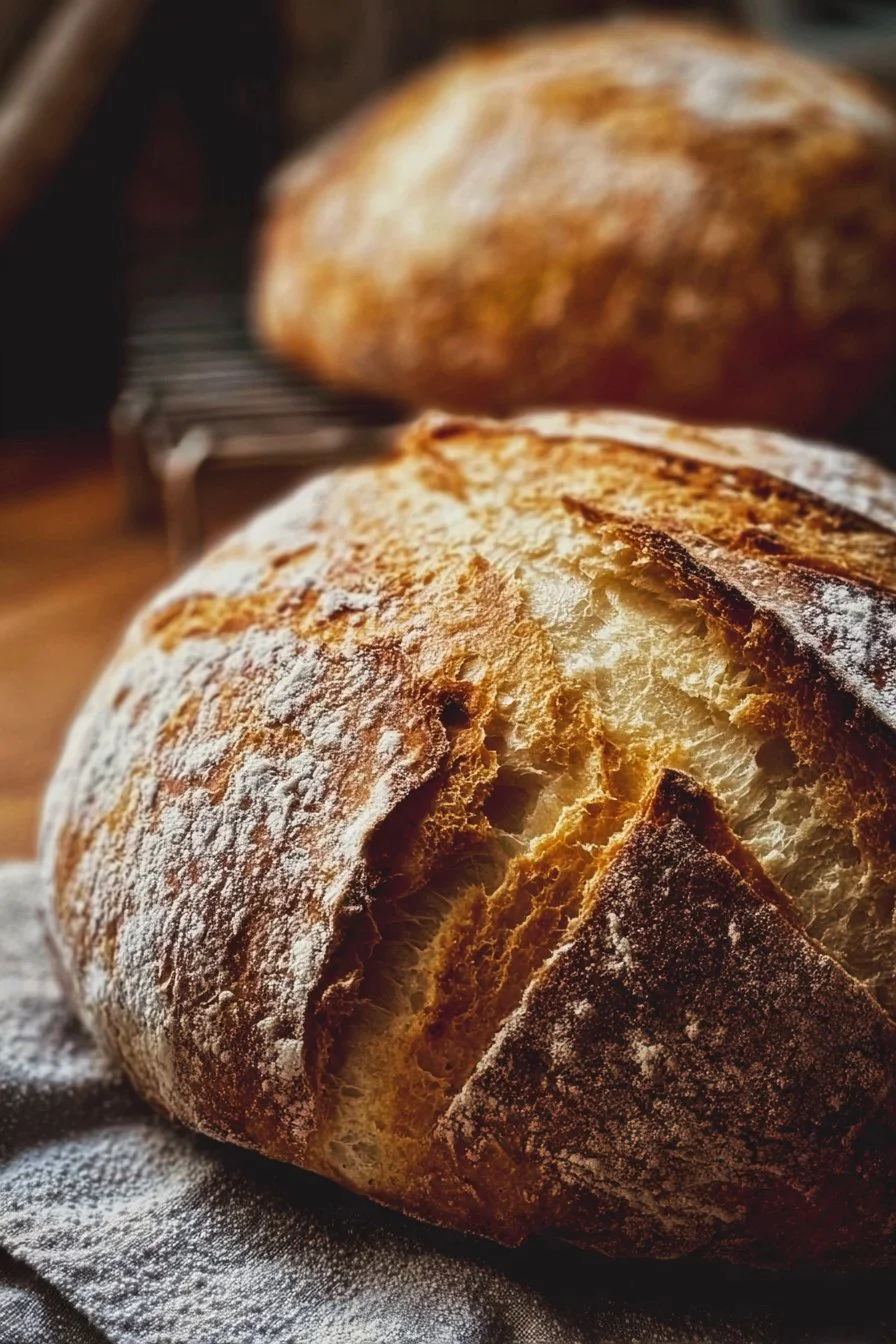
This no-fuss artisan loaf produces a crisp, deeply browned crust and an open, chewy crumb with almost no active work—just patience. It’s the kind of bread you make when you want bakery results with minimal equipment: three cups of flour, room-temperature water, a pinch of instant yeast and salt. If you want an even simpler variation that trims a step or two, check out the 4-ingredient artisan loaf for another hands-off option that delivers similar rustic charm.
Why you’ll love this dish
This loaf is deceptively simple but thoroughly satisfying. The long, no-knead rest develops flavor and structure without demanding technique or a stand mixer. It’s perfect for weekend baking, family dinners, or when you want fresh bread for sandwiches and soups.
“We made this on a rainy Sunday—crispy outside, pillowy inside. Kids loved tearing chunks off and dunking them in stew.” — home cook review
Reasons to try it:
- Minimal ingredients and equipment.
- Hands-off fermentation builds deep flavor.
- Reliable crust thanks to baking inside a preheated Dutch oven.
- Great for beginners and busy cooks who want homemade bread without the fuss.
How this recipe comes together
This recipe relies on time more than technique. You mix a wet, shaggy dough, let it ferment slowly at room temperature for 12–18 hours, shape lightly, then bake in a hot, covered pot to trap steam. The steam from the sealed Dutch oven creates that signature glossy, crackly crust; removing the lid for the final bake intensifies color and crispness. Expect active time under 30 minutes and passive time mostly waiting for the dough to rise.
Key ingredients
- 3 cups (about 360 g) all-purpose flour — unbleached is best for flavor and color.
- 1 1/2 cups (360 ml) room-temperature water.
- 1/4 teaspoon instant yeast — a tiny amount because of the long fermentation.
- 1 teaspoon fine salt.
Notes and substitutions:
- Whole wheat: Swap up to 1 cup for added flavor; add a splash more water.
- Flour type: Bread flour gives a chewier crumb; all-purpose works fine for most bakers.
- Yeast swap: You can use active dry yeast if needed—proof it in a small amount of the recipe water warmed to about 100–110°F and increase the measure slightly (see FAQs).
For tips on pushing the crust even further, see this crust-focused method that suggests extra steaming tricks and oven tweaks.
How to prepare it
- In a large bowl, whisk the flour, salt and instant yeast until evenly combined.
- Slowly pour in the room-temperature water while stirring with a wooden spoon or your hand. Mix until a shaggy, sticky dough forms—you don’t want a smooth, tight ball.
- Cover the bowl tightly with plastic wrap and leave at room temperature for 12–18 hours; the dough should double in size and show bubbles on the surface.
- Lightly flour a work surface and tip the dough out. With floured hands, fold the dough over itself a few times to shape a rough ball—don’t overwork it.
- Place the shaped loaf seam-side down on a floured towel or a piece of parchment, cover with a clean towel, and let it rise for 1–2 hours until puffy.
- Preheat your oven to 450°F (230°C) and place a heavy Dutch oven (lid on) inside to heat for at least 30 minutes.
- When hot, carefully transfer the dough into the hot pot (use parchment to make this easier). Score the top if you want controlled expansion.
- Cover and bake for 30 minutes, then remove the lid and bake another 15–20 minutes until the crust is a deep golden brown and absurdly crisp.
- Remove the loaf and cool completely on a wire rack before slicing to avoid a gummy crumb.
Best ways to enjoy it
Serve warm slices with butter and flaky salt, use thick cuts for grilled cheese, or pair with salads and brothy soups to soak up juices. For breakfast, toast thick slices and top with avocado and a squeeze of lemon. For a rustic appetizer, slice thinly, rub with garlic, drizzle with olive oil and scatter with sea salt and herbs.
Storage and reheating tips
- Room temperature: Store whole or sliced in a paper bag inside a bread box or wrapped in a clean kitchen towel for up to 2 days. Bread will stay fresher longer outside the refrigerator.
- Freezing: Wrap tightly in plastic wrap and place in a freezer bag for up to 3 months. Thaw at room temperature, then refresh in a 350°F oven for 8–12 minutes.
- Reheating: For a crisp crust, bake slices at 350°F for 6–10 minutes, or toast as usual. Microwaving makes the crumb gummy—avoid unless you’re in a hurry.
Food safety note: This recipe uses no perishable fillings and can be left at room temperature during fermentation; once baked, standard storage rules for bread apply.
Pro chef tips
- Temperature matters more than time: If your kitchen is cool, expect the bulk rise to take closer to 18 hours; in a warm kitchen it may be 12.
- Handling sticky dough: Dust your hands with flour but avoid incorporating too much extra flour into the dough—lightly wetting your hands can help too.
- Crispier crust secrets: Bake on parchment inside the hot pot and remove the lid for a longer finish. For an extra blistered crust, bake directly on a preheated baking stone and spritz with water in the first 5 minutes.
- Scoring: A single shallow slash lets the loaf open naturally; deeper cuts change the shape drastically.
- Equipment: No Dutch oven? Use a heavy lidded oven-safe pot or bake on a preheated cast-iron skillet covered with an inverted roasting pan for enclosed steam.
Creative twists
- Olive & Rosemary: Fold in 1/3 cup chopped olives and 1 tablespoon chopped rosemary during shaping.
- Cheesy pull-apart: Add 3/4 cup shredded sharp cheddar folded gently into the dough.
- Seeded top: Brush loaf with water and sprinkle sesame, poppy or sunflower seeds before baking.
- Sourdough option: Replace the instant yeast with 150–200 g active sourdough starter and shorten or lengthen the fermentation based on starter strength.
Common questions
Q: How long does this actually take from start to finish?
A: Active hands-on time is about 20–30 minutes (mixing, shaping). Passive time is 12–18 hours for the overnight fermentation plus 1–2 hours second rise and ~45–50 minutes baking.
Q: Can I use active dry yeast instead of instant?
A: Yes. Proof active dry yeast in a small portion of the warm water (about 100–110°F) with a pinch of sugar for 5–10 minutes until foamy, and use about 25% more active dry by volume than instant. Then proceed with the recipe—expect the timing to be similar once the yeast is active.
Q: My crumb turned out dense—what went wrong?
A: Common causes are insufficient fermentation (not enough time at room temp), over-handling during shaping, or using too much extra flour while shaping. Make sure the dough shows bubbles after the bulk rise and be gentle when forming the loaf.
Q: Do I have to use a Dutch oven?
A: A Dutch oven gives the most reliable steam and crust. If you don’t have one, preheat a baking stone and create steam by adding a tray of hot water to the bottom of the oven or by covering the loaf with an inverted metal roasting pan for the first part of baking.
Q: Can I make smaller loaves or double the recipe?
A: Yes. For multiple loaves, scale ingredients proportionally and divide the dough after bulk fermentation. For smaller loaves, shorten the second rise slightly and watch baking time—the crust will develop faster on smaller loaves.
No-Fuss Artisan Loaf
- Total Time: 18 hours 20 minutes
- Yield: 1 loaf
- Diet: Vegetarian
Description
A simple artisan loaf with a crispy crust and chewy crumb, requiring minimal active work.
Ingredients
- 3 cups (about 360 g) all-purpose flour
- 1 1/2 cups (360 ml) room-temperature water
- 1/4 teaspoon instant yeast
- 1 teaspoon fine salt
Instructions
- Whisk the flour, salt and instant yeast until evenly combined.
- Pour in the room-temperature water while stirring with a wooden spoon or your hand until a shaggy, sticky dough forms.
- Cover the bowl tightly with plastic wrap and leave at room temperature for 12–18 hours.
- Tip the dough out on a floured surface and fold it over itself a few times to shape a rough ball.
- Place the loaf seam-side down on a floured towel or parchment, cover with a towel, and let it rise for 1–2 hours.
- Preheat your oven to 450°F (230°C) and place a heavy Dutch oven inside to heat for at least 30 minutes.
- Transfer the dough into the hot pot and score the top if desired.
- Bake for 30 minutes, then remove the lid and bake for another 15–20 minutes until golden brown.
- Cool the loaf completely on a wire rack before slicing.
Notes
For added flavor, consider swapping 1 cup of all-purpose flour for whole wheat flour. Enhance the crust by baking on parchment inside the pot.
- Prep Time: 30 minutes
- Cook Time: 50 minutes
- Category: Bread
- Method: Baking
- Cuisine: American