
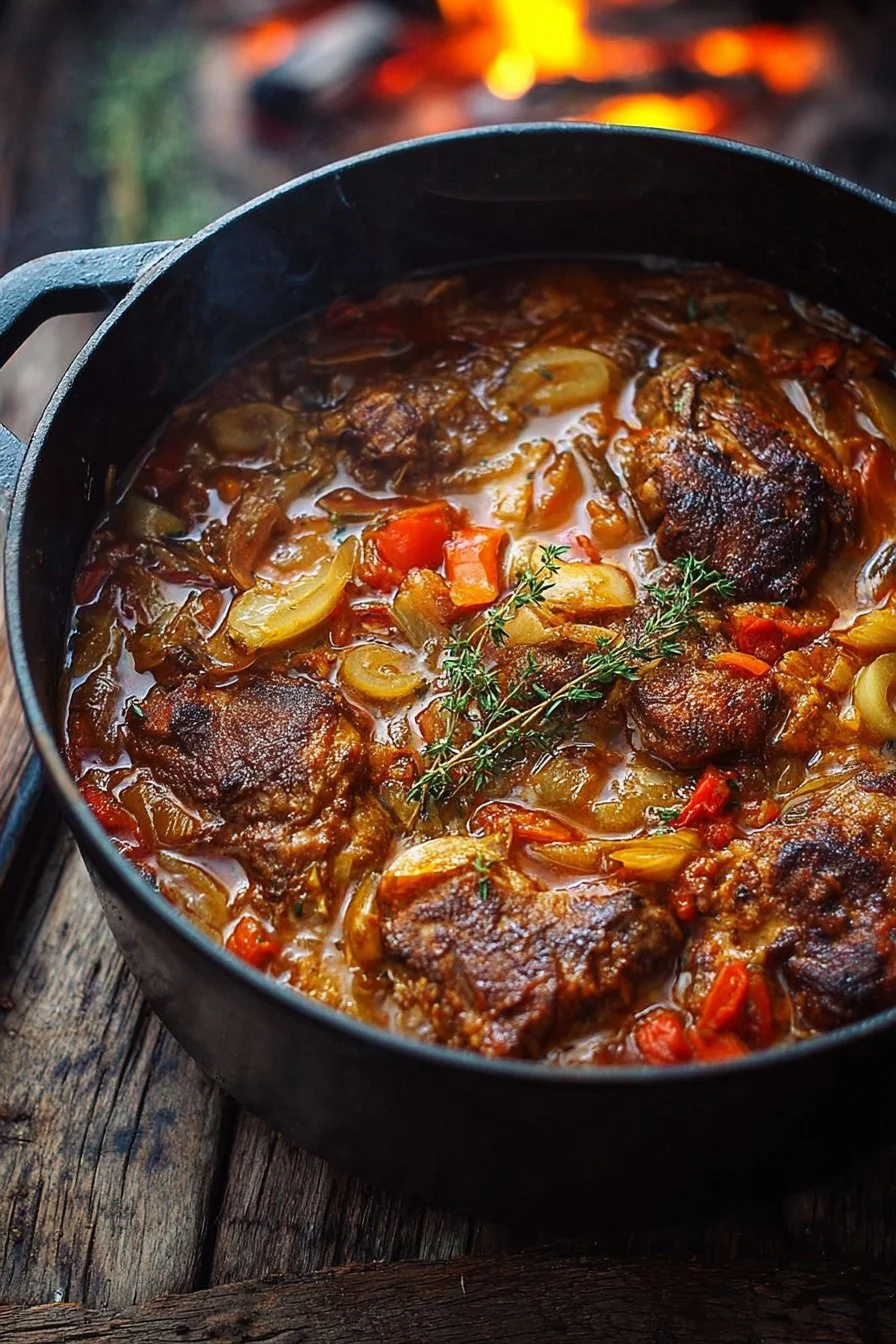
I still make this Dutch oven braise on repeat when I want something that feels slow-cooked without babysitting the stove. It’s a forgiving, one-pot dinner that works with chicken thighs, pork shoulder, chuck roast, sturdy sausages, or — for a vegetarian version — two cans of beans. If you like long-simmered, comfort-food mains that cozy up a night, you might also enjoy this take on a slow-braised pot roast for similar technique and flavor depth.
Why you’ll love this dish
This braise is the sort of recipe that rewards very little fuss with big flavor. It’s budget-friendly when you use tougher cuts that become meltingly tender, flexible for diets, and friendly to batch-cooking. Make it for a weeknight when you want minimal hands-on time or for a relaxed Sunday dinner where the oven or a low simmer does the work.
“A homey, stick-to-your-ribs meal that smells like Sunday even on a Tuesday.” — real-kitchen feedback from home cooks
Benefits at a glance:
- Economical: uses affordable, flavorful cuts and pantry staples.
- Versatile: swap proteins or make it vegetarian with canned beans.
- Crowd-pleasing: hearty, saucy, and easy to stretch for leftovers.
Step-by-step overview
Expect three phases: brown, build, and braise. First you brown the protein to develop flavor. Next you soften aromatics and deglaze the pot to lift all those fond bits into the sauce. Finally you add stock and tomatoes, nestle root vegetables in, and let the covered pot simmer gently until everything is fork-tender. Finishing touches — a splash of acid, fresh herbs, or grated cheese — brighten the dish at the end.
What you’ll need
- 2–3 lb total protein: bone-in chicken thighs (skin on recommended), boneless pork shoulder, chuck roast, or sturdy sausages; or 2 cans of beans for vegetarian
- 1–2 onions, diced
- 2–4 carrots, cut into large chunks
- 2–3 celery stalks, sliced
- 3–5 garlic cloves, minced
- 2–4 cups low-sodium chicken or beef stock (use less for chicken, more for larger roasts)
- 1 can (14 oz) crushed tomatoes
- Dry white wine, 1/4–1 cup (optional substitute: extra stock or a splash of vinegar)
- 1–2 lb potatoes or assorted root vegetables (turnips, parsnips, rutabaga)
- 2–3 tbsp olive oil
- 1–2 tbsp butter (optional, for finish)
- 2 bay leaves
- 1 tsp dried thyme
- 1 tsp rosemary (dried or fresh)
- 1 tsp smoked paprika
- Salt and freshly ground black pepper to taste
- Lemon wedges, a splash of red wine or sherry vinegar, chopped parsley, and grated Parmesan (all optional finishing items)
Notes/substitutions:
- Beans: use two 15-oz cans (drained) and add near the end so they don’t fall apart.
- Wine is optional; the acidity can be replaced by a tablespoon of vinegar.
- For low-sodium diets, start with less stock and adjust salt at the end.
Step-by-step instructions
- Preheat and prep: If using the oven, set it to 300–325°F (150–160°C). Chop vegetables and measure spices. Pat protein dry and season generously with salt, pepper, and smoked paprika.
- Brown in batches: Heat 2–3 tbsp olive oil in a heavy Dutch oven over medium-high heat. Brown chicken skin or meat on all sides until golden (about 4–6 minutes per side for thighs). For large roasts, brown each side 3–4 minutes. Work in batches so the pot isn’t crowded. Transfer browned pieces to a plate.
- Sauté aromatics: Lower heat to medium. Add onions, carrots, and celery. Cook until softened and beginning to caramelize, about 6–8 minutes. Add garlic, thyme, rosemary, and bay leaves and cook 30–60 seconds until fragrant.
- Deglaze: Pour in the wine or 1 cup stock and scrape the browned bits from the bottom with a wooden spoon. Let the alcohol cook off for a minute if using wine.
- Add liquids and nestle vegetables: Return protein to the pot. Pour in stock and crushed tomatoes so the protein is at least halfway submerged. Nestle potatoes or root vegetables around the meat. Add extra salt and pepper but remember you can adjust later.
- Braise: Bring to a gentle simmer on the stovetop. Cover and either move to the preheated oven or maintain a very low simmer on the stovetop. Cooking times: chicken thighs 45–60 minutes; sausages 30–45 minutes; pork shoulder or chuck roast 2.5–4 hours until fork-tender (internal temp for pulled pork-style texture is ~195–205°F / 90–96°C); check chicken reaches 165°F (74°C).
- Finish and serve: Remove from heat. Stir in butter if you like a glossy sauce. Brighten with a squeeze of lemon or a splash of vinegar, sprinkle parsley, and grate Parmesan if using. Adjust seasoning and serve.
Safety tip: always check poultry for an internal temp of 165°F. For large cuts of beef or pork, cook until connective tissue breaks down (195–205°F) for shreddable texture.
Best ways to enjoy it
This braise is delicious spooned over creamy polenta, buttered egg noodles, or a heap of mashed potatoes. Crusty bread is perfect for sopping up the sauce. For a lighter contrast, serve with a bright green salad or lemony steamed greens.
For a weekend comfort pivot that adds dumplings and an even heartier sauce, try our method for Dutch oven chicken and dumplings which follows many of the same braising principles.
Pairing ideas:
- Red or medium-bodied white wine (depending on protein)
- A crisp, acidic beer if you like beer braises
- Finish with grated cheese for richness or chopped herbs for freshness
Storage and reheating tips
- Refrigerator: Cool to room temperature and refrigerate within 2 hours. Keeps 3–4 days in an airtight container.
- Freezer: Freeze up to 3 months. For best texture, freeze sauce and solids together or store meat separately from vegetables. Thaw overnight in the fridge.
- Reheating: Reheat gently on the stovetop over low heat with a splash of stock or water to loosen the sauce. Reheat in a 300°F oven covered for 20–30 minutes for even warming. Avoid boiling leftovers, which can make vegetables mushy.
- Safety note: Reheat to 165°F before serving. Don’t refreeze leftovers that have been thawed at room temperature.
Pro chef tips
- Don’t skip browning: the fond created during searing gives the braise its deep, savory backbone.
- Deglaze well: scrape the browned bits to build layered flavor.
- Keep a gentle simmer: rapid boiling can toughen meat and reduce sauce clarity.
- Veg timing: add softer vegetables later in the cook; firm roots can braise for the full time.
- Finish with acid: a splash of vinegar or lemon brightens the rich sauce more than extra salt will.
- Use a tight-fitting lid: it traps steam and keeps the braise moist.
Creative twists
- Vegetarian bean braise: replace meat with two cans of beans, add a teaspoon of smoked paprika and a handful of chopped kale near the end.
- North African spin: use cumin, coriander, cinnamon, and preserved lemons.
- Tomato-light: omit crushed tomatoes and increase stock with a tablespoon of tomato paste for a subtler tomato presence.
- Beer braise: substitute a bottle of amber beer for part of the stock for maltiness.
- Add greens: stir in chopped spinach, Swiss chard, or kale in the last 5–10 minutes for color and nutrients.
Common questions
Q: How long does this take from start to finish?
A: Active time is about 20–30 minutes (browning and prep). Braising time varies: chicken 45–60 minutes; sausages 30–45 minutes; pork shoulder or chuck roast 2.5–4 hours.
Q: Can I use boneless cuts?
A: Yes. Boneless pork or chicken will cook faster; reduce braise time by about 25%. Check doneness with a thermometer. Boneless roasts may not need the very long 3–4 hour braise.
Q: Do I need wine?
A: No. Wine adds acidity and depth, but you can use extra stock plus a tablespoon of vinegar or a squeeze of lemon at the end.
Q: How do I thicken the sauce?
A: Reduce it uncovered on the stovetop after removing meat, or stir in a beurre manié (equal parts softened butter and flour) off heat, then return to low heat to thicken. A slurry of cornstarch and cold water works too.
Q: Can I make this ahead?
A: Absolutely. Braises often taste better the next day. Cool and refrigerate, then gently reheat. If freezing, leave a bit of headroom in containers for expansion.
Q: My vegetables fell apart — what happened?
A: They were likely added too early or cut too small. Use larger chunks for long braises or add softer vegetables in the last hour.
If you’d like, I can give a timing chart tailored to the specific protein you plan to use (chicken, pork shoulder, chuck roast, sausage, or beans). Which protein are you planning to braise?
Print
Dutch Oven Braise
- Total Time: 200 minutes
- Yield: 4 servings
- Diet: Omnivore
Description
A hearty and versatile Dutch oven braise that transforms tough cuts of meat or beans into a comforting one-pot meal.
Ingredients
- 2–3 lb protein (bone-in chicken thighs, boneless pork shoulder, chuck roast, sturdy sausages, or 2 cans of beans)
- 1–2 onions, diced
- 2–4 carrots, cut into large chunks
- 2–3 celery stalks, sliced
- 3–5 garlic cloves, minced
- 2–4 cups low-sodium chicken or beef stock
- 1 can (14 oz) crushed tomatoes
- 1/4–1 cup dry white wine (optional)
- 1–2 lb potatoes or assorted root vegetables
- 2–3 tbsp olive oil
- 1–2 tbsp butter (optional)
- 2 bay leaves
- 1 tsp dried thyme
- 1 tsp rosemary (dried or fresh)
- 1 tsp smoked paprika
- Salt and pepper to taste
- Lemon wedges, red wine or sherry vinegar, chopped parsley, grated Parmesan (optional)
Instructions
- Preheat the oven to 300–325°F (150–160°C). Chop vegetables and measure spices.
- Pat protein dry and season with salt, pepper, and smoked paprika.
- Heat olive oil in a Dutch oven over medium-high heat. Brown meat on all sides for 4–6 minutes per side.
- Transfer the browned pieces to a plate.
- Add onions, carrots, and celery. Cook until softened (6–8 minutes).
- Add garlic, thyme, rosemary, and bay leaves; cook for 30–60 seconds until fragrant.
- Pour in wine or stock and scrape browned bits from the bottom. Cook off alcohol for a minute.
- Return protein to the pot and pour in stock and crushed tomatoes.
- Nestle potatoes/root vegetables around the meat; season with extra salt and pepper.
- Bring to a gentle simmer. Cover and transfer to oven or maintain a low stovetop simmer.
- Cook according to protein type (chicken 45–60 min; pork 2.5–4 hours) until tender.
- Remove from heat and stir in butter for a glossy sauce. Adjust seasoning and serve.
Notes
For a vegetarian version, use two cans of beans and add them toward the end to prevent them from falling apart. You can replace wine with vinegar if desired.
- Prep Time: 20 minutes
- Cook Time: 180 minutes
- Category: Main Course
- Method: Braising
- Cuisine: American