
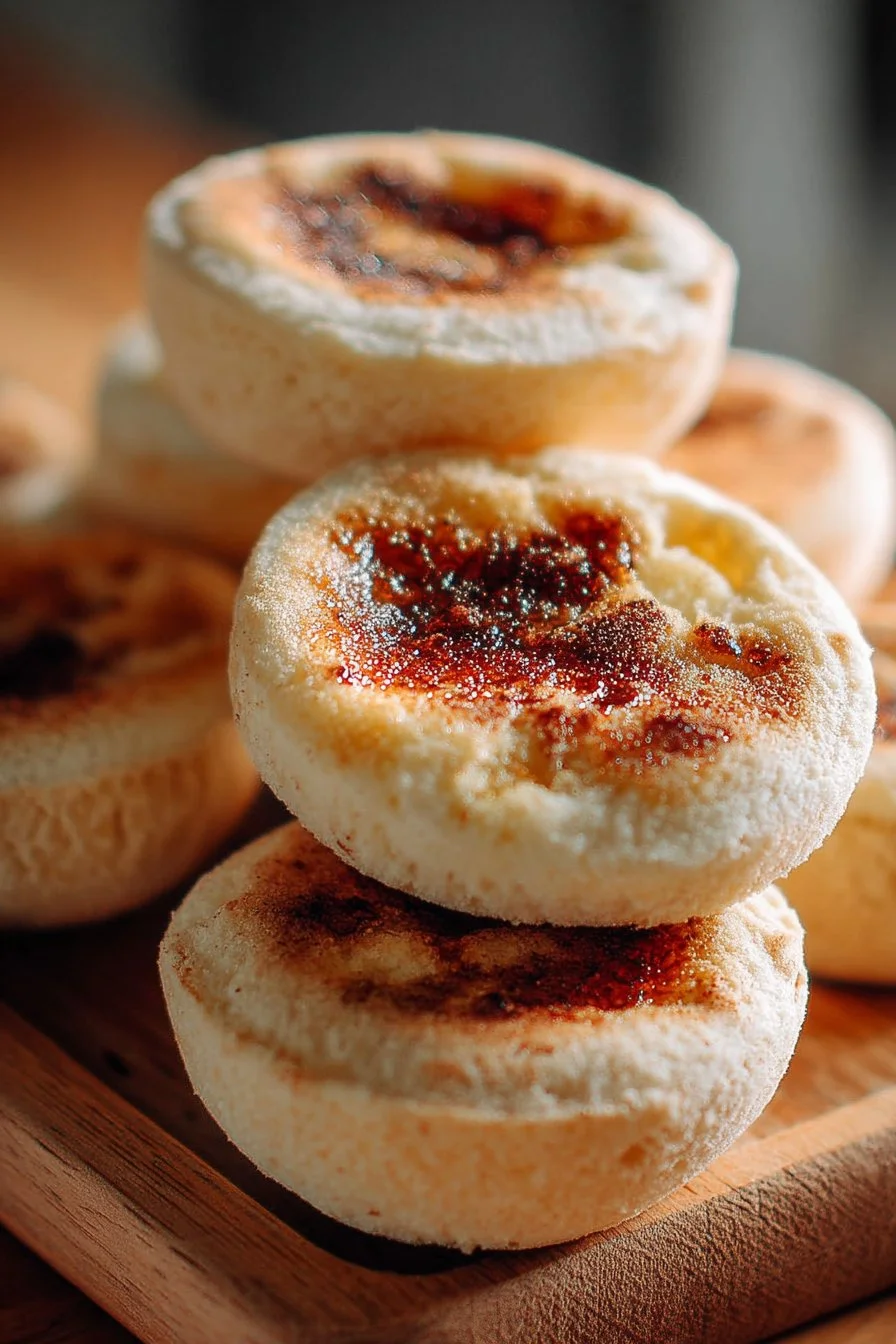
Warm, tender, and full of nooks and crannies, these Homemade English Muffins have a slightly tangy crumb, a golden crust, and that perfect chew that soaks up butter and jam like a dream. They’re simple to make with everyday pantry ingredients and reward a little patience with a bakery-quality result—soft inside, crusty outside, and ideal for breakfast sandwiches or a leisurely brunch. This recipe is straightforward enough for a cozy weekend bake but also forgiving for first-time bread makers, thanks to clear steps and visual cues. Serve them split and toasted with butter and honey, topped with eggs Benedict, or as the base of your favorite sandwich. If you enjoy experimenting with quick loaves, try pairing this with a quick homemade bread recipe for a full homemade-bread morning.
Why You’ll Love This Homemade English Muffins
- True English muffin texture: crisp, golden exterior and a tender, airy interior loaded with nooks for butter.
- Uses pantry staples — flour, milk, yeast, butter, sugar, and salt — no specialty ingredients required.
- Versatile: perfect for sweet toppings like jam or savory sandwiches like breakfast egg sandwiches.
- Hands-on but not fussy — short kneading and simple rises keep the process approachable.
- Cooked on the stovetop (no oven needed), so you can make them year-round.
- Great for weekend baking when you want something homemade and comforting.
- Makes enough to share: ideal for brunches or to freeze and reheat later.
What Is Homemade English Muffins?
Homemade English muffins are small, round, flat yeast breads cooked on a skillet rather than baked in a conventional oven. They have a chewy interior with irregular holes or "nooks and crannies" that trap melted butter and toppings. The flavor is mildly tangy and slightly sweet from the sugar or honey, with a rich note from the melted butter in the dough. Because they’re cooked on the stovetop over medium-low heat, you get a nicely browned exterior without a hard crust. English muffins are commonly served at breakfast or brunch—split with butter and jam, toasted for eggs Benedict, or as a vehicle for hearty sandwiches. They embody comfort food with a touch of homemade bakery charm, perfect for lazy mornings or weekend gatherings.
Ingredients for Homemade English Muffins
For the Dough
- 2 cups all-purpose flour
- 1 cup warm milk (105–115°F / 40–46°C)
- 2 tablespoons sugar (or honey)
- 1 tablespoon active dry yeast (or 2 1/4 teaspoons instant yeast)
- 1/2 teaspoon salt
- 1 tablespoon butter, melted
For Dusting/Cooking
- Cornmeal for dusting
Ingredient Notes (Substitutions, Healthy Swaps)
- Milk alternatives: You can use unsweetened soy or almond milk warmed to the same temperature; the texture will be slightly different but still good. Keep the temperature around 105–115°F so it activates the yeast without killing it.
- Sugar swap: Honey is listed as an option in the ingredients and works well; use the same amount (2 tablespoons).
- Yeast options: If using instant yeast instead of active dry, you can mix it directly into the flour (no need to proof), but the timing will be similar. The listed measurements allow either type.
- Lower-fat swap: Reduce butter to 1 teaspoon for a leaner muffin; they will be slightly less rich but still tender.
- Gluten-free option: A true gluten-free English muffin requires a dedicated gluten-free flour blend and likely binding agents (xanthan gum). Because that changes the dough’s behavior substantially, it’s an optional approach but expect a different texture.
- Whole-grain tweak (optional): Replace up to half the flour with whole-wheat flour for a nuttier flavor; dough will be denser and may need slightly more liquid.
Step-by-Step Instructions
Step 1 – Proof the Yeast
Warm the milk to 105–115°F (40–46°C). Stir in the sugar (or honey), then sprinkle the active dry yeast on top and wait 4–6 minutes until foamy.
Visual cue: The surface should form a bubbly foam and smell slightly yeasty.
Pro cue: If the mixture doesn’t foam, your yeast may be dead — start over with fresh yeast.
Step 2 – Add Butter and Salt
Stir the melted butter and salt into the foamy milk mixture until combined.
Visual cue: The liquid should look smooth and homogenous with small bubbles on top.
Pro cue: Make sure the melted butter isn’t too hot, or it can kill the yeast; it should be only slightly warm.
Step 3 – Form the Dough
Gradually add the flour, stirring until a shaggy dough forms. Turn the dough out onto a floured surface and knead for 4–6 minutes until smooth and elastic.
Visual cue: The dough should be soft, slightly tacky but not sticky, and spring back slowly when pressed.
Pro cue: Use a light dusting of flour to prevent sticking—but avoid adding too much, which can make muffins tough.
Step 4 – First Rise
Oil a bowl, place the dough inside, cover, and let rise until doubled in size (about 1 hour).
Visual cue: Dough should be visibly larger, airy, and pass the “finger dent” test (a finger pressed in leaves a gentle indentation).
Pro cue: Keep the dough in a warm, draft-free spot—an oven with the light on or a warm counter works well.
Step 5 – Shape and Second Rise
Deflate the dough gently and roll to 1/2 inch thickness. Cut rounds with a biscuit cutter or drinking glass. Place them on a sheet dusted with cornmeal and let rise for 30 minutes.
Visual cue: Muffins puff slightly and feel light when ready to cook.
Pro cue: Dust both the baking sheet and the cutter with cornmeal to prevent sticking and create that classic English muffin texture.
Step 6 – Cook on the Skillet
Heat a skillet to medium-low. Cook the muffins for 7–10 minutes per side until golden brown.
Visual cue: Look for an even golden-brown color on each side; they should sound hollow when tapped.
Pro cue: Keep temperature moderate—too hot and the outside will brown before the inside cooks; too low and they’ll dry out.
Step 7 – Cool and Split
Transfer the muffins to a rack to cool. Split them with a fork (not a knife) to preserve the nooks and crannies, then serve toasted.
Visual cue: The interior should show irregular holes and be steamy when freshly cooked.
Pro cue: Use a fork or an English muffin splitter to get that classic texture for better butter absorption.
Pro Tips for Success
- Temperature matters: Keep the milk between 105–115°F to activate yeast without killing it.
- Flour handling: Measure flour by spooning into the cup and leveling—too much flour makes dense muffins.
- Consistent thickness: Roll the dough to an even 1/2 inch for uniform cooking.
- Heat control: Cook on medium-low to allow the center to finish cooking without over-browning the exterior.
- Cornmeal dusting: Don’t skip it—cornmeal adds texture, flavor, and prevents sticking.
- Use a cover: If unsure about heat, cover the skillet for a minute or two to trap heat and help the center cook.
- Don’t press while cooking: Avoid pressing the muffins with a spatula; this squeezes out air and flattens them.
- Test one: Cook one muffin first to fine-tune time and temperature before finishing the batch.
Flavor Variations (Optional)
- Cinnamon-sugar: Add 1 teaspoon ground cinnamon to the dough and sprinkle cinnamon-sugar on top before cooking for a sweet twist.
- Herb-infused: Mix 1–2 teaspoons finely chopped fresh herbs (like rosemary or thyme) into the dough for savory muffins.
- Honey whole-grain (optional): Substitute the sugar with honey and swap half the flour for whole-wheat for a heartier flavor.
- Everything-seasoning: Sprinkle a little everything bagel seasoning on top before cooking for a savory breakfast option.
- Slightly cheesy (optional): Fold in 1/4 cup finely grated hard cheese at shaping stage—use a small amount so the dough still behaves normally.
Serving Suggestions
- Classic: Split and toast with butter and jam.
- Breakfast sandwich: Layer with a fried egg, cheese, and greens.
- Eggs Benedict: Use in place of an English muffin for a homemade eggs Benedict.
- Savory snack: Top with avocado, smoked salmon (or a vegetarian alternative), and a squeeze of lemon.
- Brunch platter: Serve alongside fresh fruit, yogurt, and a quick loaf for a bakery-style spread.
- Picnic: Let cool, pack whole muffins, and toast or split at your destination.
Make-Ahead, Storage & Reheating
- Make-ahead: You can complete the recipe through the second rise, then cover and refrigerate the sheet of unbaked muffins overnight. Bring to room temperature for 20–30 minutes before cooking.
- Refrigerator storage: Store cooked muffins in an airtight container for up to 3 days.
- Reheating: Split and toast from room temperature for best texture; for refrigerated muffins, warm in a toaster or under a broiler for a minute or two. For a softened result, microwave briefly (10–15 seconds) then toast to crisp.
- Texture note: Stored muffins may lose some crispness; to revive, toast them rather than microwaving for long periods.
Storage and Freezing Instructions
- Freezing: English muffins freeze very well. Cool completely, then wrap each muffin individually in plastic wrap and place in a freezer bag for up to 3 months.
- To use: Thaw at room temperature and toast to refresh the texture. You can also toast them directly from frozen—just expect a slightly longer toasting time.
- If not freezing: If you prefer not to freeze, keep in an airtight container at room temperature for 1–2 days or refrigerate up to 3 days.
Nutrition Facts (Per Serving)
| Calories | Protein | Carbs | Fat | Fiber | Sodium |
|———|——–|——|—–|——|——-|
| 210 kcal | 6 g | 36 g | 5 g | 2 g | 220 mg |
Nutrition values are estimates and may vary depending on ingredients and portion sizes.
FAQ About Homemade English Muffins
- How can I tell if my muffins are cooked through?
- Tap the bottom; it should sound slightly hollow and the interior should not be doughy when split. A golden-brown exterior with a tender interior is your target.
- My dough didn’t rise — what went wrong?
- Likely the yeast was inactive or the milk was too hot or too cold. Always use fresh yeast and check milk temperature between 105–115°F.
- Can I bake these in the oven instead of using a skillet?
- This recipe is designed for skillet cooking; baking will change the crust. If you prefer oven baking, you’ll need to adapt time and temperature (not covered by this recipe).
- Will these work with instant yeast?
- Yes—use 2 1/4 teaspoons instant yeast. If using instant, you can mix it into the flour and skip the proofing step, though proofing the milk is still helpful for flavor.
- How do I split them without destroying the nooks and crannies?
- Use a fork or an English muffin splitter and pry gently around the edge; avoid slicing with a knife.
- Can I double the recipe?
- Yes, doubling is straightforward. Keep rise times similar, but use a larger bowl and give the dough room to expand.
Notes
- Presentation tip: Toasted halves on a wooden board with small bowls of jam, honey, and butter make a welcoming brunch display.
- Small upgrade: Brush melted butter on the tops right after cooking for extra sheen and flavor.
- Seasoning adjustment: If using salted butter, consider reducing added salt by a small pinch.
- Leftover use: Stale muffins make excellent breadcrumbs when dried and pulsed—use for topping casseroles or coating chicken.
- Pairing idea: For a simple weekend spread, serve with fresh fruit, yogurt, and a pot of good coffee.
- If you want a crustier loaf to accompany these, consider trying a recipe for a crusty homemade artisan bread to round out your homemade-bread offerings.

Homemade English Muffins
- Total Time: 75 minutes
- Yield: 12 servings
- Diet: Vegetarian
Description
Warm and tender English muffins with a golden crust and nooks for butter and jam.
Ingredients
- 2 cups all-purpose flour
- 1 cup warm milk (105–115°F / 40–46°C)
- 2 tablespoons sugar (or honey)
- 1 tablespoon active dry yeast (or 2 1/4 teaspoons instant yeast)
- 1/2 teaspoon salt
- 1 tablespoon butter, melted
- Cornmeal for dusting
Instructions
- Warm the milk to 105–115°F (40–46°C). Stir in the sugar (or honey), then sprinkle the active dry yeast on top and wait 4–6 minutes until foamy.
- Stir the melted butter and salt into the foamy milk mixture until combined.
- Add the flour gradually, stirring until a shaggy dough forms. Turn out onto a floured surface and knead for 4–6 minutes until smooth and elastic.
- Oil a bowl, place the dough inside, cover, and let rise until doubled in size (about 1 hour).
- Deflate the dough gently and roll to 1/2 inch thickness. Cut rounds and place them on a sheet dusted with cornmeal; let rise for 30 minutes.
- Heat a skillet to medium-low and cook the muffins for 7–10 minutes per side until golden brown.
- Transfer the muffins to a rack to cool, then split them with a fork and serve toasted.
Notes
Keep the milk between 105–115°F to activate yeast without killing it. Use a fork to split muffins for better texture.
- Prep Time: 15 minutes
- Cook Time: 60 minutes
- Category: Breakfast
- Method: Cooking on Stove
- Cuisine: American