
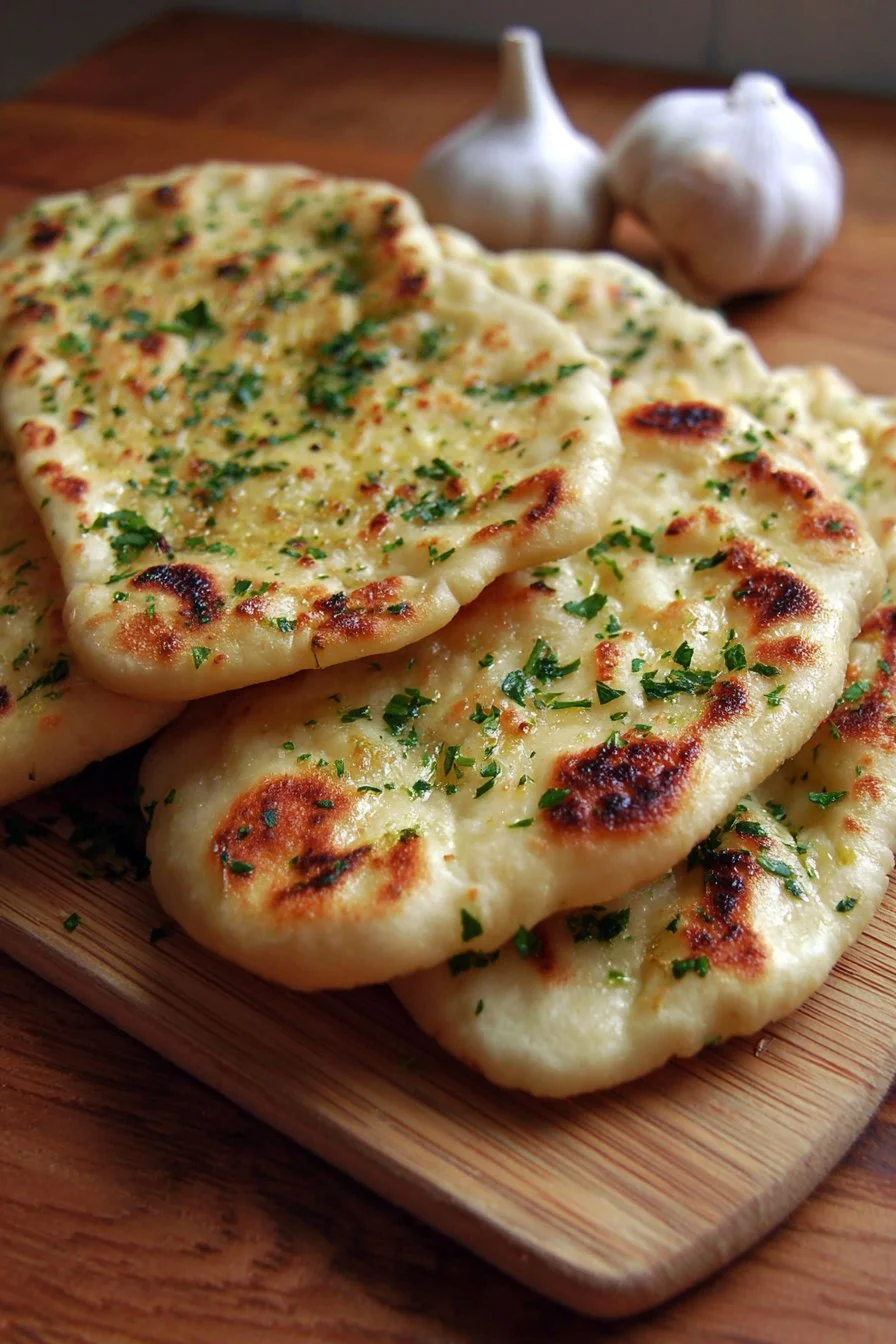
There’s something irresistibly comforting about hot, slightly chewy flatbread brushed with warm garlic-parsley butter—the crunch where it meets the skillet and the soft, pillowy middle that soaks up every buttery bite. This Garlic Flatbread is simple dough, no yeast, cooked fast on a skillet, and finished with a fragrant garlic butter that makes it perfect for dipping or wrapping. It’s easy enough for a weeknight but cozy enough to serve at a casual dinner party alongside roasted vegetables or a simple salad. If you love garlic-forward bread, try pairing it with a garlicky seafood dish like this baked garlic-parmesan shrimp for an extra-special meal. Read on for everything you need to make these in under 30 minutes.
Why You’ll Love This Garlic Flatbread
- Quick and yeast-free: no rise time, so you get warm bread fast.
- Garlic-forward flavor: melted butter plus fresh minced garlic gives bold aroma and taste.
- Soft yet slightly crisp: skillet cooking gives a golden, slightly charred exterior with a tender interior.
- Versatile: use as a dipper, sandwich wrap, or side for soups and mains.
- Easily adaptable: small ingredient swaps let you tailor it to dietary needs or flavor preferences.
- Crowd-pleaser: makes 6–8 pieces, perfect for sharing at casual gatherings.
- Minimal equipment: just a bowl, rolling surface, and a skillet—no oven required.
What Is Garlic Flatbread?
Garlic Flatbread here is an unleavened, skillet-cooked bread made from a simple dough of all-purpose flour, baking powder, a touch of sugar and salt, warm water, and olive oil. It’s cooked over medium-high heat in a skillet until golden brown spots form, then brushed with a warm garlic-parsley butter. The result is savory and buttery, with a bright garlicky finish and a soft, slightly chewy texture that holds up to dips and toppings. People typically serve this as a side for weeknight dinners, part of a mezze-style spread, or alongside grilled proteins for a relaxed weekend meal. The overall vibe is comforting and unfussy—an easy bread that elevates almost any plate.
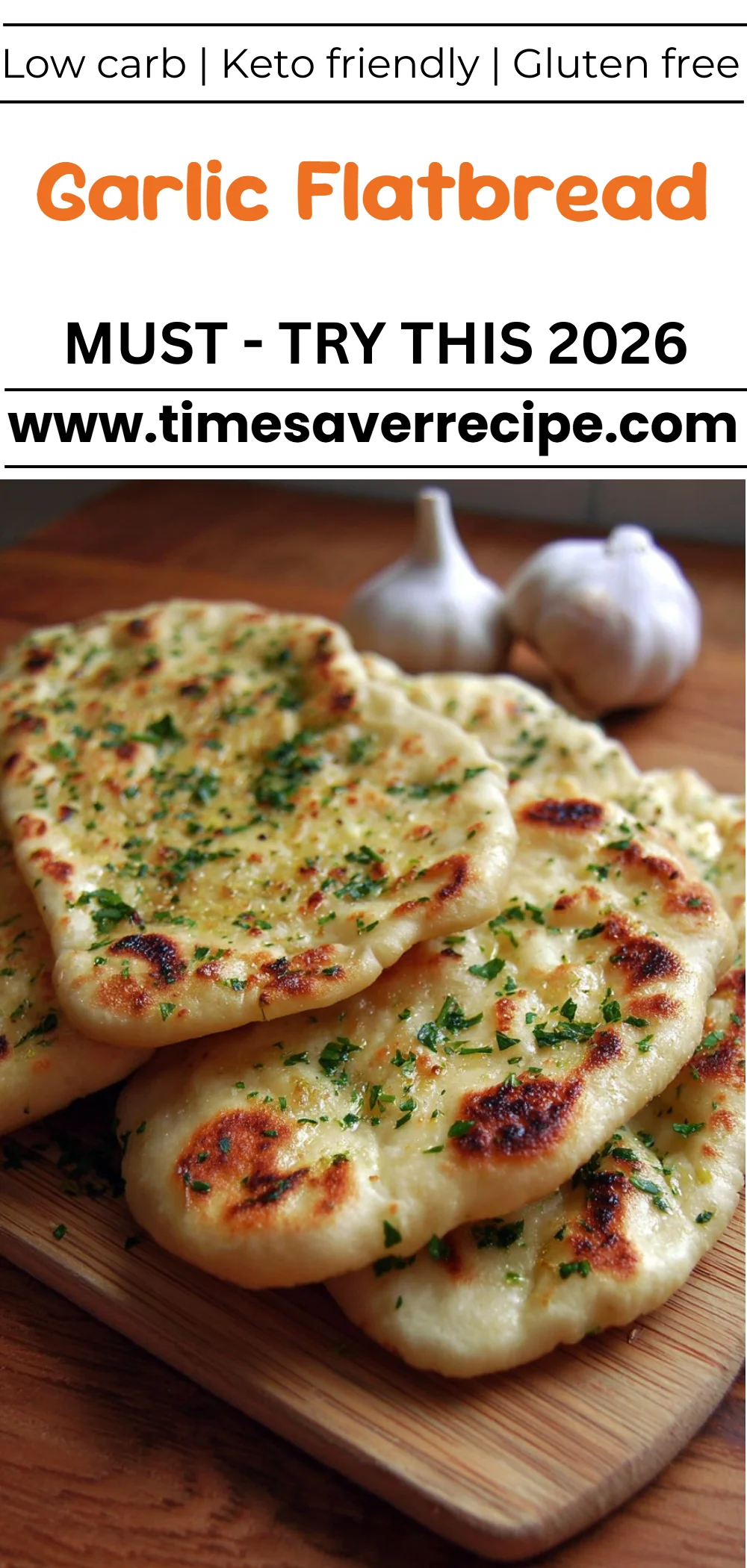
Ingredients for Garlic Flatbread
For the Base
- 2 cups all-purpose flour (about 240 g)
- 1 teaspoon salt
- 1 teaspoon sugar
- 1 teaspoon baking powder
- 3/4 cup warm water (about 180 ml)
- 2 tablespoons olive oil
For the Garlic-Parsley Butter
- 1/4 cup unsalted butter, melted (about 4 tablespoons)
- 3 cloves garlic, minced
- 1 tablespoon fresh parsley, chopped
- 1/2 teaspoon salt (for the garlic butter)
- 1/4 teaspoon black pepper
For Serving (optional)
- Extra chopped parsley for garnish
Ingredient Notes (Substitutions, Healthy Swaps)
- Olive oil: you can substitute light-tasting vegetable oil if needed, but olive oil adds flavor.
- Butter: for a dairy-free option, use a plant-based margarine or vegan butter in the same amount; it will still melt and carry the garlic flavor.
- Flour: to make a gluten-free version, use a 1:1 gluten-free baking flour blend that contains xanthan gum; expect a slightly different texture.
- Sugar: the teaspoon of sugar is optional—skip it if you prefer truly savory bread, though it helps a touch with browning.
- Garlic: adjust the minced garlic to taste—more for a punchier bite, less for subtle flavor.
- Salt: if you’re reducing sodium, cut the 1/2 teaspoon in the garlic butter and taste before adding more.
Step-by-Step Instructions
Step 1 – Combine the dry ingredients
In a large bowl, whisk together the flour, 1 teaspoon salt, sugar, and baking powder until evenly mixed.
Visual cue: The mixture should look uniform with no clumps of baking powder or sugar.
Pro cue: Whisking the dry ingredients first helps the baking powder distribute evenly so each flatbread puffs slightly and cooks uniformly.
Step 2 – Form the dough
Add the warm water and 2 tablespoons olive oil to the dry ingredients and stir until a rough dough forms.
Visual cue: Dough will pull together into a shaggy ball that’s slightly tacky but not sticky.
Pro cue: If the dough seems too dry, add water a teaspoon at a time; too wet and it will be hard to roll thinly.
Step 3 – Knead and rest
Turn the dough onto a lightly floured surface and knead briefly—just until smooth. Cover and let rest for 10–15 minutes.
Visual cue: The dough should be smooth, pliable, and slightly springy after a brief knead.
Pro cue: Resting relaxes the dough and makes it easier to roll out thin rounds without snapping back.
Step 4 – Make the garlic-parsley butter
Meanwhile, mix the melted butter with minced garlic, chopped parsley, 1/2 teaspoon salt, and 1/4 teaspoon black pepper in a small bowl.
Visual cue: The butter should be warm enough to meld with the garlic but not so hot that it cooks the garlic.
Pro cue: If you want a milder garlic flavor, let the butter cool slightly before adding the garlic so the heat doesn’t intensify the bite.
Step 5 – Shape the flatbreads
Divide the dough into 6–8 pieces and flatten each into rounds about 1/8–1/4 inch thick using a rolling pin or hands.
Visual cue: Each round should be thin with slightly uneven edges for a rustic look and about the size of a small plate.
Pro cue: Dust the work surface lightly with flour to prevent sticking; thinner rounds cook faster and get crisp edges.
Step 6 – Cook and finish
Heat a skillet over medium-high heat. Cook each flatbread 1–2 minutes per side until golden brown spots appear. Brush hot flatbreads with the garlic-parsley butter as they come off the skillet and serve warm.
Visual cue: Look for golden-brown blistered spots and a slightly puffed surface.
Pro cue: Keep the heat medium-high—too low and the bread will dry out, too high and it will char before cooking through.
Pro Tips for Success
- Preheat the skillet: a properly hot pan ensures quick browning without over-drying the interior.
- Pound or roll to even thickness: consistent thickness means even cooking—aim for 1/8–1/4 inch.
- Watch the first flatbread as a tester: adjust heat based on how quickly it browns.
- Brush generously but not excessively: a thin layer of garlic butter adds flavor without making the bread soggy.
- Cook in batches: avoid crowding the skillet; give each flatbread room to brown.
- Keep finished flatbreads warm: stack them on a plate and cover loosely with a clean towel to retain soft texture.
- Garlic freshness: mince garlic right before mixing for the brightest flavor.
Flavor Variations (Optional)
- Spicy version: add 1/4–1/2 teaspoon crushed red pepper flakes to the garlic butter for a kick.
- Herbed butter: swap or add 1 tablespoon chopped fresh basil or cilantro to the parsley.
- Citrus brightness: stir a little lemon zest into the garlic butter for a fresh lift.
- Cheesy finish: sprinkle freshly grated parmesan or a hard grating cheese on top right after brushing (optional, but tasty).
- Garlic-forward double punch: use roasted garlic in place of some raw garlic for a sweeter, mellower profile.
Serving Suggestions
- Serve warm with a simple salad of mixed greens, lemon, and olive oil for a light meal.
- Use as the base for quick wraps: fill with roasted vegetables and a drizzle of yogurt or tahini.
- Offer as a dipping bread alongside hummus, tzatziki, or a warm bean dip.
- Add to a seafood-focused dinner; it pairs beautifully with dishes like brown sugar garlic glazed salmon for a sweet-savory contrast.
- Plate as part of a casual grazing board with olives, cheeses, and sliced vegetables.
- Bring to brunch: serve alongside eggs and roasted tomatoes for a garlic-forward breakfast twist.
Make-Ahead, Storage & Reheating
- Make-ahead dough: you can prepare the dough up to 2 hours ahead and keep it covered at room temperature, or refrigerate for up to 24 hours (bring back to room temperature before rolling).
- Garlic butter: make the garlic-parsley butter ahead and store it in the fridge for up to 48 hours; rewarm gently before brushing.
- Refrigerator storage: store cooked flatbreads in an airtight container or zip-top bag for up to 3 days.
- Reheating: reheat in a warm skillet over medium heat for 30–60 seconds per side to revive crisp edges, or warm in a 350°F (175°C) oven for 5–7 minutes. Avoid microwaving when possible—microwaves make them chewy.
Storage and Freezing Instructions
- Freezing cooked flatbreads: yes, they freeze well. Cool completely, then layer between pieces of parchment and freeze in a freezer-safe bag for up to 2 months.
- Thawing: defrost at room temperature or reheat from frozen in a skillet over low-medium heat, covered, until warmed through.
- If you prefer not to freeze: store dough in the fridge and cook fresh the next day for the best texture.
- Note: Garlic butter doesn’t freeze as reliably because of texture changes in the dairy substitute; freeze only if using unsalted butter and expect slight separation—re-whisk when thawed.
Nutrition Facts (Per Serving)
| Calories | Protein | Carbs | Fat | Fiber | Sodium |
|———|——–|——|—–|——|——-|
| 220 kcal | 4 g | 23 g | 11 g | 1 g | 430 mg |
Nutrition values are estimates and may vary depending on ingredients and portion sizes.
FAQ About Garlic Flatbread
- How do I know when the flatbread is done cooking?
- Look for golden-brown spots and slight puffing. It should flip easily and not feel doughy in the center.
- My flatbreads turned out tough—what went wrong?
- Likely over-kneading or rolling too thick. Knead briefly and keep them thin (1/8–1/4 inch).
- Can I use whole wheat flour?
- You can substitute part of the flour with whole wheat (start with 25–50%), but texture will be denser. You may need a touch more water.
- How should I store leftovers to keep them soft?
- Wrap in foil or store in an airtight container and reheat in a skillet covered with a towel to retain moisture.
- Will these flatbreads brown on a nonstick skillet?
- Yes—nonstick works fine, but a cast-iron skillet gives the best char and flavor.
- Can I make the dough in a food processor?
- Yes, use brief pulses until a shaggy dough forms, then knead slightly by hand. Avoid over-processing.
Notes
- For a restaurant-style finish, brush once more with garlic butter just before serving for a shiny, flavorful top.
- If you like charred notes, finish a second over-high-heat pass in the skillet for 10–15 seconds per side.
- Adjust garlic to taste—start with less if serving to kids or garlic-sensitive guests.
- Present stacked on a wooden board with a small bowl of extra garlic butter for dipping for a cozy, shareable plate.
- If serving with spreads, offer a neutral oil-and-vinegar dipping sauce alongside for variety.
Garlic Flatbread
- Total Time: 30 minutes
- Yield: 6-8 servings
- Diet: Vegetarian
Description
A quick and easy garlic flatbread that is slightly chewy and perfect for dipping or wrapping.
Ingredients
- 2 cups all-purpose flour
- 1 teaspoon salt
- 1 teaspoon sugar
- 1 teaspoon baking powder
- 3/4 cup warm water
- 2 tablespoons olive oil
- 1/4 cup unsalted butter, melted
- 3 cloves garlic, minced
- 1 tablespoon fresh parsley, chopped
- 1/2 teaspoon salt (for the garlic butter)
- 1/4 teaspoon black pepper
- Extra chopped parsley for garnish (optional)
Instructions
- Combine the dry ingredients: In a large bowl, whisk together the flour, salt, sugar, and baking powder until evenly mixed.
- Form the dough: Add the warm water and olive oil to the dry ingredients and stir until a rough dough forms.
- Knead and rest: Turn the dough onto a lightly floured surface and knead briefly—just until smooth. Cover and let rest for 10–15 minutes.
- Make the garlic-parsley butter: Mix melted butter with minced garlic, chopped parsley, salt, and black pepper in a small bowl.
- Shape the flatbreads: Divide the dough into 6–8 pieces and flatten each into rounds about 1/8–1/4 inch thick.
- Cook and finish: Heat a skillet over medium-high heat. Cook each flatbread 1–2 minutes per side until golden brown spots appear. Brush with garlic-parsley butter and serve warm.
Notes
For a restaurant-style finish, brush once more with garlic butter just before serving.
- Prep Time: 15 minutes
- Cook Time: 15 minutes
- Category: Side Dish
- Method: Skillet Cooking
- Cuisine: Mediterranean