
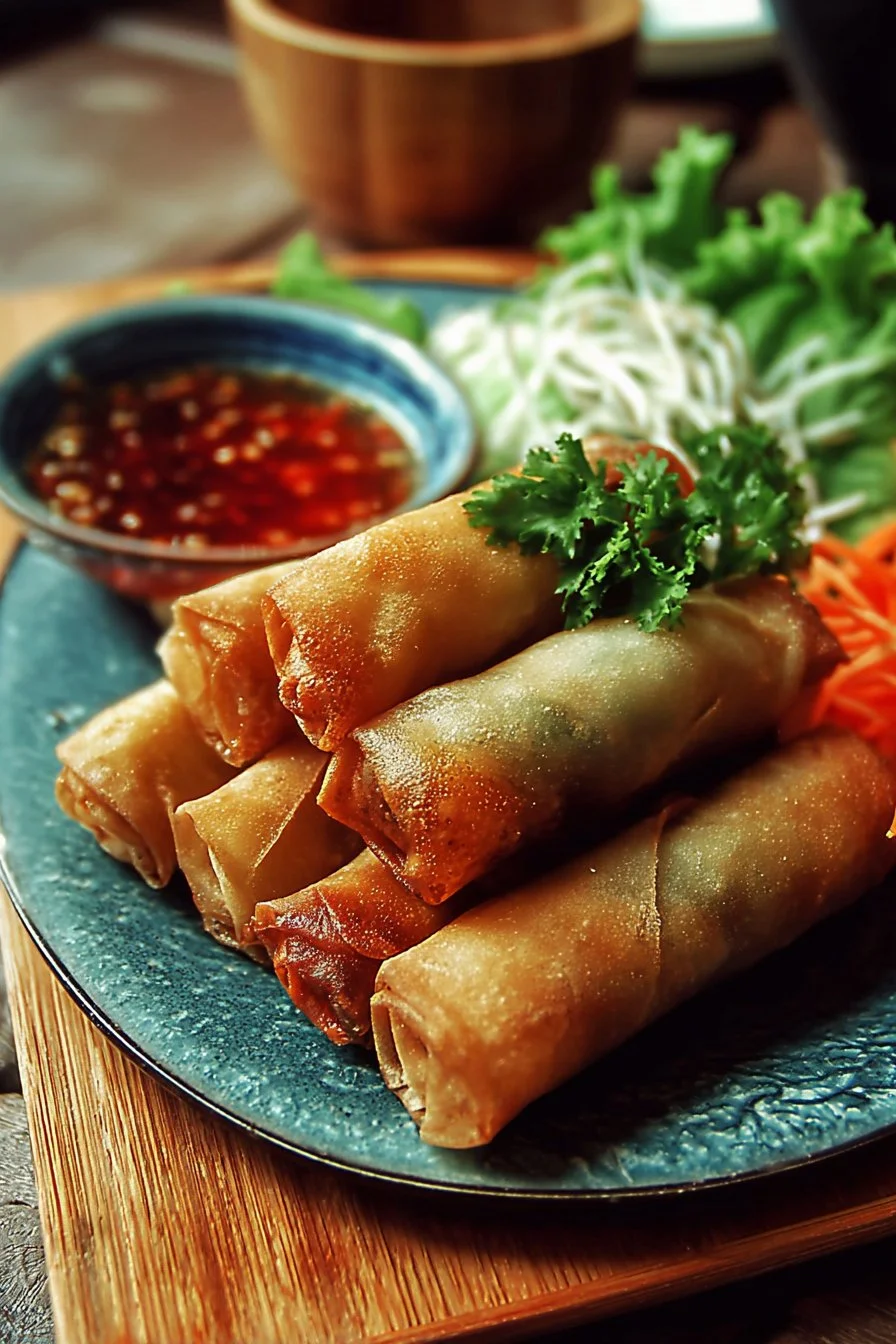
These Thai spring rolls are a bright, herb-forward bite with soft, slightly chewy rice paper, crunchy shredded carrots and bell pepper, cool rice vermicelli, fragrant mint and cilantro, and sweet-savory shrimp. The peanut dipping sauce adds a creamy, tangy heat that brings everything together. They’re light but satisfying, easy to assemble once you have your station set up, and perfect for warm-weather lunches, casual dinner parties, or as an elegant appetizer. If you prefer a crunchier finished wrapper, you can adapt them using a quick crisping method—see this simple technique for crispy rice paper spring rolls that pairs beautifully with the same fillings and sauce.
Why You’ll Love This Thai Spring Rolls
- Bursting with fresh herbs: mint and cilantro brighten every bite.
- Contrasting textures: tender vermicelli and shrimp meet crisp raw vegetables.
- No frying required: light, fresh, and naturally gluten-free (depending on your soy sauce).
- Fast to make: once fillings are prepped, assembly is quick—ideal for weeknights.
- Crowd-pleaser: great for parties, potlucks, or make-your-own roll nights.
- Customizable dipping: the peanut sauce is rich and adaptable to taste.
- Portable and picnic-friendly: rolls travel well when kept chilled and separated from sauce.
- Low-stress entertaining: assemble ahead and roll just before serving.
What Is Thai Spring Rolls?
Thai spring rolls are fresh, non-fried rolls wrapped in delicate rice paper and filled with an assortment of vegetables, herbs, vermicelli, and a protein—here, cooked shrimp. They taste bright and herbaceous with a hint of sweetness from the carrots and bell pepper, the citrusy lift of lime in the sauce, and a nutty, savory depth from the peanut dipping sauce. The cooking method is assembly-based rather than stovetop cooking: rice paper is briefly softened in warm water, filled, and rolled. These rolls are commonly served as appetizers or light mains at gatherings, summer dinners, and casual lunches, giving off a fresh, healthy, and slightly indulgent vibe that makes them a weeknight favorite and party staple alike.
Ingredients for Thai Spring Rolls
For the Base
- 12 rice paper wrappers
- 3/4 cup rice vermicelli noodles, cooked and drained
- 1.5 cups shredded carrots
- 1 cup thinly sliced red bell pepper
- 1/2 cup fresh mint leaves, chopped
- 1/2 cup fresh cilantro, chopped
- 1 cup cooked shrimp, sliced in half lengthwise
For the Sauce
- 1/2 cup smooth peanut butter
- 2 tablespoons soy sauce
- 1 tablespoon freshly squeezed lime juice
- 1 tablespoon honey
- 1 clove garlic, minced
- 1/4 teaspoon crushed red pepper flakes
- 2 tablespoons warm water (more to thin to dipping consistency)
For Serving
- Extra lime wedges (optional, for squeezing over rolls)
Ingredient Notes (Substitutions, Healthy Swaps)
- Soy sauce: For gluten-free, use tamari instead of soy sauce. For a lower-sodium option, pick a reduced-sodium soy sauce or tamari.
- Peanut butter: Smooth peanut butter creates the creamiest dipping sauce. For a lower-fat swap, use natural peanut butter and thin with additional warm water, or try almond butter for a different nutty flavor (don’t change the quantities).
- Shrimp: Use cooked shrimp as listed. To keep the recipe pescatarian-friendly, you can substitute cooked, sliced tofu as an optional variation (see Flavor Variations).
- Vermicelli: If you’re in a pinch, thin glass noodles or even lightly shredded lettuce can work as filler, but rice vermicelli keeps the classic texture.
- Herbs: If you’re out of mint or cilantro, add more of the other herb; both are central to the fresh Thai profile but one can carry the flavor on its own.
- Honey: Maple syrup or agave can replace honey for a vegan swap.
Step-by-Step Instructions
Step 1 – Prep the fillings
- Shred carrots, thinly slice red bell pepper, chop the mint and cilantro, and halve the cooked shrimp lengthwise.
- Place each component in separate shallow bowls so you can grab what you need while rolling.
Visual cue: Bowls of bright orange carrots, red pepper strips, green herbs, and pale shrimp should look neat and separated on your workstation.
Step 2 – Cook and cool the vermicelli
- Cook rice vermicelli according to package directions, drain, rinse with cold water, and toss lightly to prevent sticking.
- Divide the cooled vermicelli into 12 equal portions for even rolls.
Pro cue: Rinsing with cold water stops the cooking immediately and keeps the noodles springy rather than mushy.
Step 3 – Make the peanut sauce
- Whisk together peanut butter, soy sauce, lime juice, honey, minced garlic, and crushed red pepper flakes.
- Add 2 tablespoons warm water and whisk until smooth. Add more warm water a teaspoon at a time to reach a dipping consistency.
Visual cue: The sauce should be glossy, pourable, and thick enough to coat a spoon without being clumpy.
Step 4 – Set up your assembly station
- Prepare a wide shallow bowl of warm water for softening the rice paper wrappers and lay a clean towel or damp tea towel on your counter for rolling.
- Arrange all filling bowls within easy reach.
Pro cue: Use a towel with a slight dampness to help rice paper grip and prevent sliding while you roll.
Step 5 – Soften the wrapper and assemble
- Soak one rice paper wrapper in warm water for 6–10 seconds until pliable but not overly soft—then lay it flat on the towel.
- Place fillings near the bottom third of the wrapper: start with a small handful of vermicelli, top with carrots, red pepper, herbs, and two shrimp halves (curvature inward).
- Fold the bottom edge up over the fillings, fold both sides in snugly, then tightly roll the wrapper away from you until sealed.
Visual cue: A finished roll should be neat, slightly translucent at the seam, and tight enough to hold together without gaps.
Pro cue: Resist overfilling; a compact roll keeps its shape and is easier to eat.
Step 6 – Repeat and serve
- Continue softening wrappers and rolling until all 12 rolls are made.
- Serve immediately with the peanut sauce and lime wedges.
Visual cue: Platter of colorful rolls with a small bowl of peanut sauce in the center looks inviting and ready to share.
Pro Tips for Success
- Keep fillings dry: Excess water on shredded carrots or rinsed vermicelli can make the wrapper soggy—pat any wet ingredients with paper towels.
- Warm water timing: 6–10 seconds in warm water is usually enough. Over-soaking makes the rice paper fragile and sticky.
- Tidy rolls: Roll tightly and tuck the sides in first to create a neat cylinder that won’t unravel.
- Flavor balance: Taste the peanut sauce and adjust lime, honey, or soy sauce to your preference before serving.
- Herb placement: Distribute mint and cilantro evenly so every bite gets herbs—place some under and over the vermicelli.
- Make it interactive: For parties, lay out fillings and let guests assemble their own rolls—this reduces stress for the host.
- Knife tip: Use a very sharp knife to slice rolls in half cleanly for prettier presentation.
Flavor Variations
All variations below are optional and keep the base recipe intact.
- Spicy kick (optional): Add a thin drizzle of sriracha to the peanut sauce or a sprinkle of extra crushed red pepper flakes for heat.
- Vegetarian swap (optional): Replace cooked shrimp with thin strips of marinated, grilled tofu or sliced avocado for a creamy texture.
- Citrus bright (optional): Add extra lime zest to the peanut sauce for more aromatic citrus notes.
- Herb-forward (optional): Increase mint to 3/4 cup and reduce cilantro if you prefer a mintier profile.
- Crunch factor (optional): For extra crunch inside, add a small handful of thinly sliced cucumber or water chestnuts (keep proportions modest to avoid excess moisture).
- Nut-free (optional): Use tahini instead of peanut butter and increase lime juice for balance if avoiding peanuts entirely.
Serving Suggestions
- As an appetizer: Arrange 2–3 rolls per person with a bowl of peanut sauce and lime wedges for dipping.
- Light lunch: Pair two rolls with a small green salad dressed in a tangy vinaigrette.
- Party platter: Line up rolls on a long board with small bowls of sauce and extra herbs for garnish.
- Picnic or potluck: Pack rolls separate from the sauce and refrigerate; include small containers of peanut sauce for dipping.
- Asian-inspired sides: Serve alongside simple steamed edamame or a cucumber salad to round out the meal.
- For a crunchy pairing: If you want more textural contrast, serve with a side of crispy oven-baked egg rolls—the contrast between fresh rolls and baked crunch is delightful.
Make-Ahead, Storage & Reheating
- Make-ahead prep:
- Prep and store fillings separately in airtight containers for up to 24 hours.
- Make the peanut sauce up to 2 days ahead and keep refrigerated—stir well before serving; add a touch of warm water if it thickens.
- Rolling ahead:
- For best texture, roll fresh within a few hours of serving. If you must roll early, place finished rolls on a lightly damp towel and cover them with plastic wrap; they can be stored in the refrigerator for up to 8 hours but will gradually lose some chewiness.
- Reheating:
- These rolls are best eaten cold or at room temperature. Reheating is not recommended because the rice paper softens and becomes fragile when warmed.
- Transport tips:
- Keep sauce in a separate leak-proof container. Use paper towels between layers of rolls to absorb moisture during transport.
Storage and Freezing Instructions
- Freezing is not recommended. Rice paper becomes tough and gummy after freezing and thawing, and the fresh vegetables will lose their crispness.
- Instead of freezing finished rolls, freeze components: vermicelli and peanut sauce can be frozen separately (sauce in a freezer-safe container) but note texture changes with nut butters after freezing.
- If you need longer storage, consider making fillings ahead and assembling rolls right before serving to preserve the intended fresh texture.
Nutrition Facts (Per Serving)
| Calories | Protein | Carbs | Fat | Fiber | Sodium |
|———|——–|——|—–|——|——-|
| 240 kcal | 12 g | 24 g | 10 g | 3 g | 480 mg |
Nutrition values are estimates and may vary depending on ingredients and portion sizes.
FAQ About Thai Spring Rolls
- Can I make these without shrimp?
- Yes. Substitute cooked tofu or increase herbs and veggies for a vegetarian version; just keep the rest of the recipe the same.
- Why is my rice paper tearing when I soak it?
- Likely over-soaked. Reduce soaking time to 6–10 seconds and work on a damp towel to prevent tearing.
- How do I keep the rolls from getting soggy?
- Pat vegetables and noodles dry before assembling, don’t over-soak wrappers, and keep sauce separate until serving.
- Can I prep these the night before?
- Prep fillings and sauce ahead, but roll the night before only if necessary. Rolls are best within a few hours; overnight storage will change texture.
- How long will leftovers keep in the fridge?
- Store assembled rolls in an airtight container layered with damp paper towels for up to 24 hours, but texture will degrade after that.
- Can I serve warm peanut sauce?
- Yes—if you prefer a slightly warmed sauce, gently heat it for a few seconds in the microwave and stir before serving. Do not heat the rolls.
Notes
- Presentation idea: Slice rolls on the diagonal and fan them on a plate for attractive serving.
- Garnish tip: Sprinkle a few extra chopped herbs on top of the peanut sauce bowl for color and aroma.
- Small upgrade: Add a few thin lime slices on the platter so guests can squeeze fresh lime over their rolls.
- Seasoning tweak: If the peanut sauce tastes flat, add more lime juice in small increments until bright.
- Leftover use: Chop any leftover filling and toss with a little extra sauce for a quick vermicelli salad.
- Serving size: Plan on 2–3 rolls per person as an appetizer, 4–6 for a light main depending on appetite.
Thai Spring Rolls with Peanut Dipping Sauce
- Total Time: 40 minutes
- Yield: 4 servings
- Diet: Gluten-Free
Description
Light and fresh Thai spring rolls filled with shrimp, herbs, and vegetables, served with a creamy peanut dipping sauce.
Ingredients
- 12 rice paper wrappers
- 3/4 cup rice vermicelli noodles, cooked and drained
- 1.5 cups shredded carrots
- 1 cup thinly sliced red bell pepper
- 1/2 cup fresh mint leaves, chopped
- 1/2 cup fresh cilantro, chopped
- 1 cup cooked shrimp, sliced in half lengthwise
- 1/2 cup smooth peanut butter
- 2 tablespoons soy sauce
- 1 tablespoon freshly squeezed lime juice
- 1 tablespoon honey
- 1 clove garlic, minced
- 1/4 teaspoon crushed red pepper flakes
- 2 tablespoons warm water (more to thin to dipping consistency)
- Extra lime wedges (optional, for squeezing over rolls)
Instructions
- Prep the fillings: Shred carrots, thinly slice red bell pepper, chop mint and cilantro, and halve the shrimp.
- Cook and cool the vermicelli according to package directions; drain, rinse with cold water, and divide into 12 portions.
- Make the peanut sauce by whisking together peanut butter, soy sauce, lime juice, honey, garlic, and red pepper flakes; add warm water to reach dipping consistency.
- Set up your assembly station with warm water for softening wrappers and your filling bowls.
- Soften one rice paper wrapper in warm water for 6–10 seconds and lay it flat on a towel. Add fillings and roll tightly.
- Repeat until all rolls are made and serve immediately with peanut sauce and lime wedges.
Notes
For crispy rolls, consider using a quick crisping method. Keep fillings dry and avoid over-soaking the wrappers.
- Prep Time: 30 minutes
- Cook Time: 10 minutes
- Category: Appetizer
- Method: No-Cook
- Cuisine: Thai