
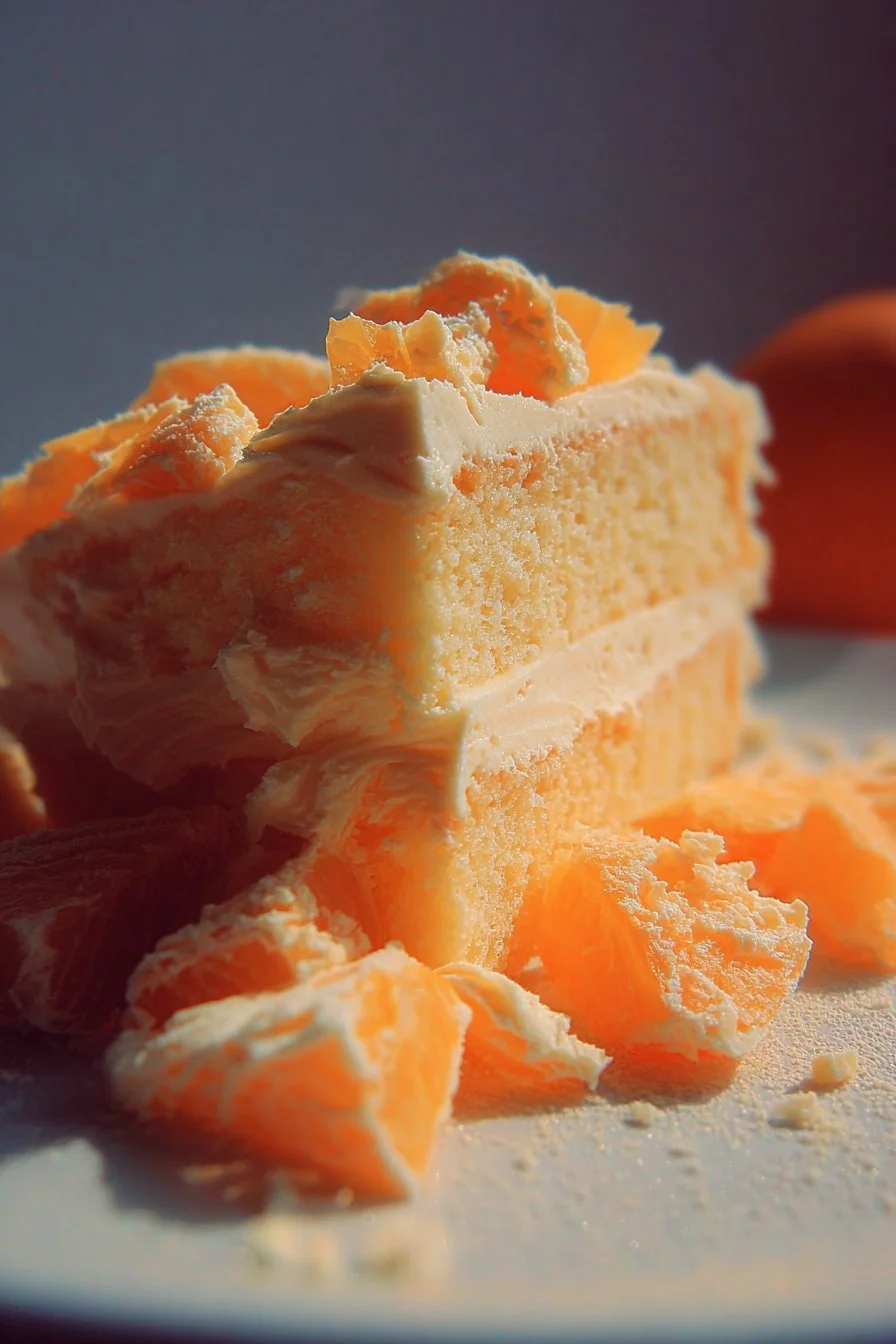
Bright, silky, and bright-hued, this Orange Creamsicle Cake tastes like a grown-up version of the classic summer popsicle — tangy orange sponge layered with a rich, vanilla-forward buttercream that melts on your tongue. The cake crumb is tender and moist thanks to fresh orange juice and a touch of orange gelatin folded into a boxed vanilla mix, while the buttercream brings that creamy, old-fashioned creamsicle finish. It’s an easy bake that feels special enough for birthdays, baby showers, or an impromptu weekend dessert. Minimal fussing, no scratch whole-cake intimidation, and flavors that everyone recognizes make this a reliable crowd-pleaser. If you love creamsicles as much as I do, try the Easy Freezy Orange Creamsicles for a no-bake, portable treat that pairs beautifully with a slice.
Why You’ll Love This Orange Creamsicle Cake
- Familiar, nostalgic flavor: orange and vanilla together evoke the classic creamsicle everyone loves.
- Extremely approachable: starts with a store-bought vanilla cake mix, so it’s fast without sacrificing taste.
- Moist, tender crumb: orange gelatin plus fresh orange juice keeps the cake soft and flavorful.
- Bright, creamy frosting: buttercream with a hint of orange turns this into a “grown-up” frozen-pop dessert.
- Versatile for occasions: elegant enough for parties, simple enough for a weeknight dessert.
- Customizable: you can dial the orange intensity up or down with zest or extract.
- Crowd-pleaser texture: soft cake and smooth frosting are universally appealing.
What Is Orange Creamsicle Cake?
Orange Creamsicle Cake is a layered vanilla cake brightened with orange gelatin and fresh orange juice, frosted with a sweet, creamy buttercream that echoes the vanilla-orange combo of the classic creamsicle. It tastes like orange sherbet softened into a cloud of cake — citrusy, sweet, and decadently creamy. This recipe uses the oven-baked method to make two 8-inch round layers, then finishes with a classic buttercream frosting. People typically serve this cake at summer gatherings, birthday parties, brunches, or anytime you want a nostalgic dessert with a refined presentation. The overall vibe is cheerful, comforting, and slightly retro — perfect for warm-weather celebrations or anytime you crave something sunny and familiar.
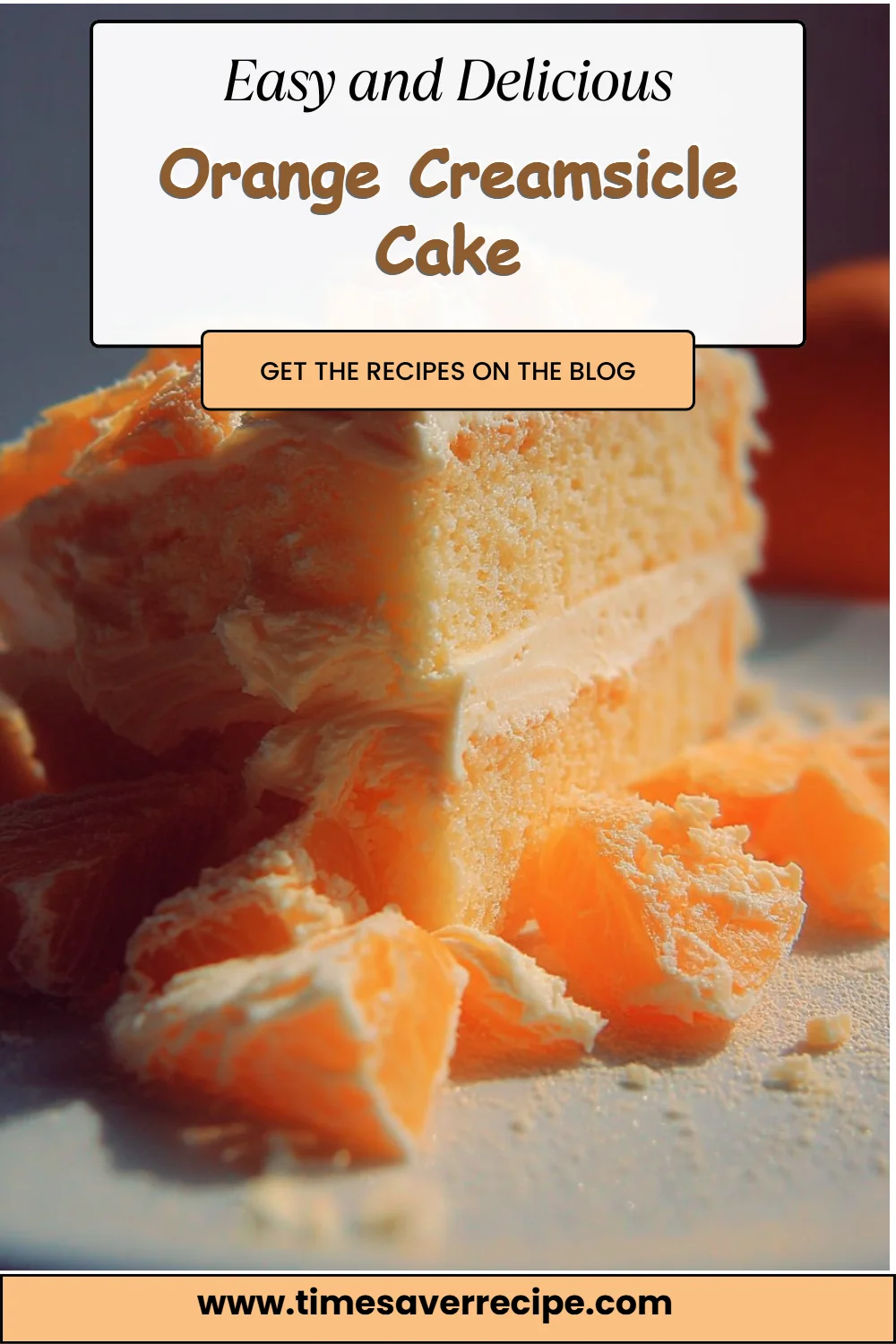
Ingredients for Orange Creamsicle Cake
For the Cake Base
- 1 box (about 15–16 oz) vanilla cake mix
- 1 box (3 oz) orange gelatin mix (Jell‑O style)
- 1 cup orange juice (preferably freshly squeezed for best flavor)
- 1/2 cup vegetable oil
- 3 large eggs
- 1 teaspoon vanilla extract
- 1 teaspoon orange zest
For the Buttercream
- 1 cup (2 sticks) unsalted butter, softened
- 4 cups powdered sugar
- 2 tablespoons heavy cream (or milk)
- 2 tablespoons orange extract (optional)
Ingredient Notes (Substitutions, Healthy Swaps)
- Dairy-free: swap the unsalted butter in the frosting for an equal amount of plant-based buttery spread and use a non-dairy milk for the 2 tablespoons of heavy cream. Keep in mind texture can be slightly softer.
- Lower-fat buttercream: reduce butter to 3/4 cup and add an extra 1/4 cup powdered sugar to keep structure, or use 2 tablespoons milk plus extra sugar to taste — this will be less rich.
- Gluten-free: use a gluten-free vanilla cake mix labeled for 1:1 substitution (same ounce box) and proceed as directed.
- Juice options: fresh orange juice gives the best flavor, but pasteurized bottled OJ works in a pinch. Avoid concentrates unless reconstituted per package directions.
- Orange extract: optional but potent — start with 1 tablespoon if you prefer milder orange in the frosting and taste before adding more. If you don’t have orange extract, the orange zest helps amplify fresh citrus notes.
- Sweetness control: if your powdered sugar or cake mix is already very sweet, consider adding just 1 tablespoon heavy cream at first and adjusting sugar for your taste.
Step-by-Step Instructions
Step 1 – Prep pans and oven
Preheat the oven to 350°F (175°C). Grease and flour two 8-inch round cake pans. Lining the bottoms with parchment rounds makes removal a breeze.
Visual cue: Pans should look evenly greased and floured with parchment in the middle before batter goes in.
Step 2 – Combine dry mixes
In a large bowl, whisk together the vanilla cake mix and the orange gelatin mix until fully combined.
Pro cue: Whisk briefly to evenly distribute the orange gelatin — this ensures every bite has consistent citrus flavor.
Step 3 – Add liquids and flavor
Add the orange juice, vegetable oil, eggs, vanilla extract, and orange zest to the dry mix. Beat until smooth and free of lumps.
Visual cue: Batter will look glossy, slightly orange-tinted, and pourable but not thin like a pancake batter.
Pro cue: Scrape the bowl at least once and beat for about 30 more seconds to ensure all gelatin is dissolved and incorporated.
Step 4 – Bake the layers
Divide the batter evenly between the prepared pans. Bake for 25–30 minutes or until a toothpick inserted comes out clean.
Visual cue: Tops should be lightly golden and spring back when touched; edges will start pulling away from the pan slightly.
Pro cue: Rotate pans halfway through baking for even color and doneness if your oven has hot spots.
Step 5 – Cool completely
Cool the cakes in the pans for 10 minutes, then invert onto a wire rack and cool completely before frosting.
Visual cue: Cakes will be firm and slightly cooled to the touch after the rack rest; frosting warm cakes will cause sliding.
Pro cue: For clean layers, level the tops if slightly domed with a serrated knife before assembling.
Step 6 – Make the buttercream
Beat the softened butter until fluffy. Gradually add the powdered sugar and heavy cream, mixing until smooth. Stir in orange extract if using.
Visual cue: Frosting should be spreadable, glossy, and hold soft peaks without being greasy.
Pro cue: If frosting is too stiff, add 1 teaspoon more cream at a time; if too thin, add more powdered sugar a little at a time.
Step 7 – Assemble and chill
Place one layer on a serving plate and frost the top. Add the second layer, frost the entire cake, and chill for 20–30 minutes to set the crumb coat. Finish frosting as desired and bring to room temperature before serving (about 30 minutes).
Visual cue: A smooth, set crumb coat will be slightly firmer to the touch and make finishing easier.
Pro cue: Use an offset spatula and a warm (briefly dipped in hot water and dried) knife for ultra-smooth sides.
Pro Tips for Success
- Room temperature ingredients: eggs and butter froth and emulsify better at room temperature; it helps batter and frosting come together smoothly.
- Don’t overbeat: once cake batter is smooth, stop — overmixing can make layers dense.
- Fresh orange juice vs store-bought: fresh gives brighter citrus oil and zest synergy for the best flavor.
- Proper cooling: never frost a hot or warm cake; that causes crumb and frosting slip.
- Frosting texture: if your buttercream looks curdled after adding powdered sugar, keep beating — it will come together; add a splash more cream if needed.
- Slice warm, not hot: serve at room temperature for the best buttercream texture — cold frosting is firmer and less flavorful.
- Even layers: weigh batter into pans for perfectly even layers if you want a professional look.
Flavor Variations (Optional)
- Extra orange punch: add an extra 1 teaspoon orange zest to the batter and replace 1 tablespoon of vanilla extract with 1 tablespoon orange extract in the frosting (optional).
- Lightened buttercream (optional): use 1 tablespoon less butter and 1 extra tablespoon heavy cream for a lighter mouthfeel while retaining spreadability.
- Zesty garnish (optional): top with thin strips of orange zest or candied orange slices for garnish — these are decorative and optional only.
- Mini-cake version (optional): bake in three 6-inch pans for a taller, party-ready cake but keep baking times shorter and check doneness earlier.
- Lower-sugar frosting (optional): reduce powdered sugar by 1/2 cup and add an extra tablespoon of heavy cream to balance texture, understanding the frosting will be less stable.
Serving Suggestions
- Simple slice: serve plain with a fork to let the flavor speak for itself.
- With fresh fruit: pair with sliced strawberries or a bowl of mixed berries for contrast.
- Dessert plate upgrade: add a dollop of lightly whipped cream and an orange zest curl for an elegant presentation.
- Party platter: serve alongside small chilled popsicles for a nostalgic dessert table — you can complement the cake with the Orange Creamsicle Popsicles for a fun, dual-format treat.
- Brunch or shower: cut into smaller wedges and serve with coffee or sparkling water for a daytime event.
- Ice cream pairing: a scoop of vanilla ice cream alongside warm cake is always a hit.
Make-Ahead, Storage & Reheating
- Make-ahead: Cakes can be baked, cooled, and tightly wrapped in plastic wrap (without frosting) and stored at room temperature for up to 24 hours or refrigerated up to 48 hours before frosting.
- Frosting ahead: Buttercream can be made and refrigerated in an airtight container for up to 3 days. Re-whip briefly before using to restore texture.
- Long chill: After frosting, the cake can be refrigerated for up to 48 hours; allow it to come to room temperature (about 30–60 minutes) before serving so the buttercream softens.
- Reheating: This cake is best served at room temperature — do not microwave the whole cake. If you want it warm, reheat individual slices for 8–12 seconds in the microwave, watching closely to avoid melting the buttercream.
Storage and Freezing Instructions
- Refrigerator: Store the frosted cake in an airtight cake carrier or covered with a cake dome for 3–4 days. Buttercream and cake both hold up well chilled.
- Freezing whole cake: You can freeze the fully frosted cake for up to 2 months. First freeze uncovered until firm (about 1–2 hours), then wrap tightly with plastic wrap and a layer of foil. Thaw in the refrigerator overnight and bring to room temperature before serving.
- Freezing layers: Alternatively, freeze unfrosted layers wrapped in plastic and foil for up to 2 months. Thaw overnight in the refrigerator and frost as directed.
- Texture note: The texture is slightly denser after freezing and thawing but still delicious. For best results, avoid repeated freeze/thaw cycles.
Nutrition Facts (Per Serving)
| Calories | Protein | Carbs | Fat | Fiber | Sodium |
|———|——–|——|—–|——|——-|
| 420 kcal | 4 g | 58 g | 18 g | 0.8 g | 280 mg |
Nutrition values are estimates and may vary depending on ingredients and portion sizes.
FAQ About Orange Creamsicle Cake
Q: Why did my cake sink in the middle?
A: Likely underbaked or the oven temperature was too low. Make sure to bake until a toothpick comes out clean and avoid opening the oven in the first 20 minutes.
Q: My frosting is grainy — what happened?
A: If powdered sugar wasn’t properly incorporated or butter was too cold, frosting can feel grainy. Beat longer and add a splash of cream to smooth it.
Q: Can I use bottled orange juice?
A: Yes — bottled pasteurized orange juice works. Fresh juice gives brighter flavor, but bottled is acceptable.
Q: How do I know when the cake layers are done?
A: A toothpick inserted into the center should come out clean. Tops should spring back when touched gently.
Q: Can I make this gluten-free?
A: Use a 1:1 gluten-free vanilla cake mix to swap in for the boxed mix and follow directions the same way.
Q: How long can leftovers stay at room temperature?
A: Because the cake is buttercream-frosted, keep leftovers refrigerated and bring to room temperature before serving. Don’t leave frosted cake out for more than 2 hours.
Notes
- For cleaner slices, run your knife under hot water, wipe dry, and make a single clean cut through the cake.
- Add a small pinch of flaky sea salt on each slice if you like contrast — it brightens the sweetness.
- If you want a subtle color, add a few drops of orange gel food coloring to the buttercream; it’s optional and purely decorative.
- To create neat layers, chill the cake for 20–30 minutes between crumb-coating and final frosting.
- Presentation tip: use a simple ring of orange zest curls in the center or a few thin candied orange rounds for an attractive finish.
Orange Creamsicle Cake
- Total Time: 45 minutes
- Yield: 8 servings
- Diet: Vegetarian
Description
A nostalgic cake that combines tangy orange sponge with rich vanilla buttercream, reminiscent of the classic creamsicle.
Ingredients
- 1 box (about 15–16 oz) vanilla cake mix
- 1 box (3 oz) orange gelatin mix
- 1 cup orange juice (preferably freshly squeezed)
- 1/2 cup vegetable oil
- 3 large eggs
- 1 teaspoon vanilla extract
- 1 teaspoon orange zest
- 1 cup (2 sticks) unsalted butter, softened
- 4 cups powdered sugar
- 2 tablespoons heavy cream (or milk)
- 2 tablespoons orange extract (optional)
Instructions
- Preheat the oven to 350°F (175°C) and grease two 8-inch round cake pans.
- Whisk together the vanilla cake mix and orange gelatin until combined.
- Add orange juice, vegetable oil, eggs, vanilla extract, and orange zest to the dry mix; beat until smooth.
- Divide the batter between the pans and bake for 25–30 minutes or until a toothpick comes out clean.
- Cool cakes in the pans for 10 minutes, then invert onto a wire rack to cool completely.
- Beat softened butter until fluffy, then gradually add powdered sugar and heavy cream until smooth. Stir in orange extract if using.
- Assemble by frosting one layer, adding the second layer, and frosting the entire cake. Chill for 20–30 minutes to set the crumb coat.
Notes
For best results, use room temperature ingredients and avoid overmixing. Can be customized with extra zest for more orange flavor.
- Prep Time: 15 minutes
- Cook Time: 30 minutes
- Category: Dessert
- Method: Baking
- Cuisine: American