
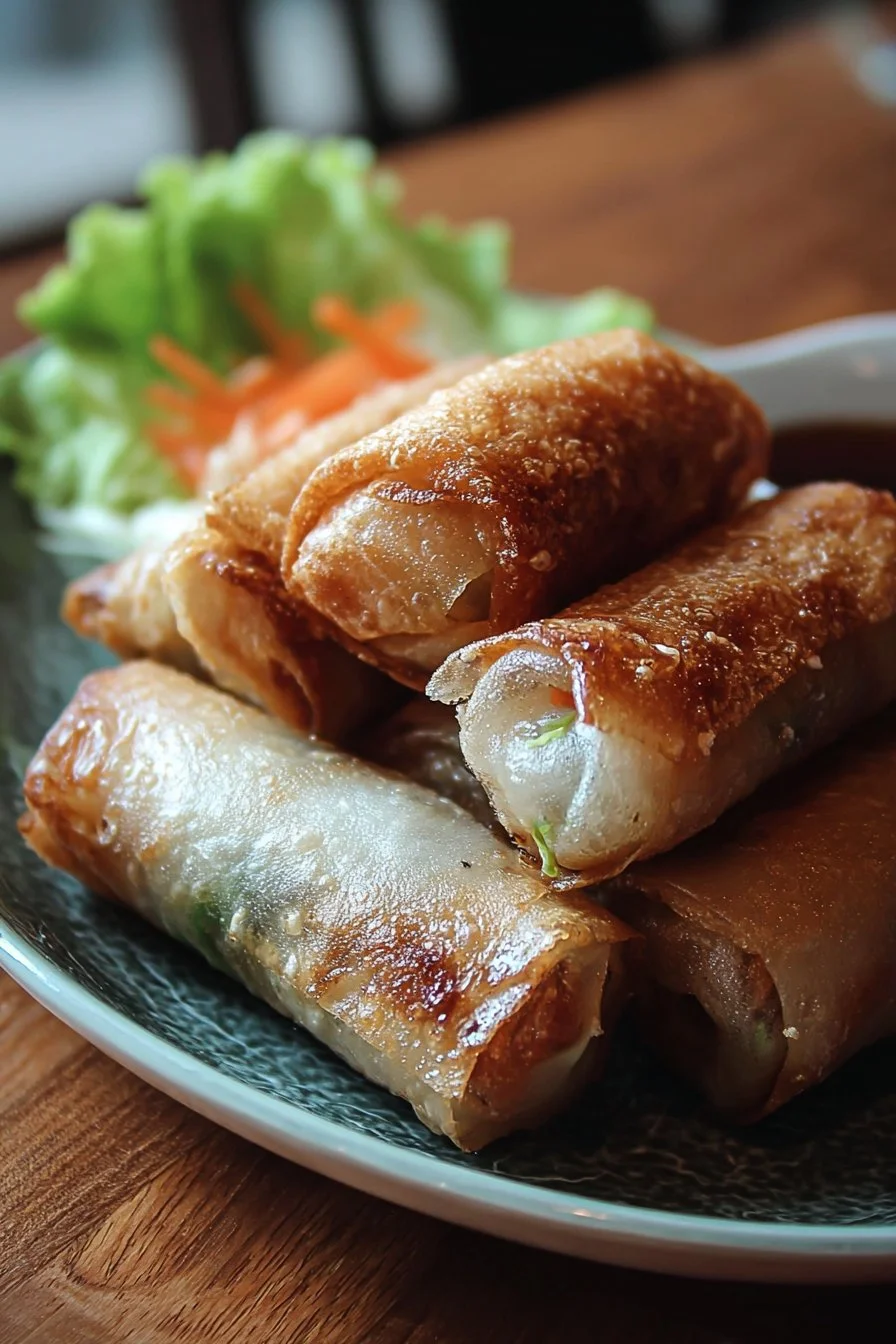
Crispy rice paper spring rolls are pure contrast: light, crackling shells giving way to bright, crunchy vegetables and a whisper of fresh herbs. Each bite hits with a satisfying crunch, lively citrus from fresh lime, and a savory dip of soy or tamari. They’re deceptively easy to make—simple prep, quick assembly, and a fast pan-fry—and they feel special enough for guests yet casual enough for a weeknight. Serve them hot off the skillet with a bowl of dipping sauce and a wedge of lime for squeezing. If you want a ready-made reference while you cook, I also have a tested crispy rice paper spring rolls recipe you can compare notes with.
Why You’ll Love This Crispy Rice Paper Spring Rolls
- Delightful texture contrast: impossibly crisp exterior with cool, crunchy vegetables inside.
- Bright, fresh flavors from mint and cilantro that balance the fried shell.
- Fast to make once ingredients are prepped—great for weeknights or last-minute entertaining.
- Versatile: eat them plain as a snack or pair them with rice or a light salad for a meal.
- Vegetarian-friendly and easy to adapt to dietary needs.
- Hands-on and fun to assemble—great for two people working together at the rolling station.
- Minimal pantry requirements: mostly fresh produce and rice paper wrappers.
- Easy to scale up for guests—make a big tray and fry in batches.
What Is Crispy Rice Paper Spring Rolls?
These spring rolls are rice paper wrappers filled with julienned vegetables (and optional rice noodles), sealed and quickly pan-fried until golden and crisp. Unlike fresh summer rolls that are served soft and cold, these are cooked to create a crunchy shell that amplifies the fresh filling inside. Flavor-wise they combine the natural sweetness of carrot and bell pepper, the cool snap of cucumber, and the herbal lift of mint or cilantro, finished with salty soy or tamari and a squeeze of lime. They’re often served as an appetizer, snack, or part of a casual meal—think laid-back dinner parties, game-day finger food, or a comforting weeknight treat.
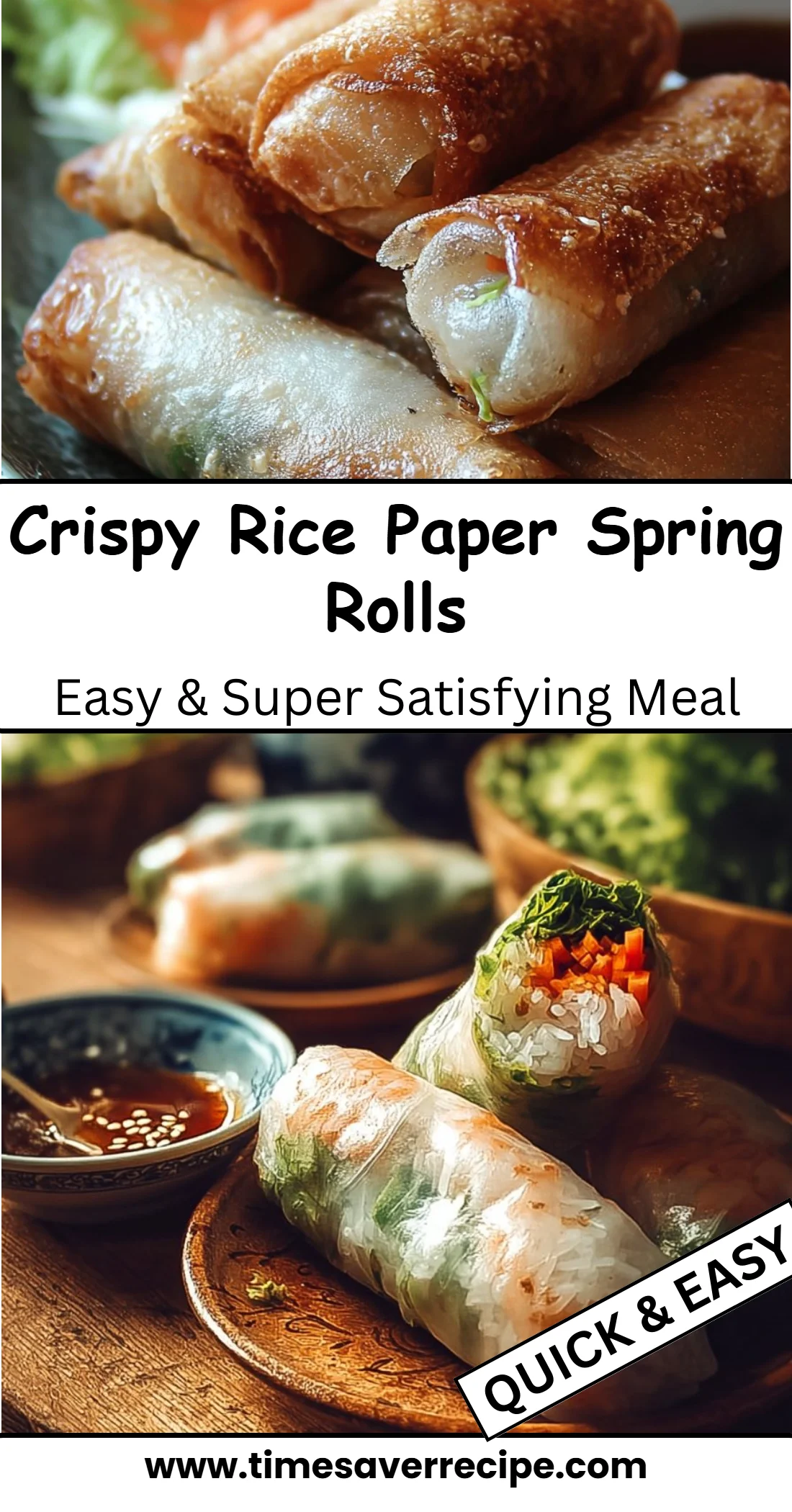
Ingredients for Crispy Rice Paper Spring Rolls
For the Base
- 8–10 sheets rice paper wrappers
- Small handful rice noodles, cooked and cooled (optional)
- 1 large carrot, julienned
- 1 small cucumber, julienned
- 1 bell pepper, thinly sliced (red or yellow)
- Handful fresh herbs (mint or cilantro, or both)
- Lettuce leaves (butter or romaine), torn to size
For Frying & Seasoning
- Neutral oil for frying (vegetable, canola or peanut oil)
- Salt and freshly ground black pepper, to taste
For Serving
- Soy sauce or tamari for dipping
- Fresh lime juice
Ingredient Notes (Substitutions, Healthy Swaps)
- Rice noodles (optional): Leave them out for a lighter, lower-carb roll. If you use them, drain well so they don’t add excess moisture.
- Rice paper wrappers: Naturally gluten-free. Use tamari instead of soy sauce to keep the meal gluten-free if needed.
- Oil: Use vegetable, canola, or peanut oil as listed—these have high smoke points for frying. For a slightly lighter option, use less oil and fry in a nonstick skillet, flipping more often to get crispness.
- Herbs: Mint and cilantro offer different profiles—mint gives a cooling note while cilantro is more citrusy and bright. Use what you love or a combination.
- Lettuce: Butter or romaine adds a mild crunch and keeps the filling from weeping into the wrapper; do not use very watery greens.
Step-by-Step Instructions
Step 1 – Prep the filling
Prepare all vegetables and optional noodles before you touch the rice paper.
- Julienne the carrot and cucumber; thinly slice the bell pepper.
- Cook rice noodles according to package instructions, rinse under cold water, and drain very well.
- Pat everything dry and season lightly with salt and black pepper.
Visual cue: The filling should look clean, dry, and evenly cut—no large wet puddles.
Pro cue: Drying the noodles and vegetables thoroughly keeps the rice paper from becoming gummy.
Step 2 – Set up a rolling station
Create a simple assembly line for speed and consistency.
- Fill a shallow dish with warm water for hydrating wrappers.
- Lay out a clean tray to hold hydrated wrappers and a small damp towel to cover cut vegetables if needed.
Visual cue: A neat station with everything within reach saves time and prevents soggy wrappers.
Pro cue: Work one at a time with hydrated wrappers—rice paper stiffens quickly as it dries.
Step 3 – Hydrate the rice paper
Soften wrappers just until pliable.
- Dip one wrapper in warm water for 10–15 seconds, then lay it flat on your board.
Visual cue: The wrapper should be supple and slightly tacky but not falling apart.
Pro cue: Don’t over-soak—overly soft wrappers tear and become difficult to roll.
Step 4 – Assemble
Build a compact log of filling that will hold together when rolled.
- Place about two tablespoons of filling along one edge of the wrapper, include a lettuce leaf and herbs.
- If using rice noodles, place a small ribbon of noodles on top of the lettuce so they stay dry.
Visual cue: A tidy, narrow pile of filling (not overflowing) about 2–3 inches long.
Pro cue: Keep the filling tight—loose filling makes sealing harder and increases oil absorption.
Step 5 – Roll and seal
Finish with a neat, secure roll.
- Fold the sides over the filling, then roll tightly from the filled edge, sealing with a dab of water.
Visual cue: Rolls should be compact with sealed seams to prevent opening during frying.
Pro cue: Seal the final edge with a little water and press gently to ensure it stays closed while frying.
Step 6 – Fry
Get a golden, even crisp on each roll.
- Heat oil in a skillet over medium heat. Fry rolls seam-side down for 2–3 minutes per side until golden and crisp.
Visual cue: Evenly golden brown on all sides; no dark burnt spots.
Pro cue: Start seam-side down to lock the roll closed and avoid overcrowding the pan so the oil stays hot.
Step 7 – Drain and serve
Let excess oil drip away so the crunch holds.
- Transfer to a rack or paper towel-lined plate to drain. Serve hot with soy or tamari and fresh lime juice.
Visual cue: Crispy, dry-looking shells with bright filling visible when cut.
Pro cue: Serve immediately—the contrast between hot shell and cool filling is best fresh.
Pro Tips for Success
- Heat control: Maintain medium heat—too hot and the outside burns before the center crisps, too cool and rolls soak up oil.
- Dryness matters: Pat every ingredient dry; moisture is the enemy of crispness.
- Fry in batches: Crowding drops the oil temperature and yields soggy rolls.
- Uniform size: Cut vegetables evenly so every bite has a balanced texture.
- Keep a clipboard of extras: prep extra wrappers and fillings—if one tears, you’ll have spares.
- Season sparingly: The dipping sauce is where you’ll get most of the salt; lightly season fillings so they stay fresh-tasting.
- Timing: Fry right before serving—these are best eaten straight from the skillet.
Flavor Variations (Optional)
- Spicy kick: Add thinly sliced chiles or a drizzle of chili oil to the dipping sauce.
- Citrus-herb boost: Add extra lime zest to the filling for a brighter finish.
- Toasted sesame: Add a few toasted sesame seeds to the filling for nutty crunch (optional garnish only).
- Herb-forward: Use only mint for a cooling, summery flavor.
- Light version: Skip frying—serve hydrated rice paper rolls fresh and chilled (this changes texture but keeps the same flavors).
- Noodle swap: Use the optional rice noodles for more substance; omit them for a lighter roll.
Serving Suggestions
- Serve as an appetizer with small bowls of soy or tamari mixed with lime juice for dipping.
- Build a casual meal: pair a platter of these rolls with a simple green salad or steamed vegetables.
- Make it a shared snack: Arrange on a large tray with lime wedges and extra herbs so guests can customize each roll.
- Party pairing: Serve alongside a fragrant rice dish—try pairing with crispy baked basmati rice for a cozy, textural contrast.
- Picnic idea: Pack the filling and wrappers separately, assemble and fry on arrival for fresh crunch.
Make-Ahead, Storage & Reheating
- Make-ahead prep: Cut and dry all vegetables, cook and cool rice noodles, and keep each component refrigerated in airtight containers for up to 24 hours.
- Rolling ahead: You can assemble the rolls and refrigerate them for a few hours before frying; keep them on a tray, separated by parchment so they don’t stick.
- Refrigerator storage time: Cooked rolls will keep in the fridge for up to 2 days, but expect loss of maximum crispness.
- Reheating: Re-crisp in a dry skillet over medium heat or in a 375°F (190°C) oven for 6–8 minutes. Avoid microwaving—this makes them soggy.
- Texture changes: Fried rice paper loses some crunch over time; reheating restores some crispness but not quite the original just-fried snap.
Storage and Freezing Instructions
- Freezing not recommended: Fried rolls do not freeze well because the wrapper becomes soggy when thawed. The texture changes too much.
- Freezing alternative: If you need a make-ahead option, freeze the filling (without wrapping) in portions. Thaw, dry thoroughly, then assemble and fry when ready.
- Refrigerator storage: Keep cooked rolls covered loosely so steam doesn’t trap and make them soggy; best within 48 hours.
Nutrition Facts (Per Serving)
| Calories | Protein | Carbs | Fat | Fiber | Sodium |
|———|——–|——|—–|——|——-|
| 320 kcal | 6 g | 35 g | 18 g | 4 g | 450 mg |
Nutrition values are estimates and may vary depending on ingredients and portion sizes.
FAQ About Crispy Rice Paper Spring Rolls
- How do I stop my rice paper from tearing?
- Use warm (not hot) water and hydrate briefly—10–15 seconds. If it’s tearing, you likely over-soaked it. Work on a dry surface and handle gently.
- Why are my rolls soggy after frying?
- Common causes: overcrowded pan lowering oil temp, too much moisture in the filling, or under-heating the oil. Dry ingredients thoroughly and fry in batches.
- Can I use other vegetables?
- Yes, but keep them thinly sliced and low-moisture. Vegetables not listed can be used only as optional variations—stick to the base ingredients for the original recipe.
- How do I know when they’re cooked?
- Visual doneness: even golden brown on all sides and a firm, dry shell when touched with tongs—about 2–3 minutes per side.
- What’s the best way to reheat leftovers?
- Reheat in a dry skillet or an oven at 375°F (190°C) until crisp again. Avoid the microwave.
- Can I make these gluten-free?
- Yes—use tamari instead of soy sauce and confirm rice noodles (if used) are gluten-free.
Notes
- Presentation: Cut rolls on the diagonal and fan them on a warm platter for elegant serving.
- Lime finishing: A light squeeze of lime over the rolls just before serving brightens the flavors.
- Dipping: Offer small bowls of soy or tamari with lime wedges on the side rather than pre-mixing—guests can customize salt and acid.
- Texture tweak: For extra crunch, fry a brief second time at the end on high heat (watch closely).
- Herb timing: Add herbs at the final assembly stage to keep them fresh and vibrant.
- Leftovers tip: If storing, place rolls on a wire rack in the fridge so steam escapes and the shell doesn’t soften as quickly.
Enjoy the satisfying crunch and fresh flavors—these crispy rice paper spring rolls are proof that simple ingredients and a little technique can make something truly moreish.
Print
Crispy Rice Paper Spring Rolls
- Total Time: 30 minutes
- Yield: 4 servings
- Diet: Vegetarian
Description
Deliciously crisp spring rolls made with rice paper wrappers and filled with fresh vegetables and herbs, served with a savory dipping sauce.
Ingredients
- 8–10 sheets rice paper wrappers
- Small handful rice noodles, cooked and cooled (optional)
- 1 large carrot, julienned
- 1 small cucumber, julienned
- 1 bell pepper, thinly sliced (red or yellow)
- Handful fresh herbs (mint or cilantro, or both)
- Lettuce leaves (butter or romaine), torn to size
- Neutral oil for frying (vegetable, canola or peanut oil)
- Salt and freshly ground black pepper, to taste
- Soy sauce or tamari for dipping
- Fresh lime juice
Instructions
- Prep the filling: Prepare all vegetables and optional noodles before touching the rice paper.
- Set up a rolling station: Create a simple assembly line for speed and consistency.
- Hydrate the rice paper: Soften wrappers just until pliable.
- Assemble: Build a compact log of filling that will hold together when rolled.
- Roll and seal: Finish with a neat, secure roll.
- Fry: Get a golden, even crisp on each roll.
- Drain and serve: Let excess oil drip away so the crunch holds.
Notes
For extra flavor, add lime zest to the filling or thinly sliced chiles for a spicy kick. Maintain medium heat while frying to ensure the rolls are crisp and golden.
- Prep Time: 15 minutes
- Cook Time: 15 minutes
- Category: Appetizer
- Method: Frying
- Cuisine: Asian