
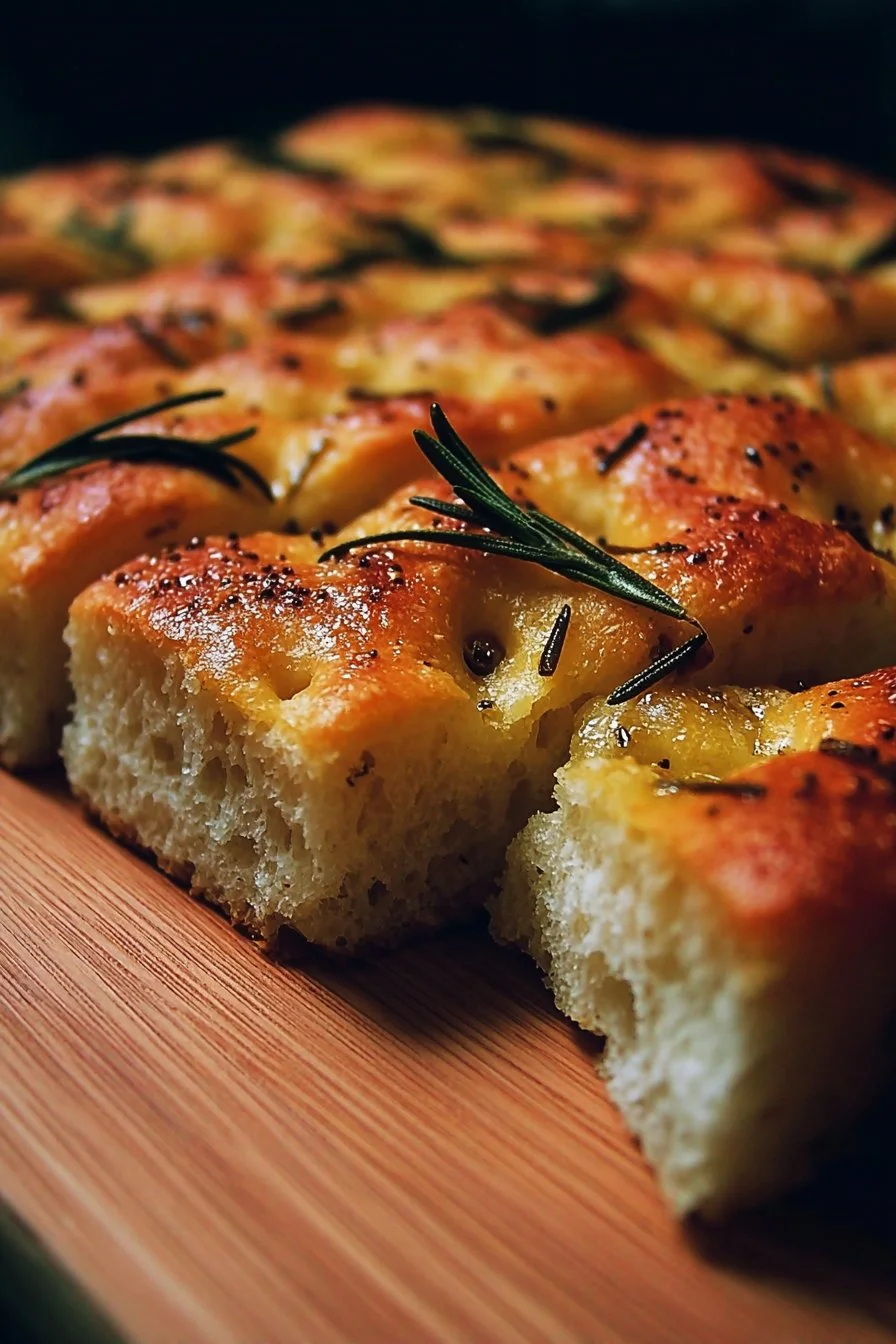
Focaccia is the pillowy, olive-oil–kissed Italian flatbread that delivers golden crusts, an open crumb, and a fragrant rosemary finish. It’s perfect when you want something that feels special but isn’t fussy — pull-apart after a weeknight pasta, serve at brunch, or slice for sandwiches. If you’re short on time, try our 20-minute homemade bread techniques as inspiration for quicker loaves and shortcuts that still taste homemade.
Why you’ll love this dish
Focaccia hits a sweet spot: relatively forgiving dough, pantry-friendly ingredients, and big flavor from just olive oil and herbs. It’s a crowd-pleaser that looks impressive but rewards simple handling.
“Soft inside, crunchy on the outside, and fragrant with rosemary — it was the easiest bread I’ve pulled off on a weeknight.” — home baker review
Perfect occasions:
- Casual dinners and family meals
- Brunch spreads with cheeses and charcuterie
- Sandwich bases for grilled vegetables or roasted meats
- Holiday sides when you want a rustic, shareable bread
Step-by-step overview
Before you start, here’s the quick roadmap so you know what to expect:
- Bloom yeast in warm water.
- Mix flour, salt, and olive oil into a shaggy dough.
- Knead until smooth, then allow a first rise.
- Stretch into an oiled pan, rest, dimple, and top.
- Bake until golden and hollow-sounding, then cool slightly before slicing.
If you prefer an ultra-simple version, see the 4-ingredient artisan bread for a no-fuss alternative you can compare techniques with.
What you’ll need
- 4 cups (500 g) bread flour or all-purpose flour (bread flour gives better chew)
- 2 1/4 teaspoons (7 g) active dry yeast or instant yeast (see tips if swapping)
- 2 teaspoons (10 g) fine salt
- 1 3/4 cups (415 ml) warm water (about 100–110°F / 38–43°C)
- 1/4 cup (60 ml) extra virgin olive oil, plus more to oil the pan and drizzle
- 2 tablespoons fresh rosemary leaves, coarsely chopped
- Coarse sea salt for sprinkling
Substitutions and notes:
- Whole wheat: Swap up to 25% flour for whole wheat for nuttiness; expect a denser crumb.
- Gluten-free: This recipe relies on gluten; use a tested gluten-free focaccia formula instead.
- Yeast: Instant yeast can be added directly to the flour; reduce proofing time slightly.
Step-by-step instructions
- Activate the yeast: Pour the warm water into a mixing bowl, sprinkle the yeast over the surface, and let it sit for 5 minutes until slightly foamy. If it doesn’t foam, the yeast may be dead—start over with fresh yeast.
- Mix dough: Add the flour, salt, and 1/4 cup olive oil to the bowl. Stir with a wooden spoon until a shaggy mass forms. The dough will be tacky.
- Knead: Turn the dough onto a lightly floured surface. Knead for about 8–10 minutes until smooth and elastic. If using a stand mixer, use the dough hook on medium for 6–7 minutes.
- First rise: Lightly oil a clean bowl, place the dough inside, and turn to coat with oil. Cover with plastic wrap or a damp towel and let it rise in a warm spot for about 1.5 hours, until roughly doubled.
- Shape and rest: Gently punch down the dough to release gas. Transfer to a well-oiled baking sheet (13×18-inch or similar). Press and stretch into a rectangle about 3/4–1 inch thick. Cover and let rest for 30 minutes so the dough relaxes.
- Preheat oven: While dough is resting, preheat oven to 425°F (220°C).
- Dimple and top: Use your fingertips to press deep dimples across the dough. Don’t be afraid to push through to the pan in spots — that’s characteristic focaccia texture. Drizzle generously with olive oil so it pools in dimples, and scatter the chopped rosemary and coarse sea salt.
- Bake: Place in the preheated oven and bake for about 25 minutes. The focaccia should be golden brown and sound hollow when tapped on the bottom.
- Cool: Remove from the oven and let cool on a rack for 10–15 minutes before slicing. This short rest helps set the crumb and makes slicing cleaner.
Best ways to enjoy it
- Serve warm, torn into pieces with a bowl of extra virgin olive oil and balsamic for dipping.
- Split horizontally and use as a sandwich loaf for grilled chicken, roasted veggies, or mozzarella and tomatoes.
- Use cooled focaccia as a base for bruschetta or panini.
- Cube leftover focaccia for salads (panzanella) or toss with garlic and roast for crunchy croutons.
Storage and reheating tips
- Room temperature: Store wrapped in plastic or in an airtight container for up to 2 days. Keep away from heat sources.
- Refrigeration: Refrigerating dries bread faster; only refrigerate if you’ll use it within a week and prefer firmer slices.
- Freezing: Wrap tightly in plastic and foil, or vacuum-seal, and freeze for up to 3 months. Thaw overnight at room temperature.
- Reheating: Refresh slices in a 350°F (175°C) oven for 8–10 minutes, or toast individual pieces. For a crisp crust, brush with a little olive oil before warming.
Pro chef tips
- Water temperature matters: Aim for 100–110°F (38–43°C). Too hot kills yeast; too cool slows proofing.
- Oil is flavor: Use good extra virgin olive oil — it’s one of the main flavors. Brush liberally into the dimples.
- Don’t over-flour while shaping: A sticky surface is easier to stretch and preserves an open crumb.
- Press, don’t punch: When creating dimples, press fingertips firmly but gently. The oil should pool in those pockets.
- Taste as you go: Add a pinch of flaky sea salt right before serving for a burst of salinity and texture.
- If you like a chewier crumb, use bread flour; for softer crumb, all-purpose flour works fine.
Creative twists
- Tomato-rosemary: Press halved cherry tomatoes into the dough before baking.
- Olive and onion: Scatter sliced olives and caramelized onions for savory depth.
- Garlic-herb: Mix minced garlic and chopped herbs into the olive oil and brush into dimples.
- Cheese-topped: Add grated parmesan or pecorino in the last 5 minutes of baking so it melts lightly.
- Sweet focaccia: For a dessert-style version, swap rosemary for thin lemon slices and sprinkle with sugar before baking.
Common questions
Q: Can I use instant yeast instead of active dry?
A: Yes. Instant yeast can be mixed directly into the flour; you can skip the 5-minute bloom step. Because instant is slightly faster, expect modestly shorter rise times.
Q: How do I know when the focaccia is done?
A: It should be golden brown on top, and when you tap the bottom it sounds hollow. An internal temperature of about 190–200°F (88–93°C) indicates a fully baked crumb.
Q: Can I make the dough the night before?
A: Yes — for deeper flavor, refrigerate the dough after the first mix (before the first rise) or after the first rise. Cold retardation for 8–24 hours develops more complex flavor. Bring the dough back to room temp before shaping and finishing.
Q: My focaccia is dense — what went wrong?
A: Likely under-kneaded dough, insufficient rise time, or old yeast. Ensure proper gluten development, warm-proofing conditions, and fresh yeast.
Q: Is focaccia healthy?
A: It’s a bread made from flour, water, oil, and yeast. Olive oil adds heart-healthy fats, and you can boost nutrition with whole-grain flours, seeds, or roasted vegetables as toppings.
If you want other easy bread ideas to practice similar techniques, try mixing and matching methods from no-knead and quick-rise recipes to find your preferred crumb and crust balance.
Print
Rosemary Focaccia
- Total Time: 2 hours 10 minutes
- Yield: 12 servings
- Diet: Vegetarian
Description
A simple yet impressive Italian flatbread, rosemary focaccia is soft inside and crunchy outside, making it perfect for any occasion.
Ingredients
- 4 cups (500 g) bread flour
- 2 1/4 teaspoons (7 g) active dry yeast
- 2 teaspoons (10 g) fine salt
- 1 3/4 cups (415 ml) warm water (about 100–110°F / 38–43°C)
- 1/4 cup (60 ml) extra virgin olive oil, plus more for the pan
- 2 tablespoons fresh rosemary leaves, coarsely chopped
- Coarse sea salt for sprinkling
Instructions
- Activate the yeast: Pour the warm water into a mixing bowl, sprinkle the yeast over the surface, and let it sit for 5 minutes until slightly foamy.
- Mix the dough: Add the flour, salt, and 1/4 cup olive oil to the bowl. Stir with a wooden spoon until a shaggy mass forms.
- Knead the dough: Turn the dough onto a lightly floured surface. Knead for about 8–10 minutes until smooth and elastic.
- First rise: Lightly oil a clean bowl, place the dough inside, cover, and let it rise in a warm spot for about 90 minutes.
- Shape and rest: Punch down the dough, transfer to a well-oiled baking sheet, stretch into a rectangle, and cover to let rest for 30 minutes.
- Preheat the oven to 425°F (220°C).
- Dimple and top: Press dimples into the dough, drizzle with olive oil, and sprinkle with rosemary and sea salt.
- Bake: Bake for about 25 minutes until golden brown and hollow-sounding.
- Cool: Let cool on a rack for 10–15 minutes before slicing.
Notes
Serve warm with olive oil and balsamic for dipping or use as sandwich bread. Store in airtight container for up to 2 days.
- Prep Time: 15 minutes
- Cook Time: 25 minutes
- Category: Bread
- Method: Baking
- Cuisine: Italian