
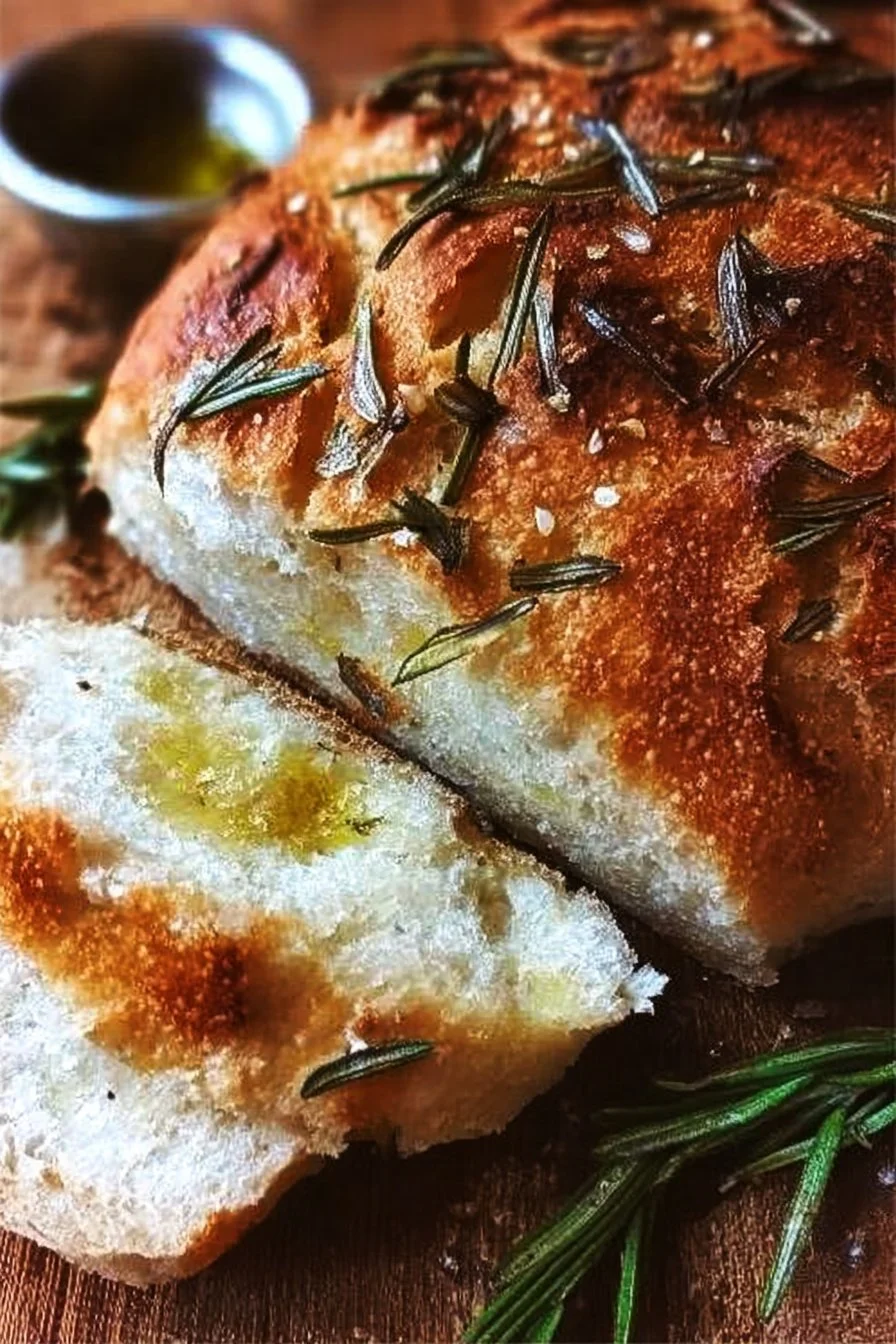
There’s something irresistible about a warm, crusty loaf scented with rosemary and sweet roasted garlic—the kind of bread that makes weekday dinners feel special and weekend brunches downright celebratory. This Rosemary & Roasted Garlic Artisan Bread combines simple pantry staples with a slow, hands-on process that rewards you with deep flavor and a chewy crumb. For another garlic-and-rosemary take that bakes beautifully in a Dutch oven, try this Dutch oven garlic-rosemary bread recipe for a slightly different technique and crust.
Why you’ll love this dish
This loaf is classic, comforting, and surprisingly approachable. It uses everyday ingredients—flour, yeast, water, oil—then gets a big flavor boost from fresh rosemary and the mellow sweetness of roasted garlic. It’s perfect for: weeknight soups, holiday spreads, or as a homemade gift.
“I took this to a family brunch and everyone went back for seconds—the garlic is rich but never overpowering.” — a quick review from a home baker
Why it works: roasting the whole garlic head softens the cloves and turns pungency into a caramelized, spreadable flavor. Fresh rosemary adds piney brightness that pairs with olive oil and a crisp crust. The method is straightforward enough for beginners yet rewarding for seasoned bakers.
How this recipe comes together
Think of the process as three phases: mix, rest, and bake. You’ll combine dry ingredients, whisk in warm water and oil, then bring the dough together. After folding in rosemary and roasted garlic, a ten-minute knead develops gluten for structure. Two rises (one bulk, one shaped) build flavor and oven spring. Finally, a hot oven creates a golden crust and soft interior. Total active hands-on time is modest; most of the clock time is waiting while the dough rises.
What you’ll need
- 3 cups all-purpose flour (substitute: half bread flour for chewier crumb)
- 1 tablespoon sugar (feeds the yeast; optional for a slightly slower rise)
- 2 teaspoons salt
- 1 teaspoon active dry yeast (or 1 teaspoon instant yeast; see FAQ)
- 1 cup warm water (about 105–115°F / 40–46°C—warm to the touch, not hot)
- 2 tablespoons olive oil (plus extra for greasing)
- 2 tablespoons fresh rosemary, finely chopped (or 2 teaspoons dried)
- 1 head garlic, roasted (see Directions for roasting method)
Notes: If using whole-wheat flour, swap up to 1 cup and increase water by 1–2 tablespoons. For a dairy-free, vegan loaf this recipe is already compliant.
Step-by-step instructions
- In a large mixing bowl, whisk together the flour, sugar, salt, and yeast until evenly distributed.
- In a separate bowl, combine the warm water and olive oil. Check the water temperature—too hot will kill the yeast; comfortable warm is ideal.
- Pour the liquid into the dry mixture a little at a time, stirring with a wooden spoon until a shaggy dough forms.
- Add the chopped rosemary and the roasted garlic cloves. Use your fingers to gently mash the roasted cloves into the dough so the garlic distributes evenly.
- Turn the dough out onto a lightly floured surface. Knead for about 10 minutes until the dough is smooth and elastic. It should be slightly tacky but not sticky—add only small pinches of flour if it’s wet.
- Lightly oil a clean bowl and place the dough inside. Cover with plastic wrap or a damp towel. Let it rise in a warm, draft-free spot for about 1 hour, or until doubled in size.
- Preheat your oven to 425°F (220°C) while the dough is rising. If you like a crispier crust, place a shallow pan on the bottom rack to heat for adding steam at bake time.
- After the first rise, gently deflate the dough and shape it into a loaf. Transfer to a greased loaf pan or onto a baking sheet.
- Cover and let the loaf rise a second time for about 30 minutes. It should look puffy and nearly doubled.
- If using, pour a half-cup of hot water into the preheated shallow pan to create steam, or spray the loaf with water and quickly close the oven door. Bake the bread for 25–30 minutes, until golden brown and hollow-sounding when tapped on the bottom.
- Remove from the oven and cool on a wire rack for at least 20 minutes before slicing so the crumb sets properly.
How to roast a head of garlic: Slice the top off the bulb to expose the cloves, drizzle with olive oil, wrap tightly in foil, and roast at 400°F (200°C) for 30–40 minutes until cloves are soft and caramelized. Squeeze cloves out when cool and fold into the dough as directed.
Best ways to enjoy it
Serve this bread warm with a smear of butter for breakfast, slice it for sandwiches, or present it alongside tomato soup, roasted vegetables, or a cheese board. Toast slices and top with ricotta and honey for a sweet-savory bite. If you prefer a quicker bake or a denser crumb, you might also enjoy the simpler approach in the 4-ingredient artisan bread for comparison.
Storage and reheating tips
- Room temperature: Store in a paper bag or bread box for up to 2 days to preserve crust integrity. Avoid sealed plastic if you want to keep the crust crisp.
- Refrigeration: Not recommended for freshness—refrigerator cold accelerates staling.
- Freezing: Slice and freeze in an airtight bag for up to 3 months. Toast or reheat slices directly from frozen.
- Reheating: For crisp crust, reheat whole loaf in a 350°F (175°C) oven for 8–10 minutes. For slices, toast until warm. If bread is a bit dry, wrap loosely in foil with a teaspoon of water and warm for 5–8 minutes.
Helpful cooking tips
- Water temperature matters: aim for warm, not hot. 105–115°F is a safe guideline.
- Kneading: Use the windowpane test—stretch a small piece of dough; a thin translucent membrane indicates sufficient gluten development.
- Steam creates a shinier, crisper crust: add a tray of hot water to the oven or mist the loaf at the start of baking.
- Doneness check: an internal temperature of 190–200°F (88–93°C) indicates a fully baked loaf. If you don’t have a thermometer, a hollow sound when tapped is a good sign.
- Mix-ins: Fold add-ins gently to avoid deflating the dough too much.
Creative twists
- Add grated Parmesan or Asiago for a cheesy crust.
- Stir in chopped olives and sun-dried tomatoes for Mediterranean flavor.
- Swap half the all-purpose flour for whole-wheat for a nuttier loaf; add 1–2 tablespoons more water.
- Make garlic-herb knots: divide dough into pieces, tie, and bake on a sheet.
- Seeded top: brush with olive oil and sprinkle sesame, poppy, or flaky sea salt before baking.
Common questions
Q: How long will this bread take from start to finish?
A: Active hands-on time is about 30–40 minutes (mixing, kneading, shaping). Allow 1–1.5 hours for the first rise and 30 minutes for the second rise, plus 25–30 minutes baking—so plan roughly 3 hours including rests.
Q: Can I use instant yeast instead of active dry yeast?
A: Yes. Use the same amount of instant yeast and mix it directly into the dry ingredients. Instant yeast may speed up the rise slightly, so watch the dough rather than the clock.
Q: Can I make this in a stand mixer?
A: Absolutely. Use the dough hook on low-medium speed and knead for 6–8 minutes until smooth and elastic. Avoid overmixing; you still want a slightly springy dough.
Q: My garlic was too strong—any fix?
A: Roast the garlic longer until very soft and caramelized; this mellows sharpness. You can also reduce the roasted garlic to half a head if you prefer subtler flavor.
Q: Why did my loaf come out dense?
A: Likely reasons are under-kneading, insufficient rise time, or too much flour. Make sure the dough doubles during the first rise and performs the windowpane test after kneading.
Rosemary & Roasted Garlic Artisan Bread
- Total Time: 90 minutes
- Yield: 1 loaf
- Diet: Vegetarian
Description
A warm, crusty loaf infused with roasted garlic and fresh rosemary, perfect for special occasions and everyday meals alike.
Ingredients
- 3 cups all-purpose flour (substitute: half bread flour for chewier crumb)
- 1 tablespoon sugar
- 2 teaspoons salt
- 1 teaspoon active dry yeast (or 1 teaspoon instant yeast)
- 1 cup warm water (about 105–115°F / 40–46°C)
- 2 tablespoons olive oil (plus extra for greasing)
- 2 tablespoons fresh rosemary, finely chopped (or 2 teaspoons dried)
- 1 head garlic, roasted
Instructions
- In a large mixing bowl, whisk together the flour, sugar, salt, and yeast until evenly distributed.
- In a separate bowl, combine the warm water and olive oil.
- Pour the liquid into the dry mixture gradually, stirring with a wooden spoon until a shaggy dough forms.
- Add the chopped rosemary and roasted garlic, gently mash the roasted cloves into the dough.
- Turn the dough onto a floured surface and knead for about 10 minutes until smooth and elastic.
- Lightly oil a clean bowl, place the dough inside, cover it, and let it rise in a warm spot for about 1 hour, or until doubled in size.
- Preheat the oven to 425°F (220°C) while the dough rises.
- Gently deflate the dough, shape it into a loaf, and transfer it to a greased loaf pan or baking sheet.
- Cover and let the loaf rise again for about 30 minutes.
- If using, pour hot water into a preheated shallow pan for steam, or spray the loaf with water before baking.
- Bake for 25–30 minutes until golden brown and hollow-sounding when tapped on the bottom.
- Cool on a wire rack for at least 20 minutes before slicing.
Notes
For a dairy-free, vegan loaf, this recipe is already compliant. If using whole-wheat flour, swap up to 1 cup and increase water by 1–2 tablespoons. Adjust roasting time for garlic for desired sweetness.
- Prep Time: 30 minutes
- Cook Time: 30 minutes
- Category: Bread
- Method: Baking
- Cuisine: American