
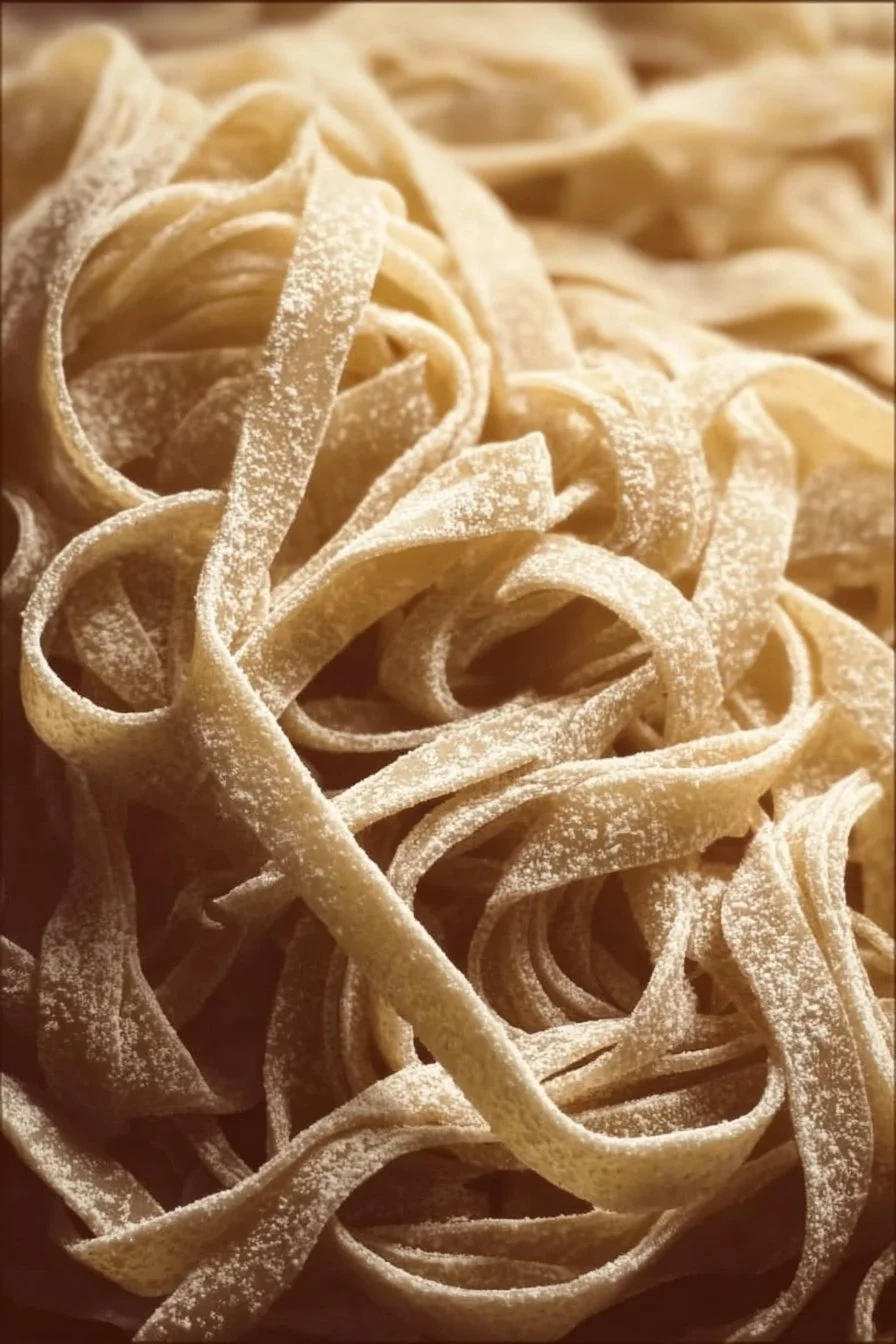
Making fresh pasta at home with just three pantry staples—flour, salt, and eggs—turns a simple set of ingredients into silky ribbons that cook in minutes and taste impossibly better than store-bought. It’s the kind of recipe people make when they want a hands-on meal, need a quick dinner that feels special, or want a base that adapts to soups, sauces, and family favorites. For a cozy weeknight, serve these noodles alongside a loaf like crusty homemade artisan bread to soak up every last drop of sauce.
Why you’ll love this dish
There’s something wonderfully tactile about making pasta from scratch. It’s fast, budget-friendly, and you control the texture and thickness. These noodles are especially great when you want fresh, tender pasta without a pasta machine. They’re versatile — perfect for a light butter-and-herb toss, a rich Bolognese, or to lift a steaming bowl of soup.
“Quick, comforting, and better than store-bought—these homemade noodles became my weeknight staple.” — a satisfied home cook
This recipe is ideal for weeknights, family meals, and when you want to impress guests with minimal fuss. Because the dough is egg-based, you get a richer flavor and more elasticity than water-only pasta.
How this recipe comes together
You’ll make a simple dough, rest it, roll it thin, cut into ribbons, and briefly boil. The method is straightforward: whisk dry ingredients, incorporate eggs, knead until smooth, chill to relax the gluten, roll and cut, air-dry briefly, then cook for just a minute or two. Expect 45–75 minutes total time when including chilling and drying, though active hands-on time is only about 15–20 minutes.
What you’ll need
- 1 cup (about 125 g) all-purpose flour — can be mixed with 20–30% semolina for toothier texture
- 1/2 teaspoon fine salt
- 2 large eggs, room temperature (room-temp eggs mix more evenly)
- Extra flour for dusting and rolling
- Optional: a little olive oil (1 tsp) to enrich or prevent sticking
Substitutions/notes:
- For sturdier pasta, use 00 flour or a 50/50 blend of all-purpose and 00.
- To make egg-free noodles, swap eggs for about 1/3 cup water + 1 tbsp olive oil (texture differs).
- If you prefer a nuttier flavor, replace up to 25% of the flour with whole wheat.
Step-by-step instructions
- In a bowl, whisk together the flour and salt until evenly distributed.
- Make a well in the center of the flour. Crack the eggs into the well.
- Using a fork, beat the eggs gently and pull flour from the inner sides of the well into the eggs a little at a time. Continue until a shaggy, slightly sticky dough forms.
- Turn the dough out onto a lightly floured surface. Knead with the heels of your hands for 3–5 minutes until the dough becomes smooth and slightly elastic. If the dough feels too dry, add a few drops of water; if too sticky, dust with a bit more flour.
- Wrap the dough in plastic wrap and refrigerate for at least 30 minutes (or overnight). Resting relaxes the gluten and improves texture.
- On a floured surface, roll the dough to your desired thickness (about 1–2 mm for most ribbon noodles). Use a rolling pin or a pasta machine if you have one.
- Dust lightly with flour, then slice into ribbons with a pizza cutter or sharp knife. You can roll the sheet into a loose cylinder and cut to save time; unroll the strips afterward.
- Lay the cut noodles on a wire rack or floured tray and let them air-dry for 2–3 hours to firm up slightly. This helps them hold shape when boiling.
- Bring 3 quarts of water to a rolling boil and add 1 teaspoon salt. Add the noodles gently and cook for 1–2 minutes until al dente—fresh pasta cooks very quickly. Drain well and toss with sauce or butter.
Best ways to enjoy it
These noodles shine with simple preparations that let their texture and egginess show. Toss with browned butter, sage, and Parmesan for a 10-minute supper. Stir them into a hearty broth for a quick noodle soup, or serve with a slow-simmered ragu. For an easy weeknight bowl, toss with olive oil, garlic, lemon zest, and chili flakes.
If you’re building a soothing meal, try dropping a few ribbons into a simmering pot of homemade chicken soup—they add body and comfort without overpowering the broth.
Storage and reheating tips
- Refrigeration: Fresh, uncooked noodles wrapped tightly and stored in the refrigerator will keep 24–48 hours. Cooked pasta will last 3–4 days refrigerated in an airtight container.
- Freezing: Freeze raw noodles on a tray until firm, then transfer to a sealed container or freezer bag for up to 2 months. Cook from frozen—add an extra 30–60 seconds to boiling time. You can also freeze cooked noodles with sauce in meal-sized portions.
- Reheating: Gently reheat cooked noodles in a skillet with a splash of water or sauce over medium heat, or microwave covered for 1–2 minutes. Avoid overcooking to preserve texture.
- Food safety: Because this dough contains raw eggs, always refrigerate if not cooking immediately and discard if left at room temperature for more than 2 hours.
Pro chef tips
- Knead until smooth and slightly tacky; under-kneaded dough won’t hold together, while over-kneading can make noodles tough. Aim for elasticity that springs back when pressed.
- Let dough rest: at least 30 minutes, ideally an hour or overnight. Resting relaxes gluten and makes rolling easier.
- Roll thin but not paper-thin: 1–2 mm gives a nice bite. Thicker for hearty sauces; thinner for delicate butter or cream sauces.
- Dust with semolina for drying and storage to prevent clumping.
- Use a pasta machine set 3–5 for medium-thickness sheets if you have one. If rolling by hand, rotate and flip the dough often to keep thickness even.
- Cook small batches: fresh noodles cook quickly and can clump if overcrowded. Use a wide pot with plenty of boiling water.
Creative twists
- Herb or spinach noodles: puree cooked spinach or fresh herbs with a teaspoon of oil and replace 1–2 tbsp of the egg with the puree for color and flavor.
- Whole-grain or semolina blend: swap part of the flour with whole wheat or semolina for nuttiness and texture.
- Flavored doughs: mix in saffron threads dissolved in warm water, or finely grated beet for color.
- Turn into filled pasta: roll a little thicker and use as a wrapper for ravioli or tortellini.
- Gluten-free option: use a pre-blended gluten-free flour designed for pasta and add 1 tbsp xanthan gum if the blend lacks it.
Common questions
Q: How many servings does this recipe make?
A: About 2 modest servings as a main, or 3–4 as a side. If you need more, the recipe scales linearly—double or triple easily.
Q: Can I use bread flour or 00 flour instead of all-purpose?
A: Yes. Bread flour will give slightly chewier noodles due to higher protein. 00 flour produces a silkier, more tender pasta. Either works—adjust water/egg slightly if the dough seems too dry.
Q: Do I have to dry the noodles for 2–3 hours?
A: You don’t have to—if you’re cooking immediately, a short 20–30 minute rest is adequate. The 2–3 hour drying helps them hold shape and makes them easier to store or freeze.
Q: Is it safe to use raw eggs in pasta dough?
A: Yes, if you use fresh, properly refrigerated eggs and handle the dough hygienically. If concerned, use pasteurized eggs or cook the pasta thoroughly before serving.
Q: Can I freeze uncooked dough?
A: Yes. Wrap tightly in plastic and freeze for up to 1 month. Thaw in the refrigerator before rolling, or roll from partially thawed if your surface allows.
If you want more ideas for homemade staples to pair with fresh noodles, check out recipes for hearty loaves and soups that complement pasta without fuss.
Print
Homemade Fresh Pasta
- Total Time: 45 minutes
- Yield: 2 servings
- Diet: Vegetarian
Description
Quick, comforting, and better than store-bought, this homemade pasta is made with just three simple ingredients.
Ingredients
- 1 cup (about 125 g) all-purpose flour (can be mixed with 20–30% semolina)
- 1/2 teaspoon fine salt
- 2 large eggs, room temperature
- Extra flour for dusting and rolling
- Optional: 1 teaspoon olive oil
Instructions
- In a bowl, whisk together the flour and salt until evenly distributed.
- Make a well in the center of the flour and crack the eggs into the well.
- Beat the eggs gently with a fork, pulling flour from the inner sides of the well into the eggs until a shaggy, slightly sticky dough forms.
- Turn the dough out onto a lightly floured surface and knead for 3–5 minutes until smooth and slightly elastic.
- Wrap the dough in plastic wrap and refrigerate for at least 30 minutes.
- On a floured surface, roll the dough to your desired thickness (about 1–2 mm).
- Dust lightly with flour, then slice into ribbons.
- Lay the cut noodles on a wire rack or floured tray and let them air-dry for 2–3 hours.
- Bring 3 quarts of water to a boil and add 1 teaspoon salt.
- Add the noodles gently and cook for 1–2 minutes until al dente.
Notes
Store uncooked noodles in the refrigerator for 24–48 hours or freeze for up to 2 months. Cooked pasta will last 3–4 days in the refrigerator.
- Prep Time: 15 minutes
- Cook Time: 2 minutes
- Category: Main Course
- Method: Boiling
- Cuisine: Italian